Online Reporter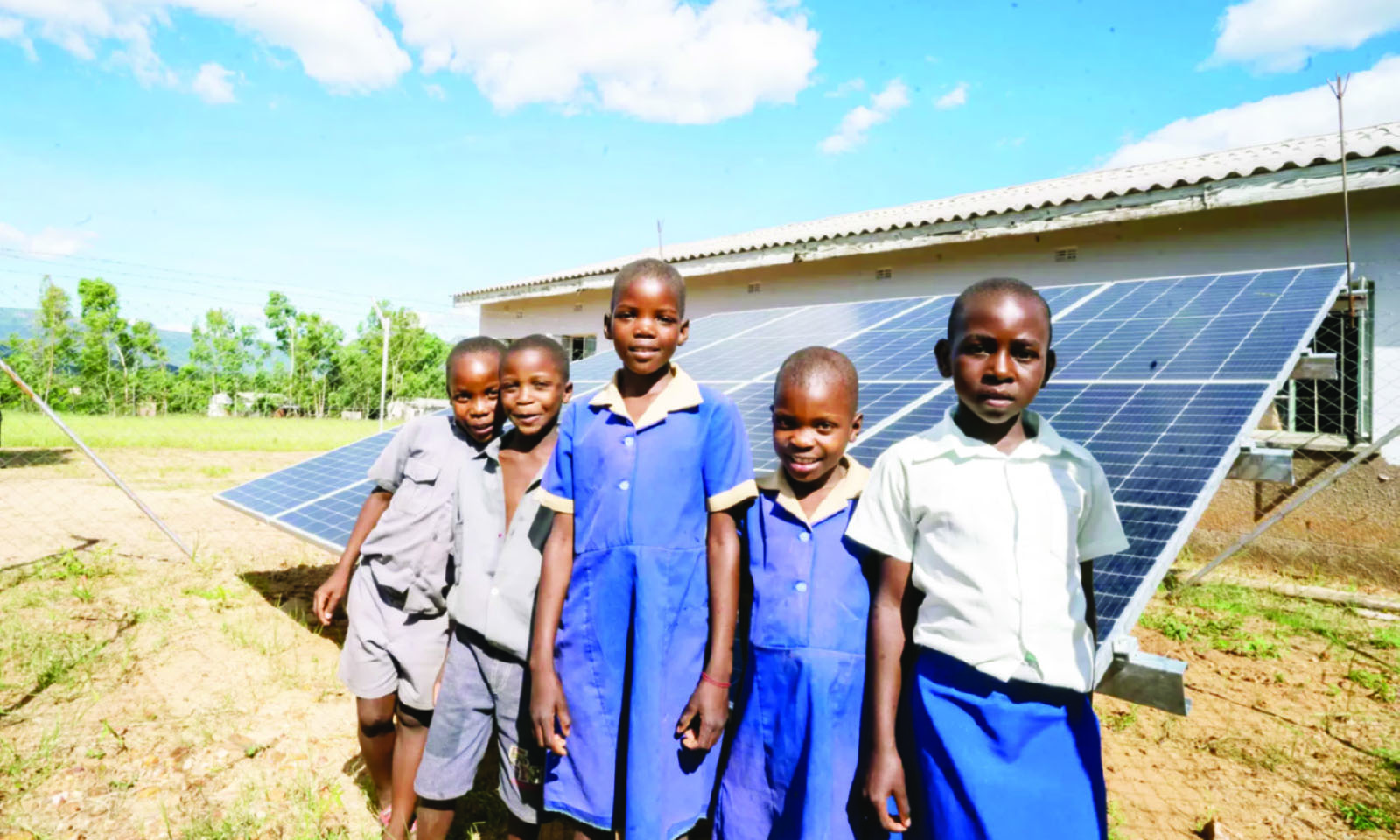
Farai Mutsaka
Nyanga, Zimbabwe — When Irene Munyengeterwa, a teacher, first arrived at Chidazuru Primary School last year, one goal immediately came to mind. And it had nothing to do with teaching there.
“All I wanted to do was leave as soon as possible because of a lack of electricity. Imagine the indignity of going into the community begging those with solar panels to allow me to charge my phone. Sometimes, they would tell me off. At the end of the day, I couldn’t even use my phone for personal communication. I would use candles for lighting at home, so there was no way I could work from there,” said Munyengeterwa.
A year later, she abandoned the idea of making a transfer request.
Instead, the infant class teacher feels at home at the Makoni school, a rural Manicaland Province district. She said she is now entirely focusing on delivering quality education to her class, thanks to the solarisation of the school under a project to improve learning and living conditions at P3 schools.
The Ministry of Primary and Secondary Education (MoPSE), a key partner in the project, defines P3 schools as those in rural and poor communities that are most affected by financial constraints.
Authorities say installing solar power at remote schools such as Chidazuru motivates teachers to stay. In the process, it is helping learning institutions that teachers once snubbed to retain staff.
Munyengeterwa is one of those who have chosen to stay at their stations. Her school was solarised in April 2023.
“I am comfortable; our conditions have greatly improved. I can charge my phone and laptop in the comfort of my home; I can communicate with friends and relatives and also do my work,” said Munyengeterwa.
She added: “At school, I now concentrate on teaching, and I leave marking and lesson planning for the night when I am home. It means I give learners quality time, unlike before when I had to balance marking, scheming, researching, and teaching. The pressure is less now.”
A laptop plugged into a power socket sat on a desk in her home, providing her with a new and additional workstation that is making both her personal and working life bearable.
The solarisation project was introduced through the Education Development Fund, TEACH programme, and was implemented by the MoPSE in partnership with UNICEF, with funding from the UK Government.
Schools benefiting from the project had a 6.5KVA solar power system installed on school premises to power the administration block and a computer lab equipped with 40 power charging stations.
Additionally, the system provides power for lighting and charging stations at teachers’ houses, enabling them to work from home after class. A lockable kiosk with power ports rakes in extra cash for schools that charge a minimal fee for community members to power their cell phones. Funds from the kiosk contribute to the maintenance costs of the solar power system.
A total of 154 schools drawn from eight districts in Manicaland and Matabeleland South provinces are benefiting from the project.
At Chidazuru Primary School, the programme has relieved headmaster Elisha Mafara and learners who had to contend with a debilitatingly high staff turnover.
“We used to have a maximum of four teachers at a time before the project. Most teachers would come but transfer after a term or two, sometimes or a few weeks after their arrival. We now have eight teachers, and no one is talking about transferring because they are now enjoying their stay. This is enhancing the ability of teachers to deliver well-prepared lessons,” said Mafara.
Teachers can also print assignments and other learning materials, such as sample examination answer sheets, unlike before when everything had to be written on the classroom board.
Although it is still too early for comprehensive statistics, there is a noticeable change, with teachers deployed to the recently electrified schools showing eagerness to stay, said Cecilia Makanyanga, a MoPSE Schools Inspector for Nyanga District.
“Before, we had many cases where a teacher would assess the situation upon arriving at a school and immediately visit our offices asking for a transfer. We are seeing reduced incidences now,” said Makanyanga. No teacher from all the six schools that benefitted from the project in her circuit has asked for a transfer so far, she said.
“It was sad to see teachers walking five kilometres to the nearest shopping centre just to charge their phones. At home, they would use candles or paraffin for energy. This programme has become a blessing to the teacher; they feel less burdened,” said Makanyanga.
For learners, the programme has not only ensured that their teachers stay. It has revolutionised their learning experience.
On a recent day, two learners with disabilities punched keyboards in the school computer lab.
“They used to feel lost before we had computers, but they are now also active and excited because they can comprehend some issues using video and audio elements. They can also type,” said Mafara, the school headmaster.
He attributed the jump in the school’s Grade Seven examination pass rate from 49 per cent in 2022 to 67 per cent in 2023 to the solarisation project.
Another learner, Lisa (13), said she only started using a computer after the solarisation of the school.
“We were learning about the hard parts of a computer that we saw in books. Now we can switch on a computer, make drawings, type our assignments and research on the internet,” she said.
She said that preparing for her upcoming end-of-year Grade Seven examinations has become a joy since she started using computers.
“I am now confident that I will pass, I am more prepared than before,” said Lisa — unicef.org