Online Reporter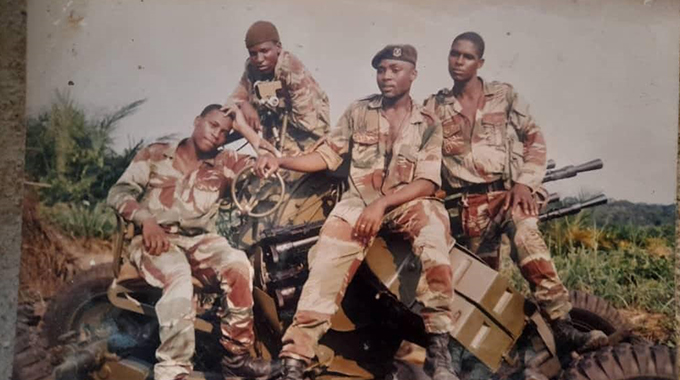
Ikela’s strategic location in the Democratic Republic of Congo (DRC) made it a key point of contention during that country’s war. It served as a vital stronghold, particularly for Zimbabwean forces, and its control was crucial for access to other parts of the country. The town’s importance stemmed from its position as a potential gateway to Kinshasa from the north, making it a strategic objective for various factions.
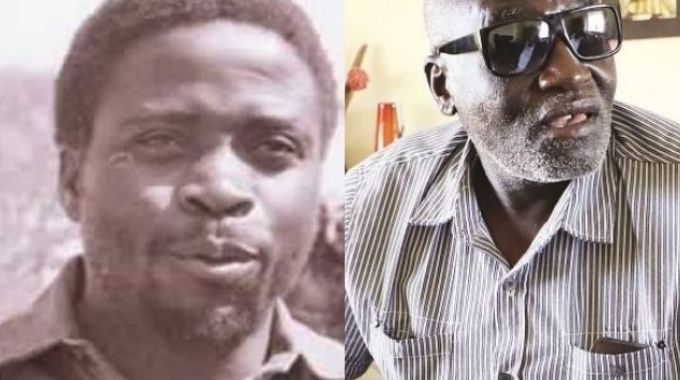
Zimpapers Features Writer, Thupeyo Muleya (TM), spoke to Zimbabwean retired army captain Kudakwashe Chasauka (KC) who relived his experience in Ikela during the DRC’s war. Below are excerpts from the interview.
TM: What was your experience before joining the Zimbabwe National Army (ZNA)?
KC: I completed my Advanced Level studies in 1996 and at that time the frenzy was about joining the teaching profession. I started working as a temporary teacher and later enrolled for a teaching course. I then joined the army (ZNA) in 1999. There was the DRC war and like all youths, I was carried by the emotions of the moment to join the army. Along with several others, we encouraged each other to join the army as general duty soldiers. We trained at All Arms Battle School (AABS) in Inyanga from March 1999 to November of the same year.
TM: How were you deployed to the DRC, and what was your role in the mission, specifically the Ikela operation?
KC: During training, we were told by instructors that some soldiers from ZNA (2 Brigade) had been surrounded by the enemy in Ikela and were under siege. So, we were supposed to go and rescue them as soon as we finished training. The level of excitement was very high and many recruits felt duty bound to rescue fellow soldiers. These, we heard, had been under siege for over six months and we were eager to defeat the enemy. After training in November 1999, I was deployed to the 5.1 Infantry Battalion. Upon arrival, we were told that we were being deployed to the DRC specifically to Ikela. In December 1999, we flew to Kinshasa from the Commandos airbase. We met with other soldiers from our battalion who were already in the DRC who had withdrawn from Matade and were now in Kinshasa. So we had to join them for the mission to Ikela.
TM: What were your expectations before deployment, and how did they compare to the reality on the ground?
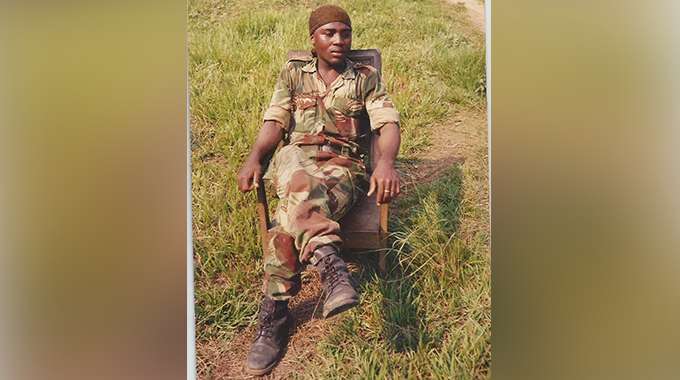
KC: Our Mission at Ikela was to support the Commandos from ZNA to rescue a battalion (2 brigade) that had been under siege from the enemy in that area. So as the infantry our role was to take over and defend the positions which would have been overrun by commandos. Upon arrival at Ikela, we had to defend the position which was critical to the DRC war. Ikela is the gateway to Kinshasa by water. In fact, it was a central position and strategic. At war you need to hold all strategic positions and routes and to win the war in eastern DRC, Ikela was the key. The idea was to defend Ikela and all areas leading to Kinshasa via eastern DRC. The training we got was very necessary although we thought it was too gruelling. The skills came in handy in the Congo war, fighting in the rain, patrolling on foot, planning, endurance and resilience we acquired from training. There were a lot of mosquitoes and no soldier got sick from malaria or water-borne diseases. We were trained to adapt to any situation.
TM: How did you prepare for the challenges you would face in the DRC?
KC: In January 2000, we flew from Kinshasa to Mbandaka as a company after being briefed by our commanders. I was part of the C (Charlie) company which was the initial deployment. Upon arrival, we took a ferry privately owned by civilians. We had no army boats, this ferry carried about 100 people to Ikela. It was the first ferry to ply that route since the attack on 2 Brigade units. You will note that most travelling was done on water because there were a lot of swamps and the road network was poor. We could not use the helicopters because our destination was under attack.
From Mbandaka to Ikela it’s almost 1 000 km. We passed through Mbwende, Bukungu and Mondombe and some small settlements which were enemy territory. It took about two weeks to get to Ikela. We would travel day and night because the commandos were already clearing the path ahead. So we were racing against time to sweep and defend positions. We would stop to do reorganise because of the nature of terrain. We first met commandos at Mondombe where they had done a great job, we took over the positions permanently.
TM: Describe the events leading up to the Ikela battle. What was the situation like?
KC: After two days, the commandos had penetrated Ikela and they had withdrawn to Ya-Lusaka. So we had to move faster to rescue the guys from 2 Brigade and defend the positions (areas) so that the enemy couldn’t regroup and attack. Along the way, we heard the enemy was regrouping. Our disadvantage is that we were using a civilian ferry, not an army fighting ship. So our commander decided to split platoons and send one platoon in front in a makeshift raft and I was part of the first team that was sent to Ikela to prod. I was a private by then because I was just from training.
TM: What were your experiences during the Ikela operation?
KC: We were a unit of about 14 soldiers and I was the one doing signals (communication) carrying the B16 radio. Basically, we were sweeping the route cleared by commandos and defending positions. We also had friendly forces with us from the local DRC army, Namibians and the Rwandan Interahamwe. Our challenges were that we could not carry huge artillery in the makeshift raft and we were faced with an enemy with huge fire power. So we carried an HNG gun, light weapons and a commando mortar 60 with us. We had one guy from Interahamwe who knew the area better than us. We travelled under the cover of darkness and arrived at Ya-Lusaka. We met commandos who assured us that the area was now clear. Along the way, the enemy threw bombs but they couldn’t get to us. We didn’t return the fire to preserve our ammunition and based on our training, we discovered the enemy was making uncalculated attacks on us, so we carried on with our journey. We don’t attack where we don’t see a target. We could only engage when effectively engaged. However, every week we had to exchange fire with rebels and their supporters to push them away until we opened supply routes and after four months we were able to open the air space in Ikela. Ferries were slow, so we had to clear the enemy to open airspace in that area.
TM: Can you recount the moment when you and your team rescued the trapped countrymen? What was going through your mind?
KC: It was a moment of joy for the soldiers from 2 Brigade when they saw us arriving at the harbour; they had been trapped there for a long time. By merely looking at them, you could tell they had been through a lot. However, they were worried that only a platoon had come to rescue them and defend the won positions. We were briefed by the CO (Commanding Officer) from 2 Brigade, who then deployed us to the major hospital in the direction where the enemy had escaped through and was planning a comeback. This was a strategic deployment because it was the entry point of the enemy coming through from Kisangani. So this area had to be secured permanently. In this case, 2.1 Infantry Battalion soldiers kept their positions. We had to extend our territory towards enemy lines. The place was big and we were just a platoon and at some point we felt it was insecure because we were few and were yet to understand the territory. After some time, we gave feedback to our command post and they deployed the full company to Ikela.
TM: How did you and fellow soldiers cope with the harsh conditions, including the terrain and enemy fire?
KC: The arrival of the 5.1 team paved the way for the 2 Brigade guys to go home while we kept defending the positions. As mentioned earlier, Ikela was a critical route to Kinshasa. Anyone with access to Ikela would easily get to Kinshasa and take over the Government. So, our mission was clear, we had to defend positions and push away the enemy further. After the commandos penetrated the place, 2 Brigade had to defend the position until our battalion came and they withdrew within a week. So after we had a full strength battalion, we secured all the positions on the route between Ikela and Kinshasa. Even though we had friendly forces, some not trustworthy at times, we had to deploy them to positions where we could effectively defend ourselves should they decide to turn against us.
This was common. We had very co-operative sources from the community on enemy movements. So we heard they had cut supply routes through the air or water and they were at striking positions. They put us under siege but better than 2 Brigade teams because we were covering a bigger place compared to the 2.1 Battalion. To win this, we had to prod and drive the enemy further and we had to keep going towards enemy lines. I was selected to be part of a section to carry out that task since I was the radio man. The challenge here was that the area had no distinct features, it was just a jungle. We had to rely more on reconnaissance as the wreck patrol. Alpha Company was doing the recc while the C company section was supporting them. As a platoon, we only had a PK (machine gun), Commando mortar 60 and RPG 7. Intelligence was that the enemy was 10km within range and we had to drive them away.
Initially the 2.1 Battalion had patrolled the area before attacking and they left a truck. The road was bad, so we had to do foot patrols, single file formation with a space of at least two metres where you could see each other. We had to make sure we didn’t lose track of each other. Along the way, they had sent a platoon to ambush us which we ran into. We exchanged fire and the enemy retreated. So we informed our command post and retreated. When we returned with more manpower and fire power, they had moved close to our lines. We decided to do the ambushes as well using different platoons. We had a scouter and the guy carrying a PK machine gun in front as we prodded. Here we had a fierce contact with the enemy which had huge fire power, the enemy was mostly Rwandans who were commanding the local rebels who were poorly trained. The Rwandans had huge firearms. We had defended our position during contact and lost two soldiers.
After contact, we retreated and plotted to recover the bodies. We only managed to recover one body. During combat, the enemy tried to encircle us but we picked that and managed to withdraw to safety and fight with more manpower housing our huge artillery. We exchanged fire for over 30 minutes until the enemy withdrew further. It was always raining and hence fighting was always a challenge but we ended up getting used to the terrain. We used the full company and friendly forces to recover the dead soldiers. Interahamwe guys went ahead of us and managed to drive away the enemy and recover one body. In terms of languages, we were catching on fast and in our team, we had others fluent in all local languages.
To avoid interception, we had to communicate using Shona. On operation recovery, we had contact again with the enemy which was moving towards our lines. We had a fierce battle and the way the Interahamwe fought showed a lot of passion, but they were somehow dare devils. On our side, we believed in strategic, not haphazard attacks. But during this battle, the Interahamwe plan worked and we had to rely on the commando mortar 80 and 81 to neutralise the enemy.
We hit about 16 rebels, captured around eight to 10, and we lost three Interahamwe guys. On the enemy side, the Rwandans would put local rebels in front. So our attacks had to be carefully planned after assessing fire power or nature of attack. Local rebels only knew how to fire guns but they had no tactic or resilience of real soldiers. We recovered one body from a previous battle and the other soldier was declared missing in action after the peace pact. In terms of food, we had to adapt to the local diet of fruits which are plenty in the area, cassava and fish.
TM: How did you win the defence of Ikela?
KC: The constant offensive on the enemy was enough to move them away. Whenever we overran a position, we would permanently deploy and go on the offensive again. With time we had an additional battalion from the DRC army which we deployed to further positions until the rebels felt the fire. We kept pushing them further until a cease fire agreement was signed by warring parties around 2002.
TM: What was the aftermath of the battle like? How did you process the experience?
KC: One thing about war is that nothing prepares you for the experience. It teaches you about adapting and you should know that anything can happen at any time. However, war experiences take away something from you as a person. I remember there was a point where we could not talk about this war. War is violent, it affects characters. With a strong support system, one heals and moves on with life.
TM: Did you have female soldiers in Ikela?
KC: We had no female soldiers during our training or in the DRC war. The few we knew were doing special jobs at the headquarters mostly in Kinshasa which was a liberated zone.
TM: How did the mission impact you personally? Did it change your perspective on anything?
KC: I learnt a lot about life in both negative and positive ways. Some people need counselling or therapy at the family level. There are many things we take for granted, but I would say the courage and determination by the youths who fought in the DRC war as part of the ZNA is commendable. Young people are determined to learn from their elders and they are eager to defend the country. Our army is professional; it is tried and tested. When people talk about war veterans, they focus only on those who fought the Second Chimurenga, leaving those who fought many battles such as the Mozambique, Angola, Somalia, DRC wars etc. Even if the wars were not territorial, they were a Zimbabwean mission, by Zimbabwean soldiers. Recognition should be made for these heroes.
TM: How has your experience in the DRC shaped your perspective on conflict, peace, and stability in the region?
KC: The efforts by Sadc to defend each other is impressive. This is the war that revealed the power of collective approach. Sadc proved it really has teeth in terms of maintaining peace and security in the region. They managed to defend a legitimate Government, one of their own.
TM: How did you reintegrate into civilian life after the mission?
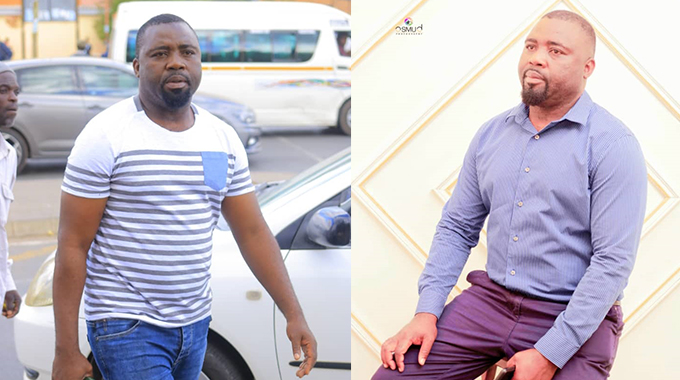
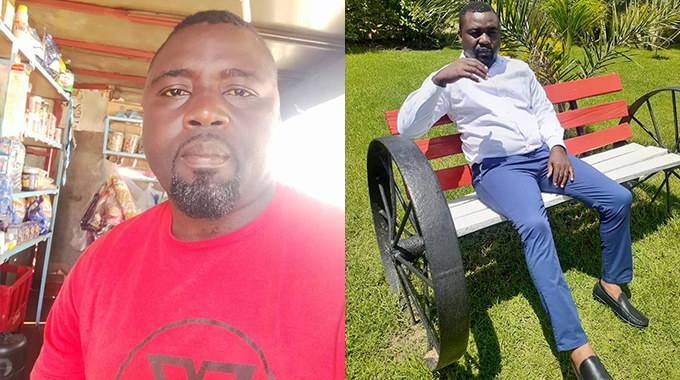
KC: I retired at the rank of captain in 2007 after going through the army cadet training post the DRC war. It was easy for me to reintegrate into the community after serving in the army post DRC war for five years. I am now an entrepreneur with a shop, car wash and I am also into buying and selling depending on the market trends and demands.
TM: How do you think the Zimbabwean Government or military could better support veterans who have served in conflict zones?
KC: There is a need for psychosocial support for these heroes. Some experiences impact people’s lives and some may fail to adapt. We need to get to a point where the issues are handled collectively.
KC: The Ikela operation is one of the most important parts of the DRC war. The defence of the Kabila or Kinshasa Government hinged mostly on the support of friendly forces. It should be remembered as such. It formed a central part in the defence of Kinshasa. The training and involvement of Special Forces was very critical, especially the commandos. Such units are very critical. Commandos are for the offensive while Infantry sweeps and defends positions. This was well executed in the DRC war, especially the defence of Ikela. The Army structure as a whole is very important. Each department plays a key role and these complement each other.
TM: Are there any specific individuals or moments from the mission that you would like to honour or remember?
KC: I would like to acknowledge our battalion commander Major Mutetwa. At first, since we were raw from training, we felt he was aggressive, but his ways were very necessary to drive away the enemy from Ikela. We stayed on the offensive to keep the enemy busy on the defensive side. We had Corporal Mapiyo who excelled in terms of managing our signals during the war. I commend the veterans of the Chimurenga war, although they were un-commissioned, they had the experience that kept us alive in the DRC. The army should promote these guys based on their vast experience at the front.