admin
admin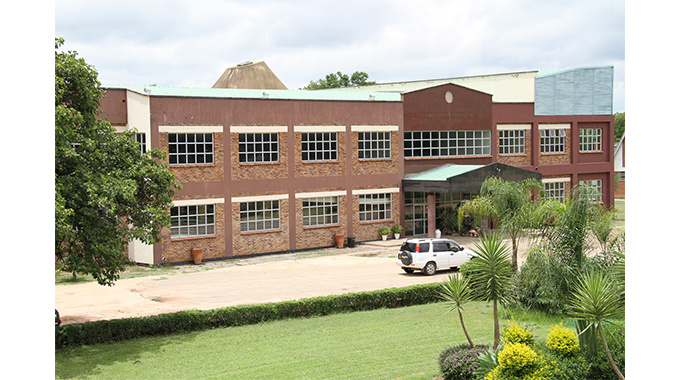
Mbulelo Mpofu recently at Solusi University
AFTER recently equipping forty-three Information and Communication Technologies (ICTs) teachers and lecturers and certifying them with a free Designing and Deploying Computer Networks (DDCN) course certificate, Solusi University is spearheading an examination preparation seminar for students.
As students prepare upcoming November Zimbabwe Schools Examinations Council (Zimsec) examination period, Solusi University last week held a 5-day A-Level Continuous Assessment Learning (CALA) examination tips and Career Guidance Seminar at the campus’ Ralph Watts Library where scores of students converged to mentally prepare for a time of reckoning.
Plucked from diverse schools in and around the Bulawayo Metropolitan Province and Matabeleland region, students were in for a time of learning and implementation with them set in groups to foster teamwork.
Whoever coined the phrase, “Failing to plan is planning to fail” had seen the adverse effects of not properly preparing in one’s quest for success and Solusi wasn’t having an ill-prepared lot in their wake.
With the Ministry of Primary and Secondary Education exhibiting a strong stance on the need to take forward CALA, those involved in the education sector are slowly warming up to the idea of having CALA around.
Anchored on the Education 5.0, a five-mission model of teaching, research, community service, innovation and industrialisation, established to move the nation forward towards an innovation-led and knowledge-driven economy, students were taught on the need to think outside the box. Education 5.0, an advancement from Education 4.0 speaks to application of local resources for social and economic development.
The new model, which was adopted a few years back, seeks to produce students who solve national problems instead of just being job seekers. In 2018, President Mnangagwa set out a clear vision for higher and tertiary education. He articulated that he wanted a human capital development sector that would contribute to national development.
The President wants to see higher and tertiary education institutions playing a more significant role in national development, and providing the essential knowledge and skills needed for production of quality goods and services for the industrialisation and modernisation of the nation.
This meant moving away from old traditional ways of teaching and learning to building an innovation-led and knowledge-driven economy by 2025 as espoused in the National Development Strategy 1 (NDS1). It also brings to light the advancement of Sustainable Development Goal (SDG) 4 which shines the spotlight on the importance of increasing skills in youth, ensuring gender equality and promoting sustainable development in the education system.
This way, the education sector would significantly contribute towards the attainment of an upper-middle income economy by 2030.
The seminar came at an opportune time since some fail dismally due to inadequate time for examination preparation or employing the wrong tactics of study.
At the seminar, facilitator Eldon Zulu who teaches at Maranatha High School and is an Adjunct Lecturer at the National University of Science and Technology (Nust) majoring in Innovation and Entrepreneurship, Education 5.0 as well as 4th Industrial Revolution (4IR), said a paradigm shift in focus is necessary if students are to compete with their global counterparts.
“With the advent of 4IR and the adoption of the Education 5.0 style of learning, students have the window to change their own fortunes. Education 5.0 is the current and future of the education system and armed with scientific subjects, students have a mandate to be innovative and compete with their global peers to stay relevant in an ever-changing world. A lot is changing out there and our students need to adapt to new ways of doing things and also show their academic pedigree. Theory should be buttressed with practical lessons that students have to understand and undertake,” he said.
Zulu, who is also the managing director at the Concept Education and Management Science Consultancy also encouraged students to embrace the adoption of science, technology, engineering and mathematics (STEM) subjects as critical components portending power to shape their destiny.
Students who spoke to this publication expressed relief at being part of the programme.
Bhekakuye Moyo, a Lower 6 student from Bulawayo Adventist High School (BAHS) and also the Junior Deputy Minister of Foreign Affairs and International Trade said such a programme was long overdue as it was an eye-opener.
“In as much as we know what CALA is and these other facets of learning are, this seminar has been an eye-opener as it mentally prepares one to face not only examination challenges but whatever life may throw at them. Life is a puzzle and we were prepared on the need to take our CALAs seriously as they are here to lessen our academic burdens.
“School is a cerebral warfare where how ones views circumstances either makes or breaks them. Our minds were fortified and we were given tips on how to be innovative in order to make the most of our education especially on the practical side of things,” he said.
Tanaka Chirwa an Upper 6 student at Solusi Adventist High School (SAHS) said the seminar helped her understand the need to have CALA around.
“I always thought CALA was introduced to worsen the academic burden that we already have but after attending the seminar, I now see how it makes life easier for us. At least we get into the examination room with something to lean on. It is a foundation that we build upon and was actually introduced to benefit us,” she said.
Rivhathihi Ndou who is an Upper 6 student at SAHS challenged organisers to make sure that more seminars of such a kind are held.
“This shouldn’t just be a once-off endeavour. We need more of these as they calm our nerves as examinations are a stressful period which requires one to be mentally-prepared. Some don’t fully comprehend what their career prospects look like so the seminar helped a lot in clarifying such issues,” she said.
With more than 15 facilitators of artistic, scientific and commercial subjects as well as career guidance, students were trained on time management, question comprehension and diverse examination needs to help them better prepare for examinations. — @MbuleloMpofu


 Online Reporter