Andrew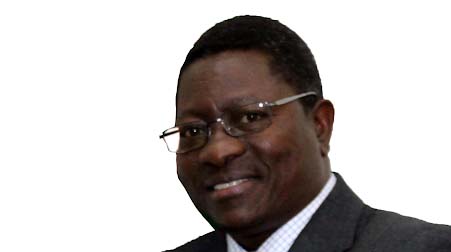
A MAJOR power outage affected Southern Africa last week, plunging parts of Zambia, South Africa and Zimbabwe into darkness. Preliminary investigations concluded that a major fault at Zambia’s Kariba North Power Station affected the region’s interconnected grid causing a major power generation and transmission problem. The Sunday Mail’s Harmony Agere caught up with the Southern Africa Power Pool (SAPP) executive director Engineer Stephen Dihwa to discuss the region’s power woes and the efforts being undertaken to ensure power security.
****************
HA: Zimbabwe, South Africa and Zambia recently decreed longer load shedding regimes. What is the status of power supply in the region?
SD: Agreed, there has been a worsening shortage of electricity in the region mainly attributed to breakdowns of equipment at some of the power stations in the region.
This is over and above the planned maintenance, which normally takes place during this time of the year when the electricity demand is lower compared to the winter period.
This to some extent could be attributed to the fact that there was limited maintenance during Covid-19 lockdowns, compounded by the logistical challenges of bringing in spares for generation plants expeditiously.
It should be noted that currently nine out of 12 SADC member states are electrically interconnected at transmission level.
SAPP is co-ordinating transmission interconnector projects to get all members connected as well as to strengthen the interconnected SAPP grid.
To provide focus on that, a project advisory unit has been set up by SAPP and is currently working on projects from concept stage through feasibility studies to financial structuring.
The remaining three countries to be interconnected are Angola, Malawi and Tanzania.
Malawi is already being interconnected through the Malawi — Mozambique interconnector.
Projects to interconnect Tanzania to Zambia are in progress.
Feasibility studies have been recently completed for the Angola — Namibia interconnector which would result in the interconnection of Angola.
The interconnection of these countries will increase available power supply in the region as some of these countries, for example Angola, have surplus power.
HA: What are the main reasons behind power shortages in SADC?
SD: The main reasons behind the power shortages are the unplanned breakdowns against increased economic activities following the relaxation of Covid-19 restrictions as alluded to above.
While each country has been making efforts to increase generating capacity, the progress on the projects has been slowed down by the Covid-19 pandemic.
Of note has been the increase in renewable energy projects from both the power utilities and independent power producers (IPPs) particularly in Mozambique, Namibia, South Africa, Zambia and Zimbabwe.
HA: It was reported that there was a major fault at Kariba North Power station last week that affected the interconnected grid. What is the extent of the damage and how is the matter being resolved?
SD: The preliminary information available now seems to indicate that there was no major fault at Kariba North Power station, but rather there was a power system disturbance in the interconnected SAPP power system, which resulted in disconnection of power generators at some power stations in the region including Kariba North Bank in Zambia, Kariba South Bank in Zimbabwe and in South Africa.
There were disconnections of transmission lines at the time, leading to Zambia and part of the Zimbabwean network being disconnected from the SAPP grid.
Investigations are still underway to establish the cause of the disturbance and determine mitigation measures to be put in place.
HA: What is the status of some of the power plant construction projects in the region and what sort of relief will they bring upon completion?
SD: A total of 2 480MW of generation capacity was commissioned in SADC region in 2020 contributed by Angola, DRC, Malawi, Mozambique, Namibia, South Africa and Tanzania. Several generation projects are under construction and in the next three years we expect a total of around 10 000MW of generation capacity to be commissioned.
However, generation capacity of 5 000MW is expected to be decommissioned during the same period.
Based on current electricity demand projections, these projects should result in sufficient power supply in the region.
HA: How much does the region need to stabilise its power generation capacity?
SD: Based on the long-term plans carried out by SAPP, the region will need to install about 75 gigawatts generation capacity in the next 20 years at a cost of US$118 billion.
It should, however, be noted that SAPP is now revising these long-term plans in line with new climate change and renewable energy targets.


 Online Reporter