Farayi Dube
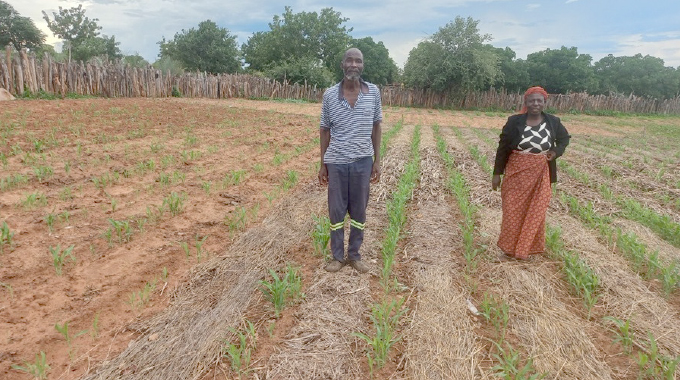
WITH the international focus shifting to resilient food systems, the impending rain season is a critical moment for smallholder farmers.
While a good farmer begins planning immediately after the previous harvest, this article is meant to help you catch up if you are behind schedule.
The question is: How can farmers secure a harvest amidst increasing climate variability?
If you are farming in Zimbabwe’s drier regions (Natural Regions IV and V), you must shift away from the high risk gamble of relying on maize as your main cereal for both food security and income.
Your best bet lies with the traditional grains. While crop production in these dry areas is inherently risky, shifting to these crops significantly lowers the risk. These are sorghum and pearl millet, which are the arid and semi-arid’s premier drought-tolerant cereals.
Dr Martin Moyo, the Icrisat Zimbabwe Country Representative, highlights that institutions like Icrisat have been instrumental in this shift, emphasising their decades of work breeding improved drought-tolerant varieties and building the capacity of farmers in good agronomy and agroecological technologies for both sorghum and pearl millet production.
(For more on their work, visit Icrisat’s Official Website (https://www.icrisat.org/). In Zimbabwe, they can be reached at Matopos Research Station, Bulawayo).
You can further optimise your yield by integrating good agricultural practices (GAPs), a holistic approach that emphasises Integrated Soil Fertility Management (ISFM), Integrated Pest Management (IPM) and Agroecology.
These are essential strategies for minimising production costs and building resilience against increasing climate variability, mid-season dry spells and erratic rainfall.
Unpacking the resilience toolkit
• ISFM means maximising soil health through the combined use of organic matter and mineral fertilisers for balanced nutrition.
• IPM means managing pests through natural and cultural methods, using chemicals only as a last resort.
• Agroecology means working with nature, focusing on diversity, soil health and water conservation.
The principle underpinning all these practices is early action focused on the soil’s health and its capacity to capture and retain moisture.
The timely soil health checklist
Farmers must prioritise timely land preparation. The critical first step involves adopting Conservation Agriculture (CA) techniques, specifically minimum tillage methods. This includes digging planting basins (Pfumvudza/Intwasa) or utilising the ripper-tine method. Unlike conventional ploughing, these techniques minimise soil disturbance, prevent soil erosion, and are highly effective for in-field water harvesting, concentrating limited rainfall directly where the seed needs it. See the Pfumvudza/Intwasa step by step guide or contact your nearest agricultural extension office (Agritex) for the official Pfumvudza/Intwasa guideline for traditional grains.
Following land preparation, focus must shift to robust Integrated Soil Fertility Management (ISFM). This begins with enriching the soil through the generous application of organic matter, such as well-decomposed cattle manure or compost, directly into the planting stations. These organic inputs are the cornerstone of agroecology, dramatically improving soil structure and its water-holding capacity, a vital buffer against drought. Inorganic fertilisers when available should then be applied strategically using microdosing, placing small, targeted quantities of basal fertiliser like Compound D directly alongside the organic inputs to maximise efficiency and nutrient uptake while minimising financial outlay.
Strategic planting and diversification
Beyond soil management, selecting the right crop variety and ensuring timely planting are non-negotiable risk management strategies. Farmers should procure certified, improved drought-tolerant varieties of sorghum and pearl millet, opting for those with a short to medium maturity period to ensure the crop reaches physiological maturity before the end of season.
While improved seeds offer consistency, effective local seed varieties that have proven good performance over time can also be a valuable option. For the most arid regions (Natural Regions IV and V) with less fertile sandy soils, pearl millet remains the superior choice due to its exceptional drought tolerance.
Planting must occur immediately after the first effective rains, which is defined as roughly 20-25 mm of rainfall within a week. This early establishment is crucial for the crop to develop a deep, extensive root system capable of accessing deeper soil moisture reserves.
Furthermore, farmers should embrace agroecological diversification by intercropping with legumes such as cowpeas, groundnuts and Bambara nuts.
This practice is multifunctional: it provides a second, valuable food or cash crop; contributes to nitrogen fixation for soil fertility (ISFM) that benefits the cereal crop; and disrupts pest and disease cycles (IPM), promoting a healthier overall farming system.
Reducing post-harvest losses, market access and national development
Post-harvest management is just as critical as field work for securing profit. Thresh and store the grain in a cool, dry place after adequate drying.
While manual threshing remains common, farmers are strongly encouraged to explore the use of small-scale mechanical threshing equipment (available through farmer groups or local services).
This shift to efficiency opens the door for youth-led enterprises across the value chain:
Mechanization services: Establishing businesses providing tillage services (using ripper-tines or tractors for CA), mobile threshing and shelling services and transportation (farm-to-market logistics) to farmer groups.
Processing and value addition: Investing in small-scale milling and processing plants to produce high-value products like fortified flours, traditional beverages (like mahewu), breakfast cereals and snack bars from sorghum and pearl millet.
Input and extension services: Supplying tailored inputs like organic fertilizers and certified small grain seeds
These youth-led efforts maximize the usable output from the harvest, contributing to the principles of a circular economy and directly helping to meet Zimbabwe’s National Development Goals related to job creation and food security.
ICRISAT’s Associate Scientist (Business Development Specialist), Dr Angeline Mujeyi, urges smallholder farmers to take a broader view of farming, noting that “profitability today goes beyond crop yields expanding market access for traditional grains presents a real opportunity for farmers to grow their earnings.”
Smallholder farmers have a widening array of market options for their traditional grains, reflecting growing demand across the food and beverage industry.
Key buyers include:
• Grain Marketing Board (GMB) – continuing to provide a reliable and structured market for grain purchases.
• National Foods
• Sunset Milling – sourcing a variety of grains for local milling and value addition.
• Delta Beverages and Ingwebu Breweries – procuring sorghum for use in the production of traditional beverages.
These expanding market opportunities offer farmers multiple avenues to enhance profitability, strengthen value chain participation and contribute to national food and nutrition security.
By integrating these pre- and post-season actions, smallholder farmers can protect their investment, boost their yields significantly and ultimately strengthen their household food security against the ever-increasing threat of climate change, thereby playing a direct role in achieving national food sovereignty and climate resilience goals.