


 Online Reporter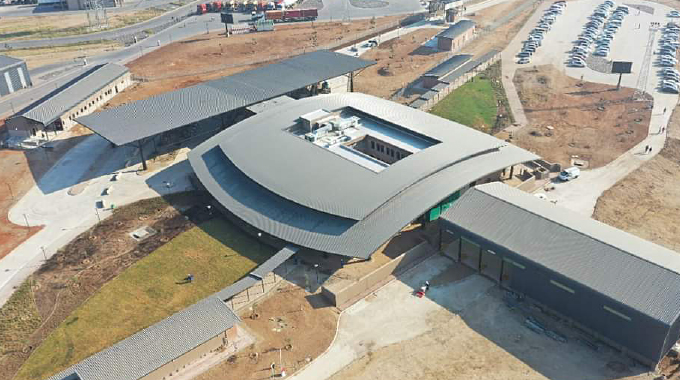
Gibson Mhaka, Zimpapers Politics Hub
THE acceleration of infrastructure projects in Matabeleland South, specifically at Maphisa Growth Point, Matobo District, in preparation for the 2026 Independence Day celebrations, coupled with the rapid rehabilitation of roads across the district and the broader province is evidence that the Second Republic is faithfully executing its core developmental philosophy of “leaving no one and no place behind.”
The decision to host the 2026 Independence Day Celebrations at Maphisa is not merely a ceremonial choice, it is a powerful catalyst for long-term development.
This focused investment in a formerly marginalised area transcends mere infrastructure projects, it is a strategic act of political commitment and restorative development.
Several key infrastructure projects, including the construction and rehabilitation of roads, schools and health facilities, as well as the drilling of boreholes are already underway across Matabeleland, ahead of the event.

The rotation of national events like Independence Day to provincial and rural centres — a trend confirmed by previous host locations like Gokwe North in Midlands and Murambinda Growth Point in Manicaland — is a key administrative and political signal.
Historically, decentralisation in Zimbabwe has been characterised by a gap between rhetoric and reality.
By visibly investing massive resources in Matobo and previous hosting districts, the Government is demonstrating that devolution and the “leaving no one and no place behind” policy are not just slogans but are backed by tangible capital expenditure.
Matabeleland, in general, has a political history marked by perceptions and realities of exclusion and marginalisation since 1980.
The deliberate focus on accelerating infrastructure projects in Matabeleland South directly confronts the narrative of regional neglect. This is a crucial political play for social inclusion and national unity.
Speaking during a recent Zanu-PF Matabeleland South Provincial Co-ordinating Committee (PCC) meeting, Minister of State for Provincial Affairs and Devolution in Matabeleland South, Albert Nguluvhe, who is also the Zanu-PF deputy provincial chairperson, stressed the crucial role of the party leadership in ensuring the day’s success.
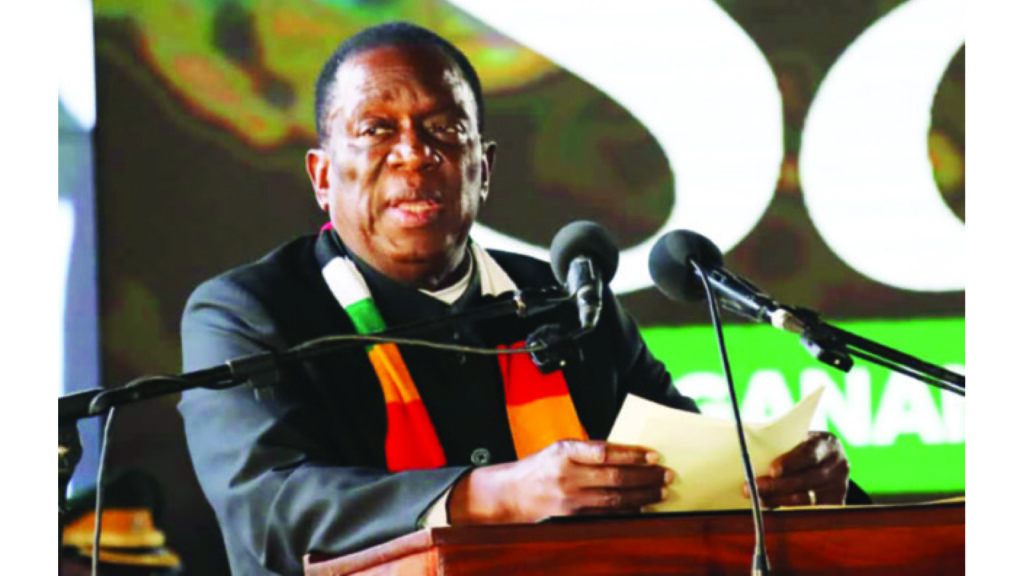
Minister Nguluvhe also provided an update on the infrastructural projects already underway in the host district.
He confirmed that the various projects are lined up to bring much-needed development to the province and significantly improve livelihoods.
Regarding roads and infrastructure, he provided a detailed update on the progress.
“We have commenced work on critical projects for the Independence Day celebrations, and among them we are going to tar the Gwanda-Maphisa Road and rehabilitate the Bulawayo-Kezi Road.”
He added that preliminary work on the venue is well underway.
“We have already started clearing the main arena. Preliminary site layout for the stadium has been done and released.
“There are two dozers, a grader and a low-bed truck on site. We expect an excavator soon. Approximately five hectares has been cleared so far at the Stadium.”
Beyond the core celebration site, the province will see widespread infrastructural investment, including the construction of new vocational training centres in Bulilima, Beitbridge, Gwanda, Esigodini and Maphisa.
Road development is proceeding on multiple fronts, with the Gwanda-Maphisa Road construction covering a scope of 55km, 10km of which is already underway, while the remaining 45km will be tendered.
The Bulawayo-Kezi-Maphisa Road will undergo a 42,1km reseal, divided into five separate lots. Furthermore, Minister Nguluvhe noted significant legacy road projects, including 10km sections on Plumtree-Maitengwe, Plumtree-Ndolwane and Filabusi-Avoca roads, along with a 20km section on the Plumtree-Tsholotsho Road.
To enhance accessibility across the rural landscape, the Rural Infrastructure Development Agency (Rida) has set an ambitious target to re-gravel at least 395km of roads in Kezi District.
This extensive construction activity is also expected to have a huge impact on local economic stimulation.
The construction work itself, from the preparation of the main venue to the renovation of local facilities, stimulates local employment, empowers local contractors and injects cash into the district economy.
Ultimately, this focused investment permanently transforms Maphisa’s status from a remote growth point into a venue of national significance.
The speed of road rehabilitation in Matobo District and across the province is critical to unlocking the region’s full economic and social potential. Good roads link farmers and miners in rural areas directly to major markets and processing centres.
Rehabilitating these roads reduces transport costs, minimises post-harvest losses, and makes Matobo’s produce and products more competitive, thereby boosting local incomes.
Improved road networks also ensure that citizens in remote Matobo villages can reliably access essential services.
A special flagship project will be the upgrading of the late Vice President Dr Joshua Nkomo homestead in Ward 8, Matobo District. The upgrade of Dr Nkomo’s homestead is a powerful symbolic move.
Dr Nkomo is a key historical figure from Kezi and a foundational nationalist leader. Investing in his legacy site is an act of political reconciliation and affirmation of the region’s importance to the national narrative, which resonates deeply in Matabeleland.
Other key legacy projects include the drilling of boreholes, the establishment of village business units, and the upgrading of infrastructure in schools and health facilities.
The Gwanda-Maphisa Road will create easier access to markets, potentially boosting local agriculture and commerce, directly supporting the national Vision 2030 goal of achieving an upper-middle-income economy.
By focusing on infrastructure, education, and water access, the programme also aligns with Sustainable Development Goals (SDGs), particularly those related to poverty eradication (SDG 1) and infrastructure (SDG 9).
Highlighting this alignment on a national stage serves the Government’s foreign policy goals and quest for international legitimacy.
The acceleration of infrastructure projects is a meticulously planned economic investment of the Second Republic, showcasing a clear shift from centralisation to decentralised, inclusive growth. By using the symbolic power of a national event to deliver tangible infrastructure — thereby stimulating local economies and improving service access, Government demonstrates that the rhetoric of Vision 2030 is being translated into decentralised, ground-level progress, bolstering national unity and earning legitimacy both domestically and on the international stage.
This deliberate action in a district like Matobo validates President Mnangagwa’s commitment to his vision, proving that the rhetoric of “leaving no one and no place behind” is being swiftly translated into observable, ground-level delivery.


