


 Online Reporter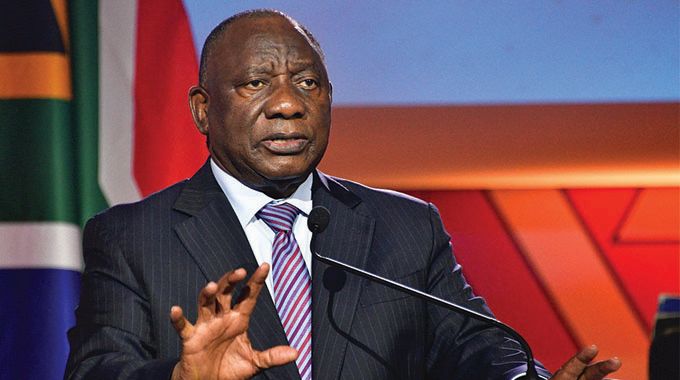
Thupeyo Muleya, Beitbridge Bureau
SOUTH Africa has dismissed claims that foreign nationals have until 30 June to leave the country, saying no such government directive exists and reaffirming that migrants’ rights are protected under the Constitution and international law.
The clarification comes amid a fresh wave of anti-migrant protests and vigilante attacks that have displaced thousands of foreign nationals, including Zimbabweans, in several parts of South Africa.
Groups such as the “March and March” movement have in recent weeks intensified campaigns against undocumented migrants, accusing them of straining public services and contributing to crime.
The violence and intimidation have forced many migrants to flee their homes, with some seeking refuge outside Department of Home Affairs offices while others have sought shelter in mountains and isolated areas to escape attacks.
The situation has triggered a humanitarian response from the Zimbabwean Government, which, with support from development partners including the International Organisation for Migration (IOM) and the United Nations Children’s Fund (UNICEF), has since the beginning of June repatriated hundreds of locals.
As of June 15, a total of 696 Zimbabweans had voluntarily returned home from South Africa, comprising 405 adults and 291 accompanied children. Most of those repatriated were displaced from the Western Cape, KwaZulu-Natal and Gauteng provinces, where anti-migrant protests have been most pronounced.
Authorities said the returnees opted to come home voluntarily as tensions escalated and concerns over their safety mounted.
The latest unrest has revived memories of previous xenophobic attacks in South Africa, which over the years have claimed lives, destroyed businesses and strained diplomatic relations with neighbouring countries whose citizens live and work in Africa’s most industrialised economy.
Seeking to contain the diplomatic fallout, South African President Cyril Ramaphosa recently announced that he would dispatch special envoys across Africa and globally to explain his government’s position and engage affected countries.
President Ramaphosa made the remarks during a Press conference following talks with Kenyan President William Ruto during the latter’s official visit to Pretoria.
Speaking during a high-level briefing on migration and regional cooperation last Friday, South Africa’s Home Affairs Director-General Dr Tommy Makhode sought to allay fears among migrants, insisting that the reported 30 June deadline was not government policy.
“The 30 June date you are hearing is not a government position. Our Constitution and immigration laws protect the rights of everyone inside South Africa, whether you are a citizen or a migrant. Law enforcement must be done in a humane way and in line with global and United Nations conventions,” he said.
Dr Makhode said South Africa understood the economic and social factors that drive migration and was working closely with countries in the Southern African Development Community (SADC) to develop lasting solutions.
“An inter-ministerial team has been set up to deal with migration policy issues. The team coordinates with governments in SADC to manage both regular and irregular migration,” he said.
Dr Makhode acknowledged the historical contribution of migrants to South Africa’s development but stressed that migration should always take place within the framework of the law.
“South Africa was built by the sweat of migrants before and after apartheid. Migrants work in farms, mines, shops and many sectors, but migration must always be lawful. That is how we protect jobs, wages and services for everyone,” said Dr Makhode.
He noted that about 45 percent of South Africa’s economic activities are linked to trade and cooperation with other African countries, making peaceful coexistence essential.
“Because of this link, vigilantism and hate will not be tolerated,” he said.
Dr Makhode also announced plans to move refugee reception centres closer to ports of entry to make it easier for asylum seekers to lodge applications and have them processed without travelling deep into the country.
He emphasised that immigration laws can only be enforced by authorised State institutions and not vigilante groups.
“South Africans have the right to protest, but protests must be peaceful and within the confines of the law. The National Joint Operational and Intelligence Structure team is on top of the situation,” he said.
Dr Makhode said Government policy is guided by the 2019 National Action Plan to Combat Racism, Racial Discrimination, Xenophobia and Related Intolerance.
He added that South Africa had also adopted International Labour Organisation protocols to address labour migration and unfair labour practices.
Rejecting claims that foreign migrants are responsible for the country’s socio-economic challenges, Dr Makhode said issues such as unemployment, poverty and inadequate public services are complex and require long-term interventions.
“In some cases, citizen journalists are using old or fake videos to create anger. Real media must rise above this and report the truth,” he said.
Dr Makhode said labour inspectors were increasingly being deployed to address unfair labour practices. He warned that employers violating labour laws would face prosecution, regardless of whether they employed locals or foreign nationals.
Dr Makhode also stressed that access to basic services such as healthcare and education should never be denied on the basis of migration status.
“Turning away a child from school or a sick person from hospital is inhumane. Our government is principled. We believe in engagement with fellow African governments to resolve issues, not in hate,” he said.
“We encourage people to respect immigration and other laws in the region. At the same time, the rights of locals and migrants are protected by the Constitution.”



This is just empty rhetoric Sir! The truth is on the ground. Just look at what is unfolding in KZN and other places. It’s going to be worse, come June 30. What will government do that it cannot do now? This is not about foreigners straining social services and committing crime in the country. This is deep seated hatred of fellow Africans by black people in South Africa and the government cannot use laws and legislation to change one’s deep rooted feeling of hate. In fact those in government share the same feeling but are only forced by the dictates of the world order to pronounce statements of tolerance and human respect like what Ramaphosa and his lieutenants are doing. The world knows that their promises are empty. They cannot fool anyone. The SA government is in cahoots with its citizens to ill treat so-called foreign migrants. While the SA media is making a faked stance of claiming that only illegal migrants are targeted, the vigilante groups are making it very clear that they are targeting non South African black people illegally there or not, not whites by the way. The question that begs an answer is how is it possible that an African becomes a foreign migrant in Africa?