Online Reporter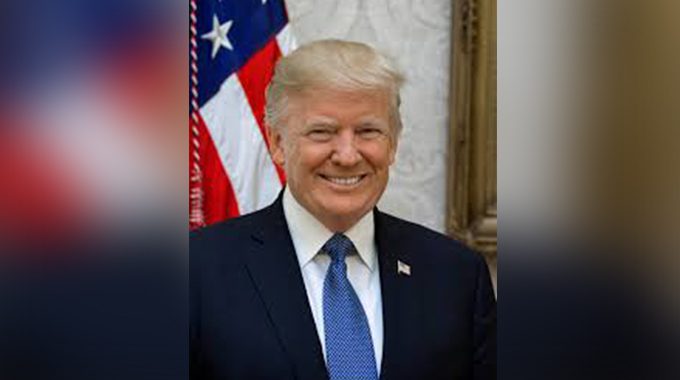
Tichaona Zindoga, Correspondent
The recent imposition of sanctions on South Africa by the United States of America’s President Donald Trump shook the world.
This was not just because of the rash manner in which the measures were promulgated in an Executive Order, but also due to the fact that the country — the continent’s biggest economy and democracy — was hardly a fathomable target to begin with.
Things change, though, especially with Donald Trump. As the past few weeks have shown he is capable of treating friend and foe alike, seen in the imposition of tariffs on basically all countries, strangely beginning with close allies and neighbours, Canada and Mexico. Now, with further drastic, if erratic, actions on a range of issues many countries are gravely concerned.
However, one significant phenomenon to watch as the Trump 2.0 unfolds, is how the US leader applies the use of America’s “long arm jurisdiction”, which in part explains sanctions on South Africa, and how many similar actions will follow, likely including renewal of sanctions on Zimbabwe, which may take place within the next 60 days or so.
Understanding America’s long arm jurisdiction
Two years ago, in February 2023, the Chinese publication, Xinhua, published an in-depth treatise titled, “The US Willful Practice of Long-arm Jurisdiction and its Perils”.

It explained that the United States has a long-standing practice of exerting frequent long-arm jurisdiction over other countries, including both its allies and countries with which it has hostile or strained relations.
In recent years, the practice has kept expanding in scope, with US “arms” stretching longer and longer.
“According to US domestic law,” the paper explains, “long-arm jurisdiction refers to jurisdiction over persons or entities domiciled or resident outside the territory of the sanctioning state.”
In international law, the exercise of a country’s jurisdiction over an extraterritorial person or entity generally requires that the person or entity or its conduct has a real and sufficient connection to that country, but the US exercises long-arm jurisdiction on the basis of the “minimum contacts” rule, constantly lowering the threshold for application. Even the flimsiest connection with the United States, such as having a branch in the United States, using US dollar for clearing or other financial services, or using the US mail system, constitutes “minimum contacts.”
To exercise long-arm jurisdiction, the United States has further developed the “effects doctrine,” meaning that jurisdiction may be exercised whenever an act occurring abroad produces “effects” in the United States, regardless of whether the actor has US citizenship or residency, and regardless of whether the act complies with the law of the place where it occurred.
America has also been expanding the scope of its long-arm jurisdiction to exert disproportionate and unwarranted jurisdiction over extraterritorial persons or entities, enforcing US domestic laws on extraterritorial non-US persons or entities, and wantonly penalizing or threatening foreign companies by exploiting their reliance on dollar-denominated businesses, the US market or US technologies.
“In essence, long-arm jurisdiction is an arbitrary judicial practice, wielded by the US government on the strength of its national power and financial hegemony, to enforce extraterritorial jurisdiction over entities and individuals of other countries on the ground of its domestic law,” the paper explains.
The superpower, the President and the sanctions
The United States is considered the only “sanctions superpower” in the world, with thousands of people on its books — and the number keeps on increasing at an alarming pace. In 2021 it is said that, according to the Treasury Sanctions Review, the number of active US sanctions designations had increased to more than 9 400. As of last year the number stood at 17 000.
The use of long-arm jurisdiction allows the US to abuse unilateral sanctions, force other extraterritorial and third party entities (like banks) and individuals to enforce the sanctions. At the centre of this is the President himself.
“The President decides on most of the economic sanctions, and Congress participates through legislative activities under specific circumstances,” the above-stated treatise explains.
At the heart of sanctions enforcement is the Office of Foreign Assets Control (OFAC), an agency under Treasury responsible for freezing assets subject to US jurisdiction, formulating and adjusting lists of sanctioned individuals and entities, and reviewing and issuing licenses.
The Department of State’s Office of Economic Sanctions Policy and Implementation (SPI) is responsible for developing and implementing foreign policy-related sanctions. The Bureau of Industry and Security (BIS), an agency of the Department of Commerce, administers separate lists from the OFAC. On top of these, the US government bolsters its sanctions enforcement through control of SWIFT and CHIPS, two major cross-border payment and clearing systems, by pressing them, when it deems necessary, to cut off contact with the financial institutions of the subject country to achieve the purpose of economic sanctions.
This has been the case with Zimbabwe. Although formal sanctions were passed by Congress on December 21, 2001 — dubbed the Zimbabwe Democracy and Economic Recovery Act (Zidera), a series of Executive Orders have since 2003 been signed and renewed by successive US Presidents, including Trump during his first term.
Last year, the US terminated the Executive Order 13288, essentially “ending” sanctions promulgated under three executive orders, but then imposed a new set of sanctions on President Mnangagwa and his wife, the First Lady Auxillia Mnangagwa, businesspeople and security services under a new rubric of the so-called Global Magnitsky Program.
As a result of the Global Magnitsky sanctions, all property and interests in property of the designated persons described above that are in the United States or in the possession or control of US persons are blocked and must be reported to OFAC. In addition, any entities that are owned, directly or indirectly, individually or in the aggregate, 50 percent or more by one or more blocked persons are also blocked.
Unless authorised by a general or specific license issued by OFAC, or exempt, OFAC’s regulations generally prohibit all transactions by US persons or within (or transiting) the United States that involve any property or interests in property of designated or otherwise blocked persons.
The key feature of these new sanctions are that they are as unilateral and coercive as any, and essentially accuse people of wrongdoing — including alleged corruption and human rights abuses — without those targeted people ever standing to question or challenge those designations. Not least, the use of sanctions — otherwise known as unilateral coercive measures — has been condemned by the United Nations and the international community at large.
It is highly unlikely, though, that the US will abandon their use, including in Zimbabwe’s case; so we all have to brace for it.
The case of ICC and beyond
Trump wields enormous power; and he has shown us he is willing to use it, most of the time in a destructive and self-serving manner. This has not just been witnessed in the international affairs space but also domestically.
On the international stage, the carnage continues: the case of the International Criminal Court, which Trump placed under sanctions recently for seeking to arrest Israeli officials for war crimes and crimes against humanity in the Gaza war, is instructive.
A repeat of 2021, sanctions on ICC is part of the US using long arm jurisdiction to undermine the purposes and functions of various international governance mechanisms. More may yet follow, including on regional and international blocs that Trump may not like, including the BRICS bloc and its bodies, following on the US leader’s threats against the bloc prospectively adopting a currency to replace the US dollar as the international settlement and reserve currency.
The response of various international actors to oppose and put in place strong counter-measures will be crucial.
Zindoga is the Director of Ruzivo Media & Resource Centre, a local think tank that analyses global and local issues.