admin
admin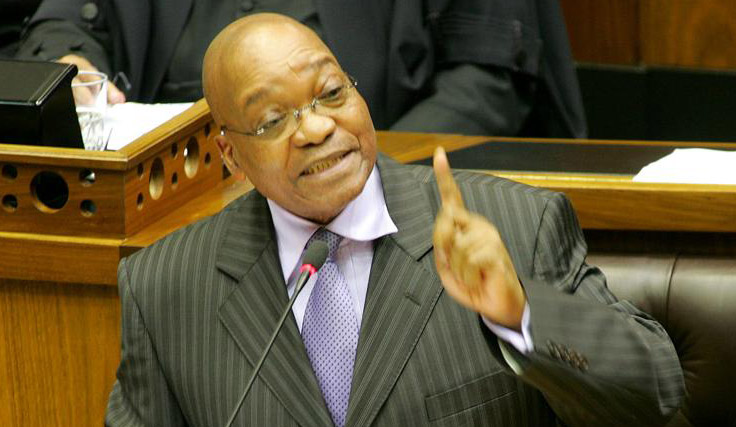
Tens of thousands of South Africans yesterday headed to the polls to vote in the country’s fifth democratic election since the end of apartheid.Electoral officials said yesterday that most polling stations across the country opened on time in a general election that is expected to see the African National Congress (ANC) party retain power.
Around 29 parties featuring on the national ballot will jostle for the votes of some 25 million South Africans registered to participate in the polls. Yesterday’s elections marked 20 years since South Africa’s first democratic election following almost five decades of apartheid rule.
“We’re generally seeing a youth that is still quite disillusioned by the current political landscape in South Africa,” Lauren Tracey, from the Institute for Security Studies, told Al Jazeera’s Haru Mutasa.
“They don’t feel as if their vote is going to make a difference.”
Arriving just after 6AM yesterday to vote at the Ohlange High School in the township Inanda, on the outskirts of Durban, where Nelson Mandela himself cast his ballot in 1994, Shandu Thabisile, said she was nervous to vote.
“I came here to vote because this is where Mandela voted all those years ago,” Thabisile said.
Another first-time voter Mbali Mduli, 18, said: “I am here to cast my vote and try to make a difference. It is exciting.”
Local radio stations reported that polling stations in Johannesburg, Cape Town, had also opened on time.
About 29 parties featuring on the national ballot vied for the votes of 25 million South Africans registered to participate in the polls.
Though a lot of emphasis has fallen on the sentiments of the “born frees”, or young South Africans born in a free South Africa after 1994, only a third of youth between the ages of 18-20 have registered to vote.
In spite of the social media campaigns, the applications on mobile devices, political parties failed to convince the young to participate, the ANCYL spokesperson said.
But analysts say political scandals and slow rate of service delivery have made South Africans very cynical about the democratic process.
One voter, Sithembiso Ngcobo, 21, said that his generation were disconnected from the struggle against apartheid and did not understand the value of voting.
Meanwhile, a group of former government ministers and members of civil society created a movement to influence citizens not to vote for the ANC.
The prominent team made of Zapiro, Nozizwe Madlala-Routledge, argue that the ANC has lost its way as a liberation party.
The ANC and its President Jacob Zuma has been dogged by allegations of corruption, mismanagement and for presiding over slowing economy over the past five years.
Protests against poor service delivery in the townships have also increased under Zuma’s tenure. Critics say that the Zuma administration has become self-centred and defensive.
In April, the Public Protector found that “Zuma and his family unduly benefited from the upgrades” to his private home, adding that the president should pay back a portion of the cost.
Despite the criticism, most polls suggest that the ANC is set to win at least 60 percent of the vote, while the main opposition, the Democratic Alliance (DA), is unlikely to attain more than 20 percent.
But the ANC encouraged voters not to boycott the polls, citing the sacrifices of those who fought for democracy.
“For us, the right to vote is a coveted prize that was earned under difficult and painful circumstances,” the ruling party said.
Nearly 2,000 military personnel assisted police in ensuring security during the election.
Observers are keenly waiting to see if the Economic Freedom Fighters (EFF) party’s brazen popularity on the ground will translate into votes.
Polling stations were due to close at 9pm local time. The IEC have seven days to declare the results.
In Cape Town a confident Western Cape ANC leader Marius Fransman says his party will “definitely” take the province in yesterday’s election.
“I can safely say now, we will, in this election, be trashing the Democratic Alliance in the rural communities . . . in the black communities, and you’re going to have a big split vote in the coloured communities,” he said.
“And we believe, with that, we will definitely take the Western Cape this time around.”
Casting his vote at the Dutch Reformed Church in Kuils River, he, nevertheless, admitted his party was in a “real fight” with the DA to wrest control of the Western Cape.
“Look, it’s always a daunting task. The ANC has never outright won the Western Cape, however, in 2004 we came in at 46 percent.”
Fransman, who arrived at the voting station in a Mercedes Benz and wearing a gold-coloured Madiba shirt, said he had earlier been up at the Electoral Commission of Western Cape operations centre.
Asked what he thought of the early morning turnout, he responded: “It is quite clear we’re seeing lower turnouts in coloured communities.”
However, in the townships there were long queues, he said.
“We’re quite excited,” Fransman said.
“I don’t like to put a prediction on this but this is a real fight. We believe the mechanisms are in place to make sure that the DA loses power after this election.”
Economic Freedom Fighters leader Julius Malema said yesterday that the ANC’s ongoing “lobbying for votes” was a clear sign it was desperate for votes and ignorant of IEC election rules.
This after a group of ANC members were seen allegedly distributing T-shirts 10 hours after campaigning had closed.
Addressing media after voting yesterday, Malema said the ANC was desperate.
“You are scared and you are buying people with T-shirts . . . they don’t eat T-shirts. We’re very proud that we are able to vote for Economic Freedom Fighters for the first time and that becomes our journey for the rest of our lives.”
Malema also praised the Electoral Commission, saying if what he had seen in his home town reflected what was happening nationally, the EFF was happy.
“We are very happy . . . the queues are moving smoothly and inside the process becomes the shortest process ever. We hope for the best . . . if elections are conducted like this all over South Africa, we can indeed say we welcome any results and accept them.”
Malema arrived at Mponelegeng with his grandmother Sara Malema accompanied by bodyguards.
He joined the queue stretching less than 100m and chatted to a small group of people.
Unlike when he was in the ANC, Malema did not jump the queue this time, saying he was trying to reverse the “culture” practised by the ANC.
“There is no need for us to jump the queue, we belong to these people, if they queue we must queue, seeing each other reminding each other of old stories.”
Malema said the run-up to the election was difficult and exciting, as his detractors had written him off.
“Many people are disappointed…they thought Julius Malema is history, but Julius Malema is a new chapter to be read by all South Africans…we’re here to stay in South African politics.
Malema started the EFF after being expelled from the ANC for misconduct and bringing the organisation into disrepute.
Meanwhile, Archbishop Emeritus Desmond Tutu said as he cast his vote in Cape Town yesterday South Africans must be thankful they can vote peacefully.
“I’m thinking of Ukraine. I’m thinking of South Sudan, you know, all of those things happening there,” he said while shuffling into Milnerton High School with his wife Leah.
“We can vote and [it’s] relatively peaceful, isn’t it? Wonderful! Wonderful!”
Tutu, dressed warmly, used a wooden cane to support him as he walked past a long line of families waiting patiently in the sun.
Ever his charming self, he took off his black beret for photos, thanked those he was walking past and even chatted briefly with some members of the public.
A woman was overheard saying to her husband: “What a moment. How cool is that,” as he got a cellphone picture of Tutu in the school hall.
Tutu slowly and painfully negotiated the wooden stairs leading down to the election officials and handed over his smart card ID.
A throng of cameras and television cameras bathed the couple in stark light. Leah commented that she couldn’t see because the lights were so bright.
They were both led to their voting booths and the media maintained a respectful distance.
Tutu emerged from the booth a few minutes later and placed his ballots in the provincial and national boxes.
“There we go. Whoopee!” he said, pumping his fist in the air. People were imprisoned. People suffered. So we mustn’t waste it. We must keep remembering we got this at a very great price.”
A journalist asked which party he had voted for.
Tutu let out one of his trademark high-pitched squeals and quipped that the journalist thought himself to be very smart.
“My vote is my secret,” Tutu replied.
Not discouraged, the journalist then asked how his vote compared to the 1994 general elections.
Tutu smiled and said: “I am 20 years older.” — Sapa



 derick.khumalo