Online Reporter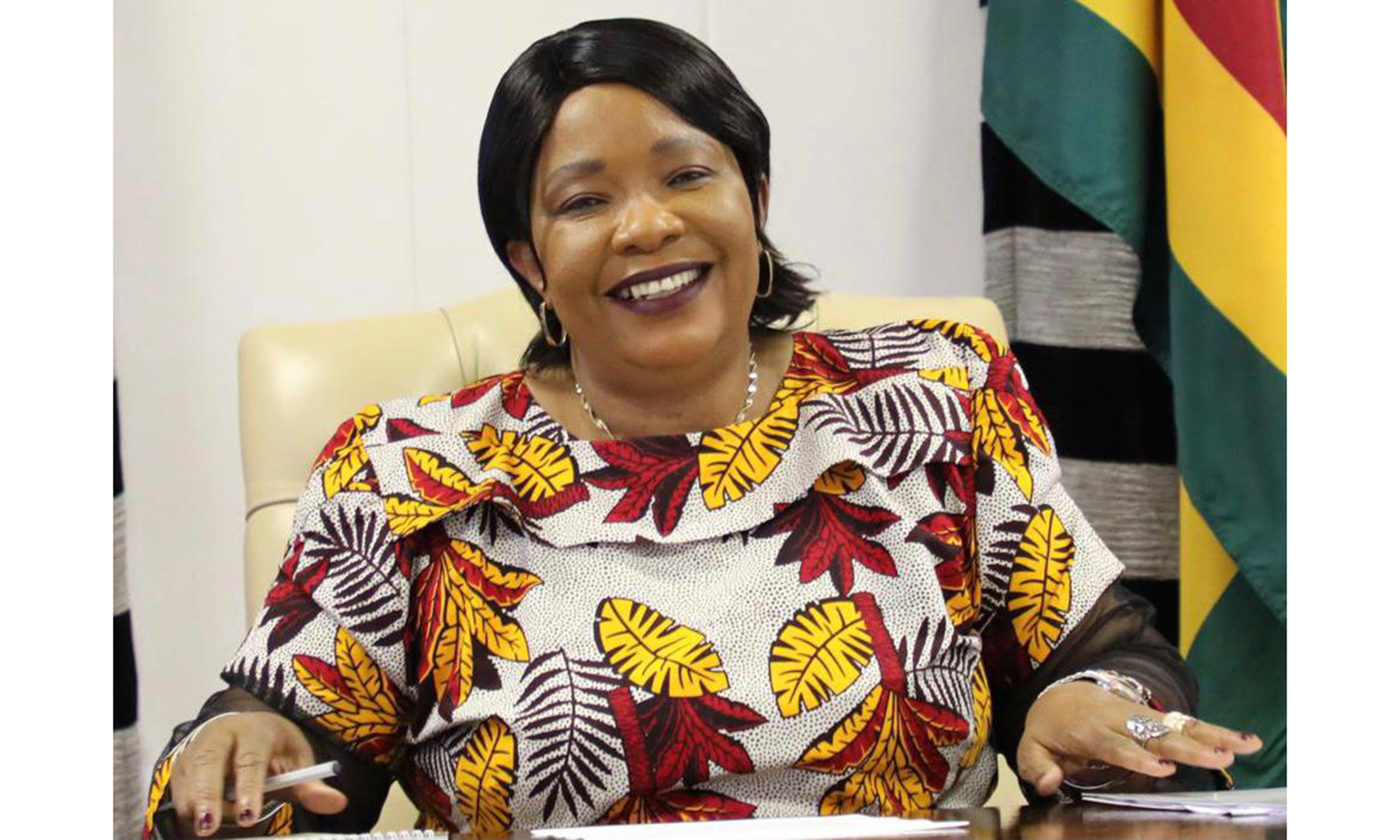
Blessings Chidakwa
Herald Reporter
THE First Lady Dr Auxillia Mnangagwa yesterday met a high-level delegation from South Korea, which expressed a strong commitment to partnering with Zimbabwe through her Angel of Hope Foundation on key developmental initiatives.
The delegation, which comprised South Korean Members of Parliament, paid a visit to Dr Mnangagwa at her offices and pledged support in several transformative sectors championed by the First Lady, including women empowerment, healthcare, environmental protection, tourism and education.
Led by South Korea’s Deputy Speaker of Parliament, Joo Ho-young, the delegation praised Dr Mnangagwa for her deep passion and tireless efforts to uplift the lives of Zimbabweans, especially the most vulnerable.
During the meeting, the delegation explored practical areas of cooperation, such as establishing a paediatric hospital in Zimbabwe to treat children with cerebral conditions and implementing medical exchange programmes to enhance the skills of local doctors.
They also expressed interest in supporting Dr Mnangagwa’s gastronomy and cultural tourism initiatives, which have gained international recognition, including by the United Nations and also invited her to Korea to showcase Zimbabwean traditional cuisines.
The engagement marked a significant step in strengthening bilateral relations between Zimbabwe and South Korea, rooted in people-centred development and shared values.
As a beacon of cultural excellence, the Culture and Heritage Ambassador said Zimbabwe and Korea should have several cultural exchange programmes.
“My office encourages culture; we should know who we are and what we eat. South Korea, you are also so much into culture and we should have exchange programmes on that. In Zimbabwe, we have our traditional foods we eat and should bring them to Korea.
“We have Agriculture for Women programmes termed Agric4She, where we want to see how much women can do for their families. It is the one that has driven us to have gastronomy now recognised by the United Nations. Gastronomy started in Zimbabwe and is now rotating to all countries,” she said.
Dr Mnangagwa also said she would be very happy to know what women in Korea do in terms of looking after their families and to have exchange programmes on women empowerment.
“If we empower a woman, there is stability both at family level and the country at large, so women should be given an opportunity to thrive through economic and social empowerment,” she said.
Tourism patron Dr Mnangagwa urged more Koreans to visit Zimbabwe and explore the richness the country has, including the world heritage site, Victoria Falls.
“In tourism, I invite you to come to Zimbabwe to see what we have, actually, it is quite a lot. We also want collaboration in that area through visiting each other’s countries. Come to Zimbabwe; you will like it,” she said.
“I have a foundation, Angel of Hope Foundation, working with all the people, especially helping the less privileged. Among what Angel of Hope Foundation is doing is taking women to school regardless of age, so that they are literate. We teach them to run small businesses to sustain their families and also financial discipline.”
Dr Mnangagwa said Angel of Hope is working with the Zimbabwe Open University in assisting the education of women, which has benefited thousands of women countrywide.
Environment Ambassador Dr Mnangagwa, who is always spearheading vigorous awareness campaigns against deforestation, said there should be more exchange programmes on forestry between Zimbabwe and Korea.
“As you know, we survive on trees for medicines. So we need to look at issues of degradation to protect that a lot. We are now planting trees in no-man’s land to protect our environment so that even our animals can survive. Our lives cannot do without these animals.
“So we need to educate our people on how important the environment is,” she said.
Health Ambassador Dr Mnangagwa said the improvement of the country’s health sector is at the core of her heart.
“As the Health Ambassador, I educate people on wellness and how to look after themselves, starting with women as custodians of families at home. I also give awareness through health in sports so that when one visits health facilities, they will recover quickly.
“I encourage everyone to know their health status, although starting with women on issues such as cancer screening. We also look after the disabled,” she said.
First Lady Dr Mnangagwa said in all areas of cooperation, including business, trade and mining, there should be growth of the two countries together.
“We want to strengthen all areas of cooperation for the benefit of the two countries. We welcome what Korea is doing in the education sector, science, and technology to boost our economy,” she said.
The Deputy Speaker said Zimbabwe is a “very beautiful” country, which many Koreans are becoming fond of, paying glowing tribute to the First Lady for having a commitment and a keen interest in seeing Zimbabwe improve.
“We discussed areas of agricultural cooperation, women’s empowerment, tourism, the medical sector, as well as forestry. We explored opportunities for mutual cooperation and have agreed to further our dialogue and expand our cooperation in these areas.
“Dr Mnangagwa is very keen on women empowerment, tourism, health, agriculture and environmental issues,” he said.
The Deputy Speaker Mr Ho-young said Korea boasts one of the best medical sectors in the world and is willing to share expertise with Zimbabwe, such that their ratio for cancer treatment is much better than that of many countries.
“Cost of medical services is very affordable while services are efficient, such that several global leaders come to Korea for medical check-ups. Doctors from Zimbabwe can also come and do exchange programmes, as is being done with other nations.
“There are also doctors from Korea who are based in Zimbabwe and want to set up a paediatric hospital locally to treat children with cerebral conditions,” he said.
Korean Deputy Speaker Mr Ho-young said five years after their nation gained independence, they went through a war that devastated the country, but they managed to recover, hence sharing notes with developing countries.
“We want to share our experiences with developing countries like Zimbabwe. So when it comes to women’s issues, we had a patriarchal society where women were looked down upon, but now that has changed. We have seen an increase in women’s economic and social empowerment.
“Even in our national examinations, more women are succeeding,” he said.
The Deputy Speaker, Mr Ho-young also shared how his country has successfully embarked on a reforestation drive to replace trees that were destroyed by a fire last year.
“As for forestry, we used to cut down trees, and coupled with war, we almost became treeless, but we had to embark on massive reforestation. While our forests are green, we now have to do better in terms of management after a fire destroyed almost a province last year,” he said.
The delegation also expressed interest in supporting Dr Mnangagwa’s gastronomy and cultural tourism initiatives, which have gained international recognition.
“Regarding gastronomy, I am willing to find out about it and study more. Our Korean food was also limited to us, but when we exported it to other countries, we didn’t know that it would grow faster than we thought.
“Your former Minister of Sports, Kirsty Coventry now President of the International Olympic Committee can be used as a model to showcase your gastronomy. Even in Korea, at some point, our citizen was the UN Secretary-General and he was championing our culture,” he said.
Owing to Amai Mnangagwa’s sterling efforts in promoting women’s agricultural exploits through Agric4She initiatives, the Deputy Speaker said Korean and Zimbabwean women should have agricultural exchange programmes, adding that he has been an avid farmer since childhood.
Mr Ho-young said agriculture is vital in ensuring food self-sufficiency, both at family and national levels, expressing his interest in studying Zimbabwean food culture.
The Deputy Speaker Mr Ho-young indicated their intention to bring in the Korea Broadcasting Company to feature Zimbabwe’s tourism sites in some of their television programmes.
“In areas we usually visit and do our filming for Korean movies, our citizens tend to flock to them in numbers. So if we bring our broadcaster to do some of their shoots in Zimbabwe, we are sure a lot of Koreans will come,” he said.
The history of Zimbabwe and South Korea has been good since 1994, having celebrated 30 years of the establishment of diplomatic relations last year.