Ivan Zhakata
Check Point Desk
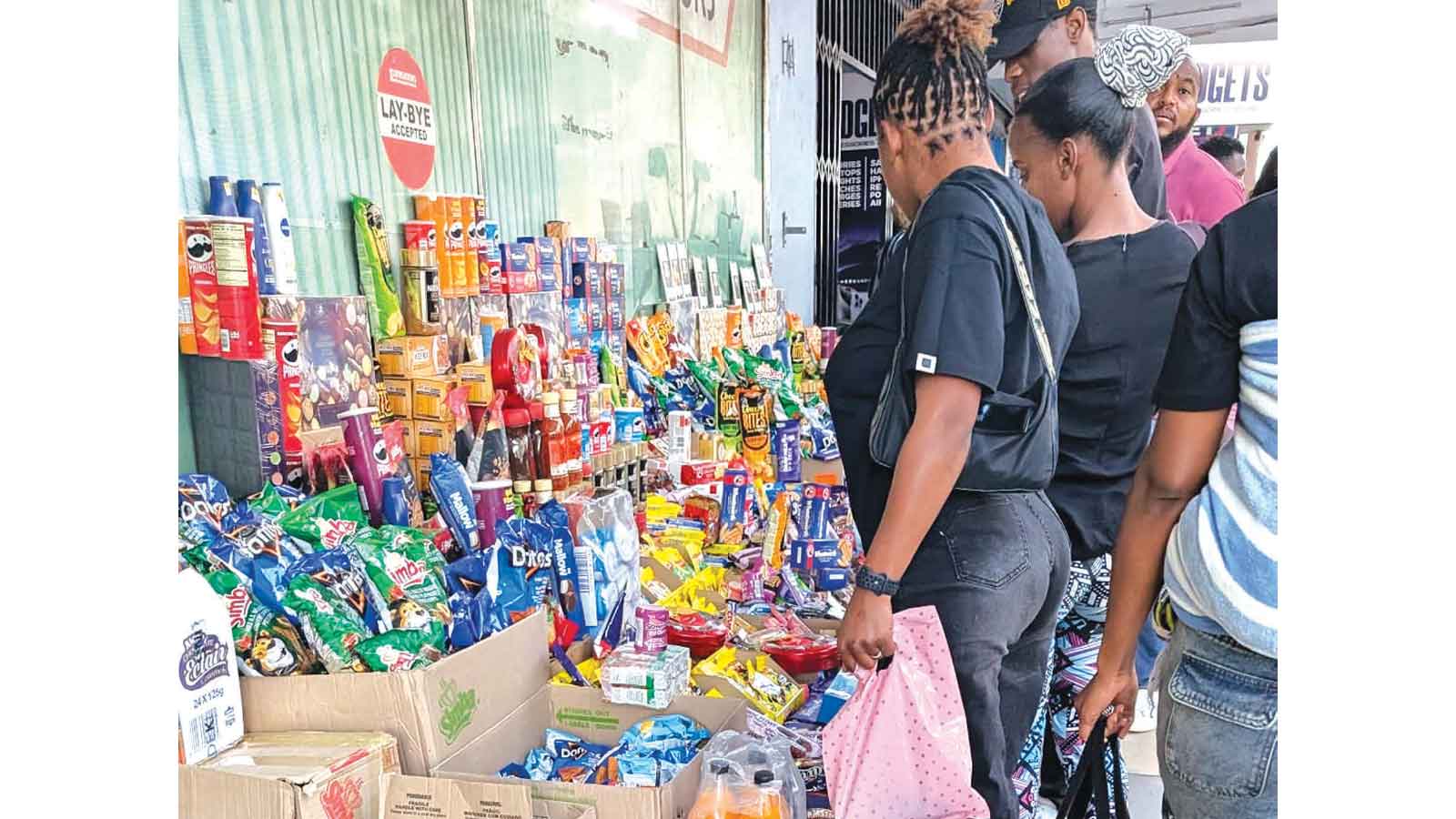
A network of illegal “space barons” has seized control of undesignated yet lucrative vending sites across Harare’s central business district (CBD).
They are systematically extorting desperate traders by demanding daily “stall fees” while operating outside the jurisdiction of the Harare City Council.
What was once an isolated phenomenon has since escalated to unprecedented levels.
An investigation by The Sunday Mail Society has revealed that prime areas — including the Copacabana Bus Terminus, the Gulf Complex and Market Square — have effectively become controlled territories.
Vendors working on these pavements reported being forced to pay unofficial fees of between US$1 and US$5 per day for the “right” to trade.
Failure to comply carries severe consequences.
Interviews with traders confirmed that those who refuse to pay risk confiscation of their goods, intimidation or being removed from the areas.
“These people come every morning to collect money. If you do not pay, you do not sell,” said John Katsiru, a vendor stationed near Copacabana.
A structured criminal hierarchy
The payments, however, form part of a highly structured system.
At the lowest level are enforcers — often overzealous young men — who collect cash and physically allocate selling spaces.
Above them are those who control some selected zones.
They oversee entire streets or blocks.
All of them report to the kingpins, shadowy figures who allegedly receive the bulk of the proceeds.
“They control everything here — where you sit, how you sell and even when you pack your bags,” explained Monica Matsveru, a trader operating near Market Square.
Prime spots are reserved exclusively for those who comply with the illegal fees, effectively rendering council authority almost non-existent on the ground.
Stanley Phiri, the national chairperson of the Association of Vendors in Zimbabwe (AVZ), expressed grave concern over the deteriorating situation, noting that vendors are increasingly subjected to harassment and extortion by space barons.
“We are deeply concerned about the continued harassment of vendors by individuals demanding illegal stall fees. Many of our members are being forced to pay just to operate and those who refuse are threatened or chased away,” Phiri said.
The proliferation of these syndicates, he said, is undermining order within the city centre and leaving vulnerable traders exposed to systemic abuse.
“This is not only illegal, but it also creates an environment of fear and uncertainty for vendors who are simply trying to earn an honest living. We urge local authorities to intervene urgently to restore order and ensure that vending spaces are properly and transparently regulated.”
Standard procedure
Under Harare City Council by-laws, vendors are required to operate from designated sites and pay prescribed municipal fees.
However, the authorities acknowledge that most vendors are reluctant to use official vending sites, which are intended to shield them from illegal practices and provide safety, as they consider them to be inconveniently located away from human
traffic.
Over the years, efforts to relocate traders to facilities such as the market near the Coke Corner (at the Seke Road and Dieppe Avenue intersection) have been in vain.
Instead, traders prefer undesignated, high-traffic city centre locations.
Some claim shortages of space at official markets like Mbare Musika have forced them onto the streets.
Operating from these undesignated points has created a vacuum that self-appointed “revenue collectors” exploit.
Disturbingly, some vendors claim collusion or selective enforcement, alleging that those who pay illegal fees are often tipped off ahead of municipal police raids.
“Sometimes they know when a raid is coming. Our colleagues just disappear and come back later,” said Patrick Kuonekera, a vendor who operates along Julius Nyerere Way.
Harare Residents Trust chairperson Precious Shumba warned that the problem of space barons extends far beyond the central business district (CBD), permeating the entire informal sector and council-run marketplaces.
“It is most pronounced among the vendors you see lined up on the streets in the CBD and in high-density residential areas,” he explained.
He believes the system is not merely opportunistic but “politically driven”.
He alleged collusion between council officials, the municipal police and space barons, claiming that some authorities actively facilitate the creation of vending spaces for personal gain.
The council, he added, must implement the Small to Medium Enterprises Policy, which mandates the local authority to organise the informal sector and require vendors to pay token fees directly to the City of Harare.
“The City of Harare should take the initiative to document all vendors using digital platforms to register them, issue identification numbers, facilitate payments and provide identity cards,” added Mr Shumba.
“Revenue generated from these fees should be directed towards constructing decent working spaces for vendors. This would improve market facilities and reduce the ongoing cat-and-mouse confrontations with the municipal police. Currently, vendors are victims of poor market management by the City of Harare.”
Harare City Council spokesperson Stanley Gama condemned the racketeering.
“It is illegal and criminal. The City of Harare will take appropriate action to eradicate this menace. We will not tolerate chaos and lawlessness, and we urge residents to report such cases.”
Yet urban development experts argue that the proliferation of these activities reflects deeper economic fractures.
With a significant number of people operating in the informal sector, the scramble for high-value trading zones has turned the CBD into a battleground for survival.
Women vendors, who make up the majority of the trading population, are particularly vulnerable to exploitation.
“As women, we suffer more because we are easily threatened. You just pay to avoid problems,” said Donna Gwerendende, a fruit vendor operating along First Street.
The rise of space barons raises alarming questions about governance and law enforcement in the capital.
As public spaces increasingly fall under the control of unregulated actors, analysts warn that failing to regularise the informal sector will only deepen exploitation.
For now, Harare’s pavements remain a contested landscape, where true authority lies not with those mandated to regulate the city, but with those who collect the rent.
SPACE BARONS TIGHTEN GRIP ON CITY PAVEMENTS