Chronicle Editor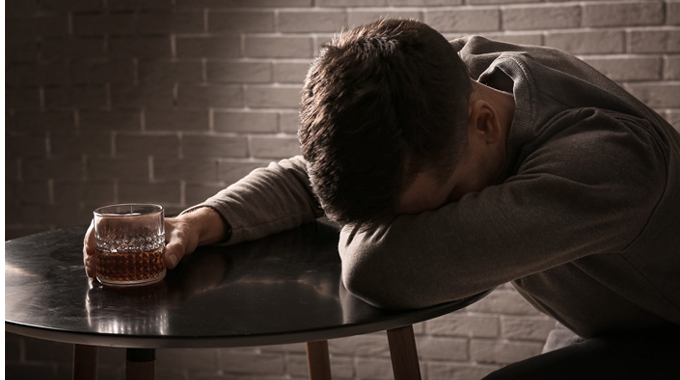
Bongani Ndlovu, Chronicle Reporter
LAST month the headmaster of Tennyson Hlabangana High School in Bulawayo committed suicide because the school system had failed him and that he had failed the school, according to a note he left.
Lwelizwe Edson Bhebhe (42) of Lobengula Extension suburb was found lying lifeless on the ground with a rope around his neck at his brother’s house in Magwegwe suburb. The rope Bhebhe used to hang himself may have snapped. The other piece of the rope had a suicide letter attached to it and police released part of its contents that stated that he had failed the school system and the school system failed him.
Just like that Bhebhe became a suicide statistic in the world, with no thought about what could have driven him to take his life.
There were no campaigns from the conventional media space or social media to raise awareness about a problem that is bedevilling society, the high number of men who are committing suicide.
According to last year’s World Health Organisation data on suicide, Zimbabwe has a suicide rate of 14 deaths per 100 thousand people. The male rate is at 20 percent while the rate is pegged at 8,8 percent for women. This has left Zimbabwe ranked 34th on a list of 182 countries, and the fifth in Africa, behind Lesotho, Eswatini, South Africa and Botswana.
More than 700 000 people die due to suicide every year and for every suicide there are many more people who attempt it.
There are many men in Zimbabwe and around the world who are suffering from some form of mental illness that leads to depression. Sometimes this depression is so severe that some men drown their sorrows in alcohol or a narcotic of their choice to numb their mind. Others pursue self-destructive behaviour such as, violence and suicide to escape or perhaps deal with the difficulties of life.
The few men who have come out to speak about their mental health issues, have been laughed at, ridiculed, called mad or crazy, or labelled sissies for being emotionally vulnerable.
Just like Bhebhe, no one will really know why men take such drastic measures as a cry for help to society. Some men, who spoke to Chronicle said they feel downcast and not prioritised by society even when they cry out for help. It was difficult to get men to open up and the two that did say it has been a difficult time as they cited infidelity and unemployment being the major causes of their depression.
One such Mr Dumisani Nare* said he tried to commit suicide thrice.
“As society men are a forgotten people. Society doesn’t care about us; we don’t have safe spaces where we can share our common sorrows. I was very much depressed and I tried to commit suicide three times until I got help. When we share with people that we are depressed they laugh at us and say we are losing our minds,” said Mr Nare.

“I tried to tell my family about what I was going through and they all didn’t understand or want to understand. It was only after my sibling heard some programme on Khulumani FM about depression and mental health that he took the contacts and that’s how I got help.”
Mr Nare said he felt robbed after he paid school fees for his girlfriend, and mother of his child, who in turn paid him back with infidelity.
“I paid school fees for my girlfriend; I was prepared to marry. She is the mother of my child and I thought I was helping set up a better future for us and have a stable home when we eventually marry. However, I caught her having sex in a car with some young man in the middle of the night. I was so disappointed. She was remorseless, unrepentant and she seemed not to care. That’s why I tried to commit suicide thrice, using pills,” said Mr Nare.
He said instead of finding comfort, he was the laughing stock of the family and had entertained thoughts of killing his girlfriend for what she had done.
“I wanted to hack her with a machete. That’s what came across my mind. That’s when my younger brother came to me with this suggestion of going to counselling. I tried it out and then I got help. The counsellor was a man and he appreciated the pain that I went through and what I was going through. He really took his time with me.
“I was the laughing stock in the family. They said she wasn’t my wife or woman and this deeply hurt me. I’m of the view that if you love someone you give them your all to elevate them so that you elevate both of you.”
Mr Nare said although he is no longer suicidal, he is not out of the woods yet.
Another man, Zenzo James* said when the Covid-19 pandemic set in he became unemployed and his wife started treating him like “trash.”
“Depression is real out there and I have experienced and continue to experience it. I’m married and have children. However, I lost my job during Covid-19. So, I’m unemployed and don’t get money to fend for my family. So, I feel down and useless as a man. It’s as if everyone is looking down at me,” said Mr James*.
“My wife doesn’t treat me well. I can see with her tendencies when we interact that she even treats me like a child. Even when one of my children comes home with food or money, they are treated better than me, even the portion of food being served I see a vast difference from what I used to get. But what can I do? I suffer in silence. I start thinking that if I was getting a steady income or employed, I could do these things myself without any problems.”
There was palpable pain in his voice and sorrow etched on his brow as he appeared to choose his words carefully.
Mr James said he harbours thoughts that his wife is cheating on him and if she was, he would not be surprised but would be hurt.
He said even being intimate with his wife is now a pipe dream.
“I don’t know the last time I had sex with my wife. How can she let you indulge when you haven’t brought food on the table?” he chuckled sardonically, seeming to find a twisted humour in his depressing suffering.
“I can’t get an erection because I am depressed. I feel like less of a man. It’s like I’m living with my sister and we sleep in the same bed. There’s no affection in the marriage. I have tried speaking to my wife telling her my feelings, but she just dismisses me saying go tell other people that.”
Mr James said his faith in God has kept him sane and he has never thought of taking his life.
He said there is a need for functional spaces for men to speak about their issues and ask for help in getting jobs.
“I can’t tell my friends what I am going through at home. My fear is that they will tell the whole world about my troubles and make me the laughing stock of the neighbourhood,” said Mr James.
“Men have been left out of many things especially those that are for income generation. It’s each man for himself when it comes to me and us fathers. No one is being helped and we suffer in silence. Some men can drown their sorrows and depression in alcohol, but it’s now expensive and they are drinking illicit alcohol that is dangerous for their health.”
Passionate about men’s depression, Mr Admond Ntini has been the bridge between depressed men and counselling services that have saved lives.
He said depression in a man is dangerous as they may lash out by perpetrating gender-based violence (GBV).
“The cases of gender-based violence are on the rise because safe spaces for men to detox are absent. Men aren’t protectors anymore. They have become perpetrators. During the Covid-19 GBV cases spiked because men weren’t working. There are no structures for them to turn to as they aren’t active,” said Mr Ntini.
“Within communities or at beerhalls, you find men sitting in groups or alone, drinking and thinking deeply.
“The moment he goes home he has this rage and beats up his spouse or girlfriend. He would have failed to find someone to speak to,” Mr Ntini said.
*Not real name


 Online Reporter