admin
admin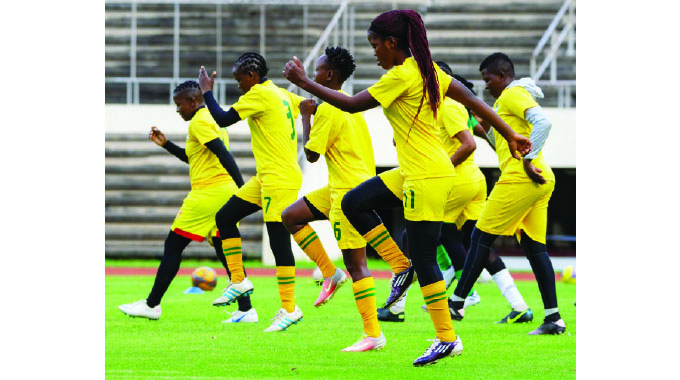
Grace Chingoma Senior Sports Reporter
AS women’s football globally and on the continent is growing and finally getting the attention it deserves, it hurts that the Zimbabwe women’s national team, the Mighty Warriors, are nowhere near the serving point.
A record crowd of 87 192 watched the women’s European Championship final on Sunday evening at Wembley in London as England brought home the Euro trophy following their 2-1 victory against eight-time winner Germany.
It is refreshing to note that the three highest attended matches in European football this year have been women’s games. This means more supporters and people are now embracing women’s football and appreciating it.
This can only give hope for the sport and the girl child.
Closer home, South Africa’s Banyana Banyana are basking in the glory of lifting their first Africa Women’s Cup of Nations title. Their Government and the corporate world are taking turns to reward the victorious team.
South Africa President Cyril Ramaphosa has promised that from now onwards the women’s national team will receive the same allowances as the men’s team Bafana Bafana while UNISA have also weighed in with educational scholarships for the history-making team.
Zambia are also celebrating their first World Cup qualification after they reached the AWCON semi-finals. Together with Morocco, Nigeria and South Africa they will be at the 2023 Women’s World Cup Australia/New Zealand.
However, all these positive developments from our rivals only worsen Zimbabwe’s plight. At one stage, the Mighty Warriors were above She-polopolo of Zambia in terms of performance. They would sometimes win contests against South Africa and sometimes lose, they were not far off the mark.
And South Africa cherished a competitive relationship with Zimbabwe and would often invite them for friendly matches ahead of major qualifiers. This relationship resulted in the two establishing an annual tournament, the Unity Cup which was hosted by Zimbabwe on December 22.
Sadly, our neighbours no longer regard us in the same manner and now prefer Botswana and Namibia instead of Zimbabwe.
Zimbabwe, together with South Africa, represented the continent at the Rio Olympics in 2016
But six years later, the Mighty Warriors are no longer featuring in the women’s football conversations in the region and the continent while South Africa have a trophy and a World Cup qualification to show, and Zambia, who were at the rescheduled Tokyo Games last year, improved on that performance with a World Cup qualification.
And the FIFA ban on international football has worsened the Mighty Warriors plight. The national team and their age-group teams, the Young Mighty Warriors, are inactive and not participating in regional tournaments such as the COSAFA Championships as well as the CAF Champions League qualifiers.
The huge strides being made by FIFA, CAF and UEFA should be lauded and football federations must also play their part in developing their products.
On the African continent, the Morocco Football Federation have flexed their muscles and invested in women’s football development. This is paying dividends and the team reached the AWCON finals for the first time and also qualified for the World Cup for the first time.
SAFA are also trying to promote the game that has also benefited from structures from clubs such as Mamelodi Sundowns that won the inaugural CAF Champions League and have over the years invested in the women’s team.
Former Mighty Warriors player Lilian Masase says it is unfortunate that the Mighty Warriors have waned at a time their rivals are shining and women’s football is being supported more than ever before.
“It is so sad for our country not to realise what is going on all over the world. What is happening with South Africa winning the AWCON Cup should be a wake-up call for us and start recognising girl child efforts and liken them to men.
“The Mighty Warriors have proved themselves by competing at the Olympics and delivered better than the Warriors.
“There is a need to set up a more professional league which in turn can help many players to secure contracts outside the country. Right now we can’t compete with South Africa and Zambia.
We used to play better football than Zambia but because of our ignorance of women’s football, we are now below Zambia.
“This belief that men’s teams bring better sponsorship than women is archaic because women’s football is now being recognised at the highest level. It’s high time we have a professional competitive league that must be marketed well.
“Right now we don’t have video footages of some of our good players in action. So how do we market these players really?
“It is my cry that women’s football gets the recognition it deserves.
“Look at Banyana Banyana coach (Desiree Ellis), she keeps getting CAF awards as the best coach, but I believe we also have good coaches here like Rose Mugadza and Sithetheliwe Sibanda but they are not noticed because their products are not visible due to lack of support just because they are with women’s teams and not men’s,” said Masase.



 Online Reporter