admin
admin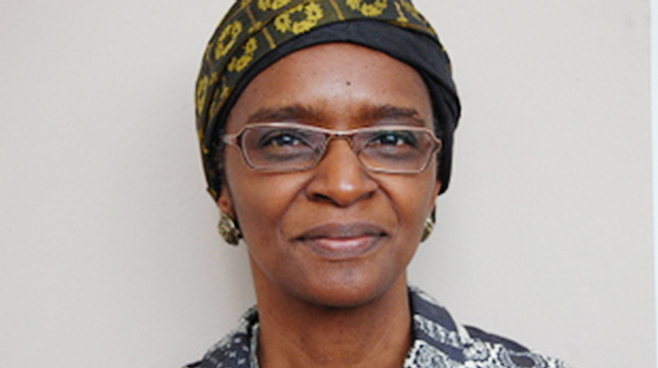
Ivan Zhakata Herald Correspondent
GOVERNMENT will soon establish a National Language Fund, administered by a Local Languages Board to promote indigenous languages which have been identified as a powerful vehicle of preserving the country’s culture, being and identity.
The fund and the board will be set up under a National Languages Policy to be implemented under the National Languages Act.
The country has 15 indigenous languages that are officially recognised and these are Chewa, Chibarwe, Kalanga, Koisan, Nambya, Ndau, Ndebele, Shangani, Shona, Sotho, Tonga, Tswana, Venda, Xhosa, including sign language.
In a statement during the commemoration of the UNESCO World Decade of Indigenous Languages Day, the Permanent Secretary in the Ministry of Youth, Sport, Arts and Recreation Dr Thokozile Chitepo said there was need to promote local languages as they were a vital cog in different communities.
“The Government of Zimbabwe recognises that language is a powerful vehicle of a people’s culture, being and identity. To this effect, the Constitution of Zimbabwe Amendment (N0.20) Act lists 15 indigenous languages.
“The National Languages Indaba held in Victoria Falls in June 2022 was a key mechanism for giving effect to the language provisions of the Constitution of Zimbabwe Amendment (N0.20) Act.
“The magnitude and import of such a critical resource as language and the effect that it has on nation-building, cannot be left to chance.”
Dr Chitepo said based on the mantra, ‘Nyika inovakwa neve vayo/ Ilizwe lakhiwa ngabaninibalo (a country is developed by its citizens),’ indigenous languages remained a vital cog and an indispensable heritage for inclusive access to quality basic services across all the sectors of society to ensure increased production, productivity and inclusivity.
She said the National Languages Indaba sought to promote, preserve and develop all the officially recognised languages of Zimbabwe, including those that were yet to be officially recognised.
“All these efforts are in a bid to attain parity and inclusivity. Government will be developing a National Languages Policy and a National Languages Act with the attendant National Languages Board and National Languages Fund.
“These are essential frameworks for the development of indigenous languages and increasing their functional space in high-function domains. Government established the National Languages Advisory Committee (NALAC) with the intention of re-defining the role of Zimbabwe’s Indigenous Languages in achieving an upper middle-income society by 2030,” Dr Chitepo said.
She said Government was working with NALAC and in line with African Academy of Languages (ACALAN) to develop and promote African languages.
“Government is planning to celebrate ACALAN’s declared African Languages Week from 24 to 30 January 2023 whose theme will be “African Languages for Sustainable Food, Cultural, Socio-Economic Development for the Africa we Want”, Dr Chitepo said.
“In Zimbabwe to date, the National Languages Institute domiciled at the Midlands State University (MSU) already offers translation services, terminology development, lexicography activities, brailing services, orthography development, literature development, speech therapy, sign language services, language technology and language instruction courses as critical exercises of fulfilling its mandate.
“The above activities are a true reflection of the Second Republic’s high regard for Indigenous Languages in nation-building and greater social cohesion.”



 Online Reporter