admin
admin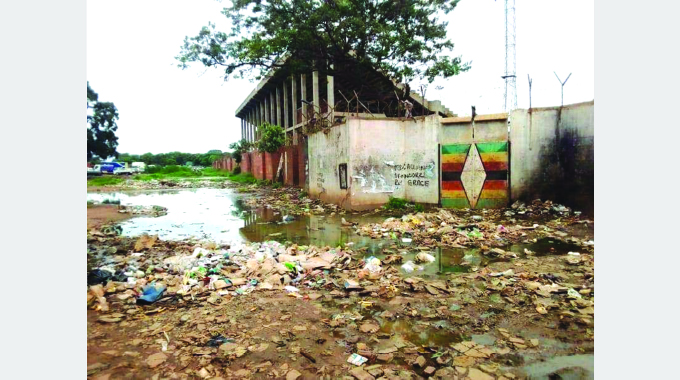
Blessings Chidakwa Municipal Reporter
The year 2022 will go down memory lane in the history of Harare as a thorn in the flesh for ratepayers.
So appalling were the living standards in the capital city which has been run down by the opposition led council in its successive forms.
Harare is the capital city! It should have been given the attention it deserved in terms of service delivery, as it is the face of the country.
But with the CCC in charge of the municipality affairs, it proved that it lacks the capacity and intellectual acumen to restore the city to the status they found it in.
Refuse collection
Contrary to the ambitious vision of becoming a world-class city in two years’ time, Harare City Council spent the better part of the year struggling to collect garbage on regular intervals, leading to the mushrooming of illegal dumpsites in various places.
The CCC turned Harare into a filthy, stinking, eyesore city! These are probably the humblest words to describe how the town now looks.
Refuse has been piling up in most parts of the once “Sunshine City”, including the Central Business District, at a very worrying rate with litter dumped on street corners, open spaces and in sacred places like graveyards and at churches.
Even at local authority’s backyard at the Remembrance Drive offices in Mbare, there was an illegal dumpsite, a clear sign the opposition is incapacitated to run the affairs of the city.
Despite the millions splashed on workshops by the councillors and officials, the city at one point admitted to failing to secure a mere US$1 000 to repair some of its broken-down refuse trucks.
The CCC councillor Enock Mupamawonde revealed that only eight refuse trucks were working out of 61 the city had.
Interestingly, top notch vehicles for senior management were always on the road and in case of any breakdown, they were fixed within hours.
Of course, for obvious reasons, the bosses’ vehicles had to be on the road to make them travel safely to destinations they know best — workshops — splashing ratepayers’ money on trinkets.
Some furious residents had to resort to dumping waste at council offices in various parts of the city.
In March, Hatfield residents in protest of non-refuse collection dumped waste at their District Council offices, which spent weeks uncollected, with officials going about with their business unfazed.
At Kamfinsa Shopping Centre in Greendale, ironically two men wearing orange council overalls were also spotted offloading two bins at an illegal dumpsite.
Also, the rubbish was being burnt, posing serious health and environmental hazards.
When the council officials resorted to dumping litter on illegal dumpsites, it became clear that no one was going to stop the madness in the city.
High density areas were the worst affected, as residents were financially hamstrung to hire private garbage collectors, forcing many to resort to dumping garbage at illegal dumpsites which posed a serious health threat.
A bus terminus in Warren Park 1 was turned into a dumpsite due to the local authority’s failure to collect refuse.
The terminus situated at a place commonly known as “Pabhawa” became an eyesore due to a heap of garbage, with some of the litter strewn all over the place.
A railway line in Mufakose slowly turned into a dumpsite, raising fears that litter was going to distract the movement of the Zupco passenger train if the illegal dumping continued.
At the site, garbage was seen nearly spilling over onto the railway line around Mufakose 1 High School.
The dumped garbage stretched for about 20 metres with a high risk of expansion as fresh mounds of refuse continued to be dumped there.
Apart from residential areas, recreational spaces in Harare were also slowly turned into illegal dumpsites as the city council struggled to collect refuse in both residential and commercial areas.
Most recreational facilities have been neglected, resulting in people dumping garbage at the idle facilities, including stadiums, grounds, parks and sports clubs.
Many high-density suburbs such as Mbare, Mufakose, Dzivaresekwa and Mabvuku were eyesores as almost every recreational facility and street corner has been turned into an illegal dumpsite.
While Harare City officials have made it a daily song to complain over shortage of refuse trucks, they have for the past five years failed to account for 15 trucks they bought and are yet to be delivered.
In 2017, council bought refuse trucks from FAW which are reportedly still stuck in South Africa, amid allegations that the council failed to raise over US$2 million required for their delivery.
There are also conflicting figures on the money said to be required for delivery of the trucks, with the local authority claiming that US$3,3 million is needed, while the supplier insists US$2,4 million is all that is required.
The 15 trucks are part of the 30 compactors that were bought by the local authority from automotive manufacturer, FAW Group Corporation.
Water woes
Experiencing dry taps became more of a habit than an event. While water woes became common the loss of non-revenue water was also prevalent.
Like always the ratepayers bore the brunt of paying for the huge costs of water treatment chemicals. Little if any efforts were put to attend to pipe bursts or even to address the long-standing issue of replacing ageing water treatment pipes.
Harare’s major water treatment plant, Morton Jaffray, has a capacity of about 700 mega litres a day, but the city would produce an average of half that capacity.
The council attributed the challenge to a shortage of water treatment chemicals or the usual old story of routine maintenance at Morton Jaffray Water Works.
Residents were being forced to resort to unsafe water sources risking contracting water borne diseases.
Sewer bursts
As the popular saying goes, “failure to plan is planning to fail ” is a true statement befitting the City of Harare. For decades the opposition has failed to invest in its water and sewer reticulation systems.
If one wants to keep a secret, he or she must also hide it from self. Just like a secret, a sewer burst has no such, it manifests when people least expect it.
Eyesore, is what branded most suburbs, including high residential areas as Warren Park, Dzivarasekwa, Glen View, Budiriro, Mabvuku-Tafara, among others.
Like the previous year, less attention was taken to address issues of sewer bursts which continued to pose serious health hazards.
What irritated the most is that the perennial sewer bursts were recurring on the very same hotspots council officials would have fixed.
Administration
Power struggles also characterised the better part if not the rest of the year with the CCC and MDC-T tussling to take control of the Town House.
At some point the city was run on parallel structures with some councillors aligning themselves to MDC-T acting mayor Musarurwa Mutizwa while others fought in mayor Jacob Mafume’s corner.
Mr Mafume’s lack of identity was a cause for concern as he was elected under a PDP ticket, but claimed to be a CCC affiliate showing the calibre of confusion that characterised the helm.
Just like 2021, there was no change in leadership; it remained a city of ‘acting’ positions.
All the key posts were occupied by acting personnel who had nothing to offer rather than use the opportunity to fatten their pockets through attending numerous mere jaunts.
The acting positions started with the highest office of town clerk followed by the chamber secretary, directors of finance, housing, works as well as human and capital department.
At some point the councillors nearly exchanged blows as the newly elected CCC councillors wanted to smuggle an agenda of reconstituting council committees, in what has been described as clear disregard of the Urban Councils Act.
The Urban Councils Act stipulates that council committees are reconstituted after every general election or when a member ceases to be a councillor.
In this case, there was a by-election and newly elected councillors were supposed to be seconded to existing committees in line with the law.
Out of irrationality, ignorance or both the CCC members hatched a plan to make the local authority ungovernable through disregard of protocol and allegedly imposing their “friends” onto key posts.
Tempers flared in a meeting which was chaired by CCC councillor, Enock Mupamawonde, as fellow CCC councillors wanted the committees to be reconstituted.
The move was vehemently opposed by other councillors.
Anti-riot police and municipal police had to be called into the chambers as there was chaos, with the meeting having to eventually end prematurely around 1pm.
The CCC councillors wanted to impose councillors which they eventually later did, manifesting their party’s dictatorial tendencies.
According to well-placed sources, CCC councillors are already implementing their plan hatched at Sherwood Golf Course on April 6.
Deals
If there is one thing, of course bad one, the outgoing Harare councillors would be remembered for is to frustrate key national deals that were in the public interests.
Talk of national status Pomona deal and the Sakunda offer to upgrade Rufaro Stadium to a world class sporting facility.
The CCC councillors made sure that they blocked the deals, despite themselves having no solution to the facilities they had run down over the past two decades.
Harare expressed interest for an investor at Pomona dumpsite as it had no capacity to the area which became a health hazard to the city.
When a lucrative investor came and offered to make a modern dumpsite the CCC politicised the deal pulling all the shots to stop it all at the expense of ratepayers.
Government which was the guarantor had to intervene and steady progress is being witnessed at the site. The deal will see Harare getting electricity with some fed into the national grid for a profit.
As of the Rufaro deal, Sakunda Holdings offered to make the dilapidated stadium a world class facility, but like the norm the CCC blocked it.
Technocrats and some councillors toured similar projects, but at the end of the day the investor pulled off after suffering numerous frustrations.
Sadly, Rufaro Stadium remains in a sorry state up to today, with no plans to resuscitate it.



 Online Reporter