peter
peter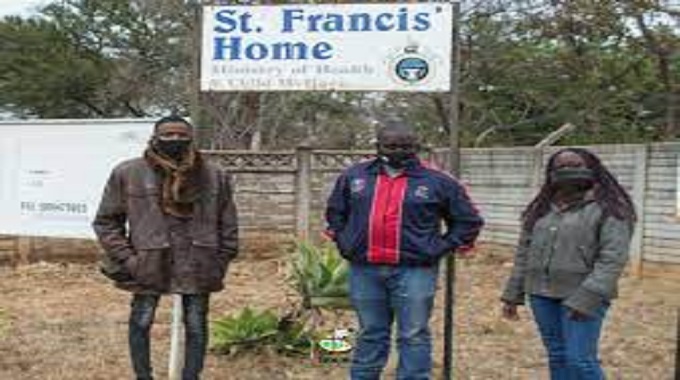
Robin Muchetu, Senior Reporter
ST Francis Home in Bulawayo has expressed concern over cases of parents who dump children born with severe to profound learning and physical disabilities at the institution, saying parents should take a leading role in the development of the children despite their disabilities.
Speaking to Sunday News during a tour of the premises, the public relations officer of Ingutsheni Psychiatric Hospital and St Francis Home, Matron Vongai Chimbindi, said it was disheartening to note that some parents do not even bother to check on their children once they have been admitted to the home.
She said even in cases where the children die, some parents do not come to claim the bodies, leading to the home carrying out pauper burials. The institution is home to 43 children with severe to profound learning and physical disabilities.
“During the festive season last year, only three out of 41 children were taken by their families for the holidays, a number that is miserably low for children who need a lot of care and support from their families. This is the sad reality of children committed to specialist homes like St Francis, the only one in Zimbabwe, where the level of their physical and mental disabilities makes parents and guardians turn their backs on them once they have secured a place at the institution. This situation has been attributed to parents exhibiting signs of shame, stigma, and discrimination over their children,” said Matron Chimbindi.
Authorities at the institution have emphasised on the need for awareness and education so that parents fully accept their children despite their disabilities. The home was opened in 1958 and was run by the Roman Catholic Church nuns before they eventually handed it over back to Ingutsheni Administration.
“We admit children between five and 16 years. We used to take under-fives but the facilities could not cater for the infants. Theoretically, when they are 16 years old, we are supposed to discharge children back to their families where they came from. We do tell the parents well in time that the child is ready for discharge at a certain date and they should come and fetch them. We also enquire if they will have made alternative arrangements for the child to be assimilated back home,” she said.
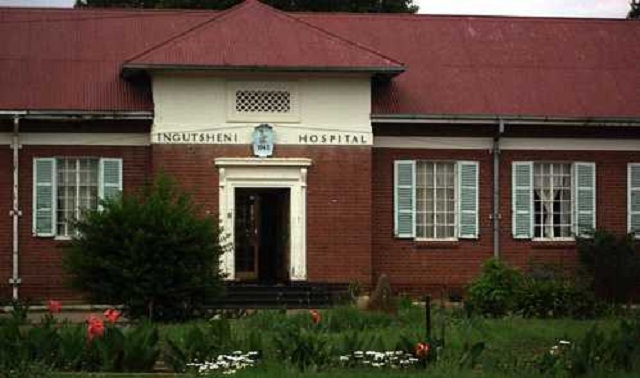
Matron Chimbindi said in a large number of cases parents have no alternative plan and the children end up being discharged to Ingutsheni Psychiatric Hospital which caters for adults with similar challenges when they turn 16 years of age.
“The social circumstances are that parents do not even acknowledge the existence of their children. They abandon them and we later hear that there is a father or mother somewhere or a stepmother. Generally, these children come with the same history, that there is ‘no one.’ I think people are scared that if they are known to be alive, we will call them to get their children when they turn 16 years old,” she said.
Matron Chimbindi said later in the child’s life, a handful of parents show up.
“We give leave of absence to the children where families get them and return them when they feel they are not coping in caring for the child. If you take your child for a day and you feel you need to bring them back on the same day, we allow that. Some go for a week or two or on holidays like Christmas. All we do is check if the child is well and get them back at the home,” she said.
However, Matron Chimbindi said there was a slight improvement in the number of children taken for visits by their families than in previous years.
“Now I can say the number (three) is better because over the years none would be taken for leave of absence to go and be with their families. In other instances, the parents come to visit but do not want to be known that they are the parents to the children which is rather heartbreaking that they do not acknowledge their children. Some go for good and never return and show up when a child dies,” said Matron Chimbindi.
She said the stigma around children with disabilities must be dealt with and more parents must visit their children who were admitted as it also assists the child’s rehabilitation. Matron Chimbindi said the home had a special school where the nuns used to teach admitted children.
“There are other homes that take in children with mild to moderate conditions up to those that can go to ordinary schools but in a special setup owing to their capabilities. However, ours is at the other end where children cannot do much for themselves, and at the same time, the learners do not sit for public examinations but get basic training as a form of stimulation,” she added.
Matron Chimbindi said children admitted to the home require diapers and other supplies. She said some of the stigma and discrimination was coming from families who would be blaming each other for the disability leading them to disown their children. — @NyembeziMu.


 Online Reporter