Online Reporter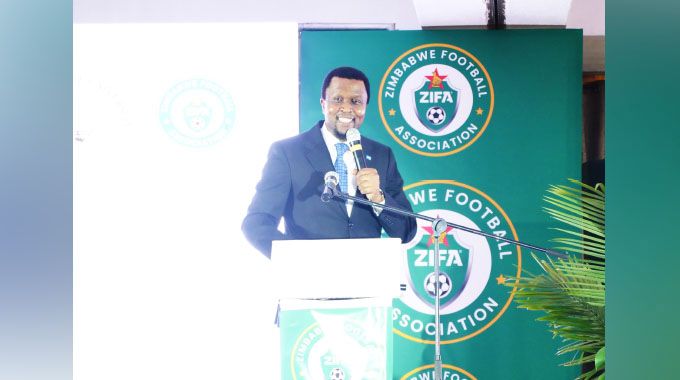
Blessing Malinganiza, Zimpapers Sports Hub
THE Midlands State University, Zifa and the International Centre for Sports Studies (CIES) officially launched the Fifa/CIES International Programme in Sports Management yesterday in a ground-breaking ceremony.
While the initiative has been hailed as a transformative step towards professionalising sports administration in Zimbabwe, the partners’ decision to limit the inaugural cohort to just 30 students has raised concerns among key stakeholders about access and wider impact.
The programme, part of the prestigious Fifa/CIES International University Network, aims to equip local professionals with world class expertise in sports management, governance and law. Representatives from across the sports spectrum expressed shared anxiety that the severely restricted intake could undermine the programme’s potential national influence. For Zifa, the limit presents a strategic dilemma.
“Our vision was to systematically train officials from all our provinces, including those working in youth and women’s football,” said a Zifa official, who requested anonymity. With only 30 seats, we cannot even cover our own administrative structures in one cycle. The professionalisation of football governance nationwide will now be a painfully slow process.”
Midlands State University administrators defended the cap as necessary for ensuring a high quality, resource intensive learning environment. However, they acknowledged the difficult trade offs.
“We anticipate hundreds of applications. Being forced to reject over 90 percent of qualified candidates is agonising,” said Thomas Marambanyika, the programme co-ordinator.
“We are turning away the very talent this industry desperately needs to modernise but it’s important to start with a strong manageable foundation,” said Marambanyika.
“30-seat limit is for the inaugural year, with future expansion under consideration,” he added.
The ripple effects extend far beyond football.
Other national sports federations, rugby and cricket among them, had hoped the programme would provide a steady pipeline of trained managers for their operations.
“We were eager to have all our staff joining. The sports fraternity is taking a real professional side. And I tell you all federations across the fraternities are interested. Now, with seats so scarce, we will likely miss,” said cycling representative, Elton Muchemwa.
“So, we worry that an output of only 30 graduates per year is mathematically insufficient to drive the widespread reform and professionalisation envisioned in their strategic plans,” said Muchemwa.
Potential solutions being informally discussed include introducing a staggered multi intake system per year, developing a tiered programme structure with a larger foundational course, or expanding digital delivery modules to increase access.
The programme is also designed to accommodate international students, with applications opening today for anyone wishing to be part of it.
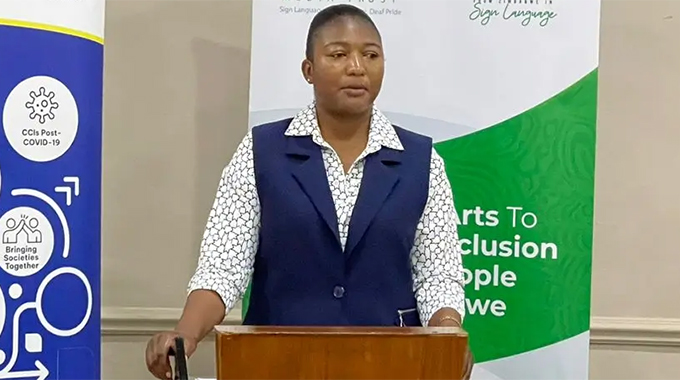
What remains unquestionable is the significance of this ground-breaking partnership. The event was attended by the Deputy Minister of Sport, Recreation, Arts and Culture, Emily Jesaya, who expressed her own interest in the programme and urged individuals under her Ministry to apply.


 Blessing Chizhande