Online Reporter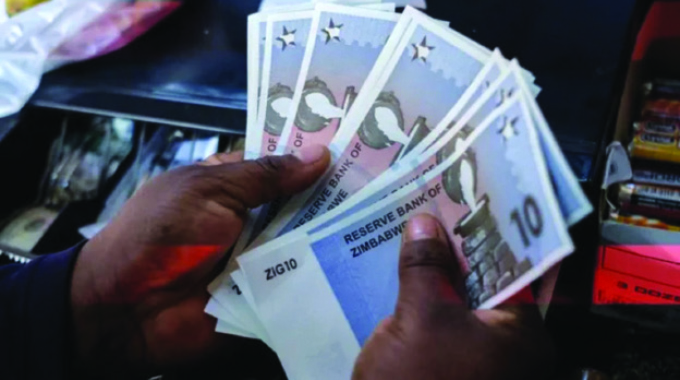
Jimmy Murwira
Zimbabwe is turning a vital corner in its economic journey.
For years, the country’s efforts to rebuild trust in its economy and domestic currency were undermined by inflation, debt distress and fiscal indiscipline.
But today, there is a growing consensus, both within and outside the country, that the foundations of macroeconomic stability are finally taking root.
A key signal of this progress came this week when the International Monetary Fund (IMF) acknowledged Zimbabwe’s ongoing reforms, especially the stability of its new currency, the Zimbabwe Gold (ZiG), and the Government’s efforts to entrench fiscal discipline and restructure unsustainable debt.
At the heart of these developments is a focused monetary and fiscal policy framework, led by the Second Republic under President Mnangagwa.
It is not just about stabilising inflation or strengthening the currency, although both are critical, but about rebuilding national credibility.
Zimbabwe has initiated tough, but necessary reforms that aim to bring order to public finances, deepen the foreign currency market and unlock new pathways for debt resolution and access to affordable international capital.
The ongoing dialogue between the Government of Zimbabwe and the IMF, particularly under the Staff Monitored Programme (SMP), is a clear indication of this new trajectory.
An SMP is not a loan programme; it does not come with direct financial support.
Instead, it is a trust-building exercise, one that allows a country to demonstrate that it can design and implement sound policies independently, in line with international best practices.
In other words, it is a credibility test, and Zimbabwe, by all appearances, is passing that test.
The IMF has noted that Zimbabwe is making “good progress” in key areas: stabilising the domestic currency, deepening the foreign exchange market and ensuring long-term fiscal discipline.
These steps are not abstract technical targets, but they have real and measurable impacts on ordinary Zimbabweans and on businesses that crave predictability, lower inflation and a functioning currency.
One of the major failings of previous eras in Zimbabwe’s economic history was the unchecked growth of government spending, often financed by printing money or excessive borrowing.
That model is no longer viable and the Second Republic has made it clear that it will not return to it.
Today’s approach is focused on staying within the country’s means, implementing transparent budgeting systems and identifying and managing fiscal risks before they become crises.
Fiscal discipline is also directly linked to restoring investor confidence.
When Government borrowing is under control and inflation remains stable, businesses can plan with greater certainty.
That means more investment, more job creation and faster economic growth.
The launch of the Zimbabwe Gold (ZiG) currency is arguably the boldest move in the Government’s monetary reform strategy.
Backed by gold reserves, ZiG is designed to anchor public confidence in a currency that retains real value.
The IMF has noted the currency’s month-on-month stability and the shrinking gap between the official and parallel market exchange rates — an important sign that markets are beginning to trust the currency.
But stability alone is not enough. For ZiG to truly succeed, it must become more widely used and accepted not only by businesses and the Government, but by the general population.
That requires consistent policy support, a functioning and competitive forex market and continued efforts to align the parallel market rate with the official one.
The goal is convergence not through artificial controls or currency depreciation, but through building confidence in the fundamentals of the economy.
Even as Zimbabwe scores progress on currency and fiscal reforms, the weight of historical debt still hangs over the economy.
With total public debt estimated at US$21 billion, of which US$12,3 billion is external, there is no avoiding the fact that debt arrears are blocking access to affordable international capital.
Zimbabwe is pursuing a structured arrears clearance and debt resolution strategy, working in partnership with the African Development Bank (AfDB) and under the facilitation of former Mozambican president Joaquim Chissano.
This process is not quick; it requires negotiation, good faith and most importantly, evidence that Zimbabwe is serious about reform.
That is where the SMP becomes vital again.
A successful review of the programme would provide the confidence signal that international creditors need to begin serious engagement on debt restructuring.
What do these reforms mean for ordinary citizens and businesses in Zimbabwe?
Quite a lot! Stabilising the currency and reducing inflation gives families the ability to plan their finances, preserve savings and regain trust in local banks.
For businesses, especially in manufacturing and agriculture, it means greater confidence to invest, expand production and create jobs.
Reports indicate that companies are already responding positively to the new environment, some increasing capacity utilisation and others expanding operations.
The clearer and more predictable economic outlook provided by the Second Republic’s reforms is turning uncertainty into opportunity.
No reform journey is without obstacles. The risks of slippage – whether in fiscal control, political will, or market disruptions – remain.
Maintaining policy consistency is essential.
The Government must continue to demonstrate that it is committed to transparency, prudent spending and sound monetary management.
Equally important is ensuring that the benefits of reform are shared across the population.
Stability without inclusivity risks creating a two-speed economy – where formal businesses thrive but ordinary citizens still struggle.
Therefore, social safety nets, job creation policies, and targeted infrastructure investment must go hand in hand with macroeconomic reforms.
The alignment between the Government’s fiscal strategies, the National Development Strategy 2 (NDS1 and NDS2), and Vision 2030 is encouraging.
The focus on transforming Zimbabwe into an upper-middle-income economy by 2030 will only be realised if the momentum on reforms is not only maintained but accelerated.
Zimbabwe stands at a pivotal moment.
After years of economic hardship, the country is finally seeing tangible progress in stabilising its currency, restoring fiscal order and rebuilding trust in its economic governance.
The Second Republic’s policy choices are showing results.
If the path of discipline, dialogue, and reform continues, Zimbabwe can move from economic recovery to sustainable growth.
With the support of development partners and the determination of its leadership, the dream of financial sovereignty, debt clearance and broad-based prosperity is no longer out of reach – it is within grasp.
The work is far from over, but for the first time in years, Zimbabwe’s future looks financially grounded, strategically thought-out and full of promise.