admin
admin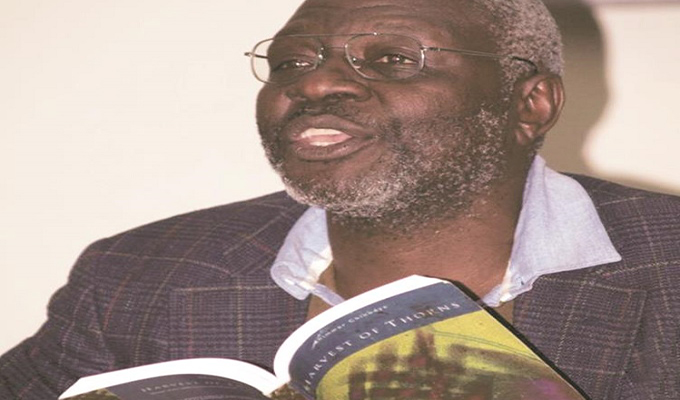
Charles Dube
THROUGH the white priest we briefly explored the theme of racism in the play. All this is evident when he talks to Benjamin, a student who bullies a newcomer to the school. Although such acts were prevalent at boarding schools, they remained “permissible” as long as you were not caught by the school authorities. The situation gets nasty for Benjamin as the white priest caught him red handed as shown last week.
The political situation is getting volatile when Benjamin is caught bullying a newcomer. The liberation war has already started and is having casualties. Black people are being arrested for aiding guerrillas fighting Ian Smith’s government. Guerrillas are derogatorily referred to as terrorists by Ian Smith’s regime. But, there is a voice crying out there mobilising black people to rise up against Ian Smith and his Rhodesia Front led government.
There is a strong black consciousness movement which is uniting people under the mantra or banner of “Everyone is a child of the soil.” They are engaged in demonstrations against the oppressive regime. These demonstrators are clamouring for “Black majority now. One man one vote”. We are reminded of a defiant voice from Ian Smith regarding the clarion call for independence by the black majority during the height of the struggle:
Ian Smith said, “Black majority rule? Not in a thousand years.” He underrated the power of the liberation forces with such a defiant utterance. Benjamin is being initiated to rebellion with these minor acts of resistance as we hear later that they teamed up with his colleagues and burnt a beer hall. Benjamin, though still young and going to school, he is conscious of what is taking place around him. People are at war and engage in sporadic strikes as a form of resistance to the government of the day, Ian Smith’s government.
Benjamin is in a heated state of mind hence he hears voices including those of accusation. Remember he heard his father, Clopas’s voice accusing him of crippling his brother for life and calling him a child of the devil. He regrets when he hears the church woman’s voice telling him: “Open your heart to the Lord, Benjamin.” This voice was telling him to calm down and ask for forgiveness from the Lord.
On the other hand, the white priest’s voice calls him a terrorist: “You little black savage terrorist!” This is how the white people viewed black people, black savages — brutes and radicals. Benjamin also feels guilty for terrorising his own black brother. Remember the words, “Bark, newcomer! Snarl!” He went to extremes to force the newcomer to do such acts. But Benjamin cannot take it anymore when he hears an anonymous voice chuckling saying to him:
“So you think you are a hero, eh, Benjamin? You’re just a puny schoolboy with a big little head. What is a hero, anyway? You want to fight everyone, your parents, your church, the bullies, the priests, the Almighty God, the system? Ha! Ha! Ha!” Benjamin cannot take all the mockery he hears from these words. He is a tiny schoolboy and in an antithesis he is told that he has a “big little head”. This could mean that he has a big head but with little knowledge, therefore stupid.
The anonymous voice is too much for Benjamin as he exclaims: “No! No! No! Nooooo!” Meanwhile, the war of liberation is spreading and as it escalates the colonial government of Rhodesia decided black school leavers had to be called to join their armed forces to fight against their brothers, the guerrillas. Male and female students did not take kindly to that and demonstrated, toi-toing holding up placards that said: “The black man is too hungry to hold a gun. Give us a vote first, we have nothing to defend. The boys in the bush are our brothers.”
As part of the demonstrators Benjamin bravely holds up a placard inscribed in bleeding red letters: “Death to Ian Douglas Smith”. This was open defiance to the regime by Benjamin. We can safely say he was prepared for any repercussions. A white policeman confronts the demonstrating students and asks them to sit down. In his address he gives students a strong tongue lashing calling them “bloody munts.” Munts is an insulting term used by whites on black Africans.
The white policeman adds that the students are ungrateful bastards, biting the hand that feeds them. Their ancestors did not know anything about progress and they built houses, churches, hospitals, schools for them. But the students want to remain cooks, garden boys and messengers forever. The policeman asks the students if the terrorist in the bush were their brothers stating that they should have got them locked up for aiding and abetting “terrorists”.
Benjamin is picked up for carrying a placard insulting the honourable prime minister of the republic of Rhodesia. He was also asked if he was the ring leader. But Benjamin waves his placard defiantly and says: “Pasi na Ian Smith!” meaning “Down with Ian Smith!” He was able supported by other students who joined the sloganeering. The next time we meet Benjamin he will be in a guerrilla training camp in Mozambique.
Book review: Harvest of Thorns Classic: A play by Shimmer Chinodya
For views link up with [email protected]/or sms to 0772113207.


 Online Reporter