

 admin
admin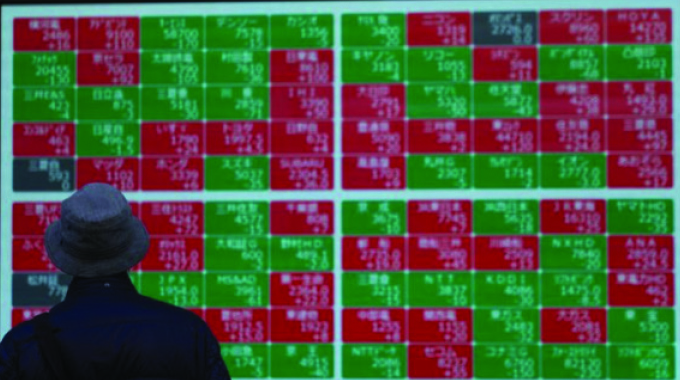
Stocks in Asia advanced along with US and European equity futures and the dollar slid ahead of commentary from Federal Reserve chair Jerome Powell later yesterday that may shape views on the central bank’s rate path.
A gauge of Asian shares rose as much as 0,8 percent, trimming losses from the biggest two-day drop in four months. S&P 500 and Nasdaq 100 contracts were in the green, while Euro Stoxx 50 futures made small gains.
Some of the strongest gains yesterday were in tech stocks listed in Hong Kong — providing a sharp contrast to the decline in US equities Monday. Baidu Inc. surged as much as 18 percent after affirming it will launch a ChatGPT-like bot in March.
The dollar weakened against all members of the Group of 10, while Treasuries clawed back some of the two-day rout that was sparked by traders ramping up bets on future Fed tightening.
The recent moves have taken the shine off the best start to a year for cross-asset returns since 1987.
Investors are weighing whether Powell may emphasise that optimism for rate cuts later in 2023 is probably misplaced. Atlanta Fed President Raphael Bostic said on Monday the strong jobs data on Friday raises the possibility that the central bank will need to increase interest rates to a higher peak than policy makers had previously expected.
Powell may reiterate some of the points he made even before the latest jobs report, which justified the Fed’s rate hikes last year, according to Jack McIntyre, a portfolio manager at Brandywine Global Investment Management.
“I expect that Powell will drive home that point that they’ve done a lot and there’ll be a tightening that is going to impact the economy later on this year,” he said on Bloomberg Television.
The Australian dollar extended its gain and bonds fell after the Reserve Bank of Australia raised its key rate to the highest in 10 years and said further hikes will be needed in the coming months to combat inflation. Australia’s benchmark stock index reversed course and fell 0,5 percent.
Australia’s yield curve may flatten as markets are “liable to overcompensate on tightening now” after underestimating the central bank’s willingness to stick to its inflation-targeting regime, according to Philip McNicholas, Asia sovereign strategist at Robeco Group in Singapore. “The market seemed to disavow RBA credibility as soon as it mentioned some concern over global growth weakness last year,” he said.
The yen gained after Japan unexpectedly reported nominal wages jumped in December by the biggest margin in almost 26 years, stoking market bets that the central bank will adjust or back away from its stimulus programme under a new governor.
Citigroup sees dollar strength as a key risk to the stock markets. “The view is very much that it’s going to be a difficult six to eight months for equity markets globally, not just in Asia,” Mohammed Apabhai, head of Asia-Pacific trading strategies at Citigroup, said on Bloomberg Television. “But if the dollar rallies back to anything more than what we are projecting, emerging market will get punished.”
In India, Adani Group’s stocks climbed, pausing a rout that began when US short-seller Hindenburg Research made fraud allegations against the conglomerate.
The group’s flagship Adani Enterprises extended gains to 20 percent in yesterday’s trading, as the Adani family’s move to prepay US$1,11 billion of borrowings allays some investor fears.
The air of caution in global markets is also being reinforced by geopolitical concerns. The US is preparing to impose a 200 percent tariff on Russian-made aluminum, while the US started to recover some parts from the Chinese balloon that a fighter jet shot down off the coast of South Carolina.
Biden administration officials said the US was still trying to figure out how much senior leaders in Beijing knew about the alleged spy mission.
Elsewhere, oil rose for a second session after Saudi Arabia unexpectedly raised its crude prices to Asia, signalling confidence in the demand outlook. Gold edged higher. — Bloomberg.


 Online Reporter