


 Online Reporter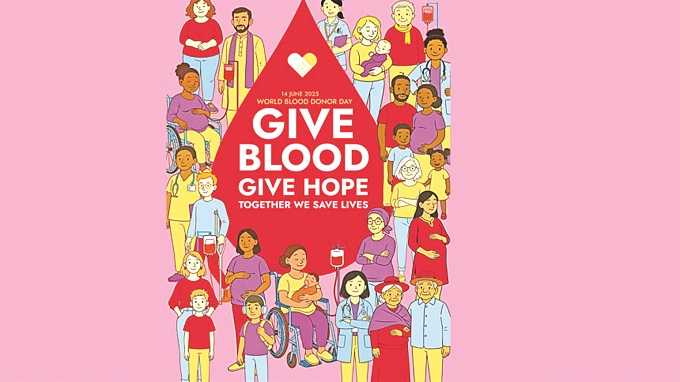
Vickie Maponga
ZIMBABWE commemorated World Blood Donor Day on June 14 under the theme “Give blood, give hope, together we save lives”.
We have a target this year of collecting 97 500 units, an increase from last year’s 88 430 units.
From January 1, 2025 to June 13, 2025, National Blood Service Zimbabwe (NBSZ) has collected 38 117 whole blood units, when the target was 50 700 units.
This is a 75 percent achievement in collections for the first half of 2025.
Blood donation rate
In 2024, three out of every 1 000 Zimbabweans donated blood, regardless of age.
This statistic underscores the need for increased awareness and participation in voluntary blood donation for Zimbabwe to achieve the World Health Organisation recommendation for each country to collect 10 units of blood for every 1 000 people.
In 2024, NBSZ collected 77 020 units of blood donated by 52 864 individuals, who did so voluntarily.
In 2025, to date, 35 583 blood donors have donated the 38 117 units. In 2024, a total of 52 864 individuals in Zimbabwe donated blood.
Based on population data from the Zimbabwe Population Census, the country’s population in 2024 was 16 634 373.
This translates to approximately 0,3 percent of the population contributing to the national blood supply in 2024.
Studies have been conducted to understand the factors that motivate and deter Zimbabweans from donating blood.
The findings reveal that altruism, the desire to help others, remains the strongest motivator.
Additionally, incentives, such as branded items and recognition programmes, have played a role in fostering a culture of regular donation.
However, there are challenges.
Misconceptions about blood donation are a challenge, including concerns over health risks; they have deterred potential donors.
Some individuals fear they may experience weakness or complications after donating.
Fear of needles, uncertainty and knowing their health status have discouraged many from donating blood.
These concerns often stem from misconceptions or anxiety about the process.
Blood donation drive
NBSZ is continuously working to encourage more people to donate blood voluntarily.
Through nationwide blood donation drives, engaging in social media campaigns and community outreach, NBSZ raises awareness on the importance of donating blood regularly.
Schools and workplaces play a key role, as NBSZ partners with them to create a culture of donation among learners and professionals.
To make the experience even more rewarding, some campaigns offer small incentives, like fuel coupons, T-shirts and shopping vouchers, ensuring donors feel appreciated for their life-saving contributions.
In addition, the Government and corporate partnerships help sustain these programmes and expand accessibility across the country.
Events like World Blood Donor Day serve as a moment to recognise and celebrate dedicated donors, inspiring more people to step forward and make a difference.
With these efforts, NBSZ remains committed to maintaining a safe and sufficient blood supply for Zimbabwe.
While we actively raise awareness and encourage participation, blood donation remains a voluntary act.
Donations by gender
Studies indicate that younger donors, particularly those under 40, contribute the majority of blood donations in the country.
However, donor retention remains a challenge, with a significant portion of first-time donors lapsing over time.
Factors such as cultural beliefs, health concerns and outreach strategies can influence gender dynamics in Zimbabwe.
Cost of blood
NBSZ uses a cost recovery model that takes into account all costs incurred in the activity chain, from collection to distribution of blood and blood products.
The processing costs are activity-based. They relate to the cost of collecting, testing, packaging, storing and distributing blood products.
Due to the different funding models adopted by countries, regional comparisons of the cost of blood are subjective due to different operating environments and funding options.
However, NBSZ strives to meet the demand for safe blood products, despite the many factors that determine adequacy.
Harnessing tech
New digital technologies offer powerful ways to drive donor loyalty and encourage regular blood donation.
Mobile applications can provide personalised reminders, track donation history and offer incentives, like achievement badges, to keep donors engaged.
Artificial intelligence (AI)-driven predictive analytics can help blood banks anticipate shortages and notify donors when their blood type is urgently needed.
Social media campaigns and virtual blood drives can create a sense of community, allowing donors to share their experiences and inspire others to participate.
Additionally, digital donor databases streamline the process by matching donors with recipients in real time, making donation more efficient and impactful.
By integrating these technologies, blood services can enhance donor engagement, foster long-term commitment and ensure a stable blood supply.
National blood policy
Zimbabwe has a national blood policy, which was originally published in May 1999 and revised in March 2010.
The NBSZ has the National Blood Service Zimbabwe Standards for Blood Donation, Processing and Clinical Transfusion in Zimbabwe.
This was published in June 2010 by the Ministry of Health and Child Care, together with the NBSZ.
Health professionals were then trained.
Screening and processing
Blood screening and processing in Zimbabwe follow strict safety protocols to ensure that all donated blood is safe for transfusion.
NBSZ adheres to international standards, including rigorous laboratory testing for infections such as HIV, Hepatitis B and C, and syphilis.
Once screened, the blood is processed into components, red blood cells, platelets and plasma, allowing hospitals to use the specific component needed for different medical conditions.
NBSZ also collects specific components of blood from a blood donor using a process called aphaeresis.
Storage is another critical aspect, with blood products kept under precisely controlled conditions to maintain their quality and effectiveness.
The Government has also played a role in ensuring accessibility, with public health centres providing blood and blood products free of charge since 2018 to all patients who will have been admitted and receive blood transfusion in all public health institutions.
Also, NBSZ recognises dedicated donors through its Blood Components Beneficiary Policy, which allows frequent donors to access free blood for themselves and their immediate family members if needed.
These measures ensure that Zimbabwe maintains a safe, reliable and accessible blood supply, supporting patients in need of life-saving transfusions.
Frequently transfused blood group
Hospitals are best positioned to give detailed patient-specific data because NBSZ does not deal directly with the patient.
However, blood group O is the one with the highest demand. Half of Zimbabwe’s population is in blood group O.
Support
The National AIDS Council (NAC) plays a vital role in enhancing blood availability, quality and safety by providing essential financial support.
To strengthen these efforts, we are actively engaging developmental partners to collaborate with us in sustaining and improving blood services across the country.
Recently, the World Health Organisation (WHO) contributed towards the successful organisation of World Blood Donor Day, demonstrating the impact of strategic partnerships in advancing blood donation awareness and accessibility.
By fostering these collaborations, we aim to ensure a consistent and safe blood supply for all patients in need of blood transfusion in all hospitals in Zimbabwe.
Vickie Maponga is the NBSZ spokesperson. She was speaking to Zimpapers’ Fact Check Editor Sifelani Tsiko.



 Online Reporter