Online Reporter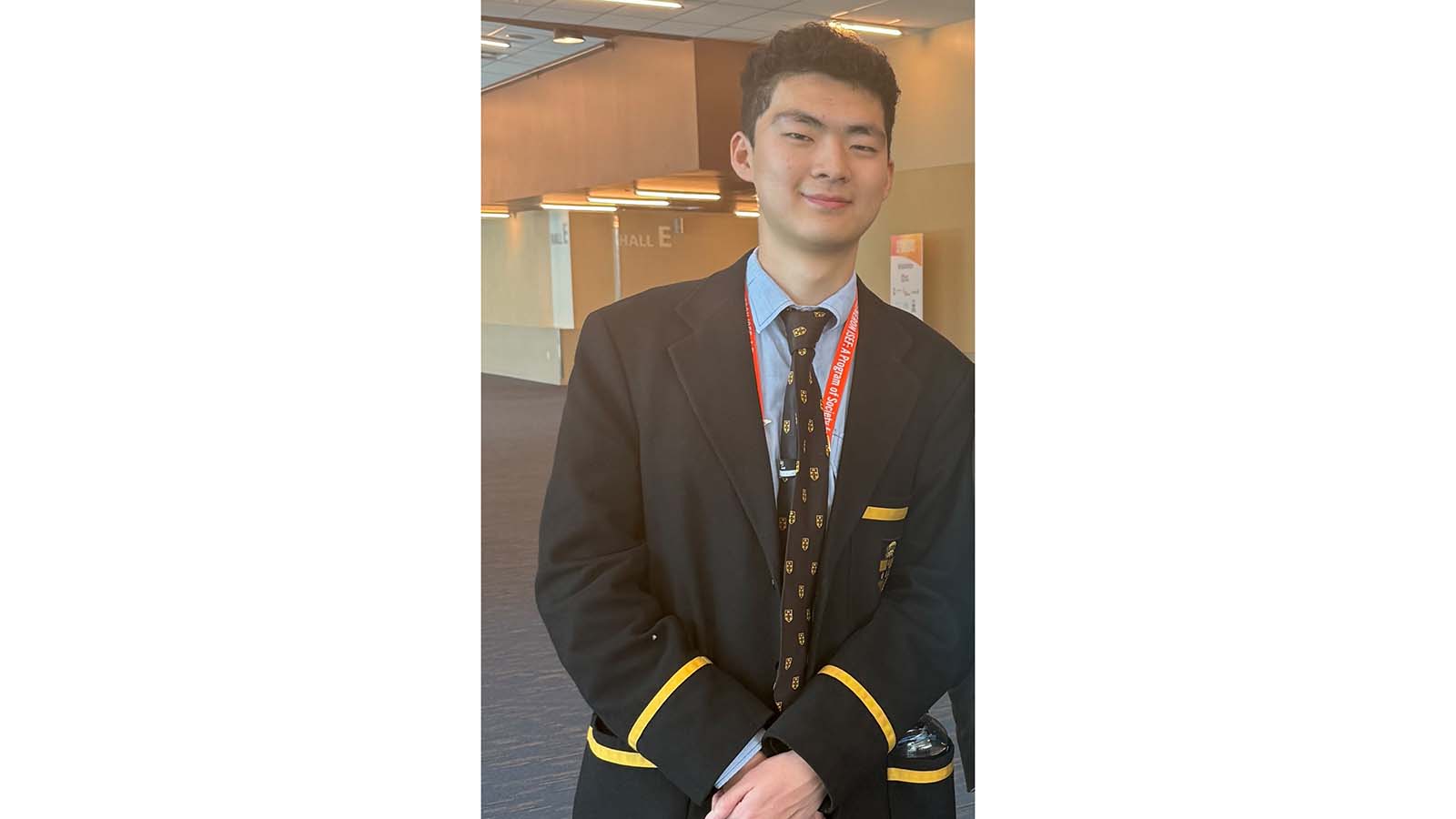
Sifelani Tsiko
Fact Check Editor
AN 18-year-old student with Zimbabwean roots, Nathanael Guo, has turned a classroom curiosity into an SMS-based referral tracking system to help advance low-cost healthcare delivery systems in rural areas.
Nathanael, a Sydney-based Zimbabwean student designed and built an SMS-based referral confirmation system after realising gaps in the referral flow system in Murehwa District.
“I got the idea to develop this referral system as part of my school project after I talked to a nurse working in Murehwa district in 2025,” he said.
“The nurse told me that referral visibility was a persistent operational problem in the rural healthcare delivery system. So I decided, why not come up with an SMS based system to help fill the gaps.”
He prepared a concept note in early 2026 and got it rolling in Murehwa district. The referral health system in most rural areas in Zimbabwe is often riddled with some hurdles. Once a referral is written and the patient leaves, the referring clinic may have no reliable way of knowing whether the patient reached the receiving facility, was delayed along the way, or did not make the journey at all.
Recognising this gap, Nathanael designed and built an SMS-based referral confirmation system. He conducted some tests from May this year in some rural clinics in Murehwa district, using locals and some healthcare professionals in the district. Then, by initially rolling out some tests at five facilities – Murehwa District Hospital and four clinics: Nyamutumbu, Kadzere, Madamombe and Murehwa Polyclinic, his pilot have since expanded to 14 participating facilities across the district.
Nathanael sought to close the loop with a structured SMS workflow system to enhance healthcare delivery and feedback. At its core, the system converts a one-way referral into a tracked event with a defined close. A referring clinic opens a referral by sending a structured SMS when a patient is sent on. When that patient presents at the receiving facility, a nurse replies by SMS, and the reply closes the referral.
“Where no confirmation returns within a set window, the referral is automatically flagged and a nurse begins structured follow-up: calling the patient’s mobile or a contact’s mobile, checking directly with the receiving facility, and sending an SMS to the patient,” Nathanael said.
The window is adjustable according to the severity of the case, so an urgent referral is escalated sooner than a routine one, he said.
Under this model, the district health office holds a district-level view of completion rates and flagged cases across all participating facilities.
“Before we started using the SMS system, referrals would disappear. We wouldn’t know what happened to patients after we referred them. Now with the structured SMS, every referral is tracked; if the receiving hospital doesn’t confirm, we call the patient. The district health office can now see the completion rates of referrals of all facilities,” said a nurse at Nyamutumbu Rural Clinic in Murehwa district.
The prototype system runs entirely on ordinary mobile handsets and requires no smartphone, no application and no internet connection at either end. SMS is delivered over the mobile network rather than a data connection, allowing the workflow to operate on the basic handsets staff already carry, with no new hardware to procure and no unfamiliar interface to learn.
“An application-based approach would have required reliable internet connectivity at both the referring and receiving ends, a condition that cannot be assumed across the district,” Nathanael said.
“A system dependent on internet connectivity can become unavailable during an outage, precisely when a referral may be hardest to trace.”
The system, though done on a small scale between May and August this year, has a great potential to be rolled out on a bigger scale in other districts.
Nathanael, through a network of locals and healthcare professionals in the district, tracked 822 referrals across the district. Of these, 769 were confirmed as arrivals at the receiving facility showing a completion rate of 93.6%. A referral counts as complete only when the receiving facility confirms that the patient arrived, rather than simply when an SMS is returned.
According to his research, the district records held no formal measure of referral completion before the pilot because no mechanism existed to record whether a referred patient reached the hospital. The figures therefore describe the system’s own performance rather than an improvement on a known baseline.
“A clinic that sends a patient on now learns whether that patient arrived, and where no confirmation is received, someone is tasked with finding out,” the student said.
“The change is one of visibility: diagnostic capacity, stock availability and transport in the district remain as they were, and the system was built to work within those constraints rather than to alter them.”
Zimbabwe has made significant progress in developing its healthcare system but still needs to further strengthen referral management, particularly in rural and resource-constrained communities where continuity of care can be difficult to monitor.
Nathanael said the use of practical, affordable digital technologies presents an opportunity to enhance accountability, improve healthcare management and strengthen service delivery without imposing significant additional costs on existing healthcare structures