


 tawandamusarurwa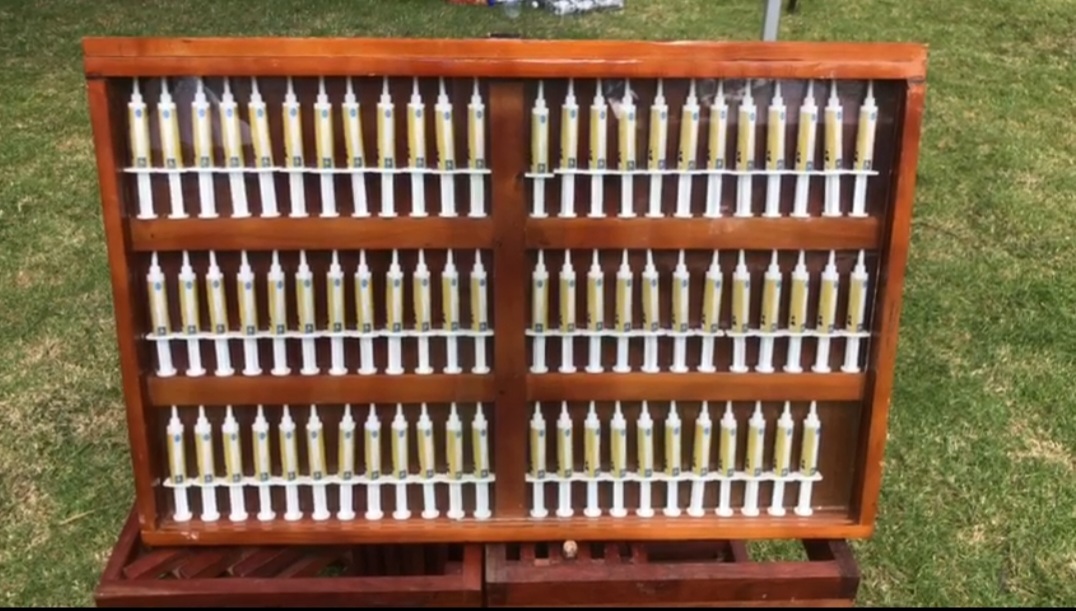
Youth Buzz
Delight Nyamande
A CHINHOYI University of Technology (CUT) PhD student’s innovative drug — which is made from medicinal plant extracts and can potentially treat mastitis — could be the solution the dairy industry is looking for to save cows from anti-microbial resistance.
Mastitis is a disease that causes severe inflammation of the mammary gland and udder tissue of dairy cattle.
It reduces yield and results in poor-quality milk.
However, the drug, named CUTMAST Lactating Cow Antimastitis Intrammamal Infusion, could reduce the frequent use of antibiotics, which normally lead cattle to develop resistance that affects milk production.

If approved, the drug might cut the import bill for antibiotics by 25 percent, making it affordable to rear healthier dairy cattle locally.
It will also be a breakthrough for smallholder dairy farmers, who have limited resources and less experience in using costly antibiotics.
Thirty-one-year-old Ms Tinotenda Kaseke, who developed the drug, participated at the inaugural Presidential Innovation Fair last week. The event — which was organised by the Ministry of Higher and Tertiary Education, Innovation, Science and Technology Development — provided students and institutions with a platform to exhibit their innovations and products.
“Anti-microbial resistance reduces effectiveness of the drug in livestock and people, and makes the whole health process expensive. The current management regime has made use of synthetic antibiotics, which has many drawbacks,” Ms Kaseke told The Sunday Mail.
“The problem of using antibiotics is that the drugs have a withdrawal period of two weeks, meaning the production for two weeks will not contribute to commercial returns.”
The drug is, however, designed to reduce the withdrawal or waiting period.
“Traditionally, these diseases have been treated using natural remedies, so we went on to profile some of these medicinal plants that are known to have anti-bacterial activity.
“We tested them against causative agents of mastitis and we saw them working in the laboratory.”
Being the daughter of subsistence farmers, Ms Kaseke had tuition fees for her first degree at CUT funded by proceeds from farming.
This background nurtured her keen interest to pursue studies related to animal science.
She, therefore, chose to study biotechnology.
She then proceeded to attain a Master’s degree in Advanced Microbiology through the Vice Chancellor’s scholarship award.
Due to her sheer determination, she scooped the “Women Innovator Award”, which saw the Ministry of Higher and Tertiary Education, Innovation, Science and Technology Development granting her a scholarship to study for a PhD.
“There is a vast range of plants that we have that can benefit us but have not been explored, thereby neglecting the benefits they can provide us. This herbal drug’s components come from making use of anti-bacterial activities . . .
“The drug has anti-inflammatory properties because, if the animal is affected by mastitis, it will be inflamed. Therefore, the two main components focus on reducing inflammation for the cow to be milked and to also clear the bacteria that causes the infection,” she added.
Proud to come up with home-grown solutions to local problems, as is being encouraged by the Government, Ms Kaseke said they are currently taking the herbal drug through trials to ensure it meets the required standards laid by regulatory authorities.
Her journey speaks of how women can be innovative and contribute to ground-breaking solutions to various sectors of the economy, just as their male counterparts, if they also take up science, technology and mathematics subjects.
With Government making a deliberate thrust of producing graduates who are geared towards innovation and production, students like Ms Kaseke prove that the initiative is already bearing fruit.
◆ Twitter: @NyamandeDelight2



 Bongani Ndlovu
 Online Reporter