


 tawandamusarurwa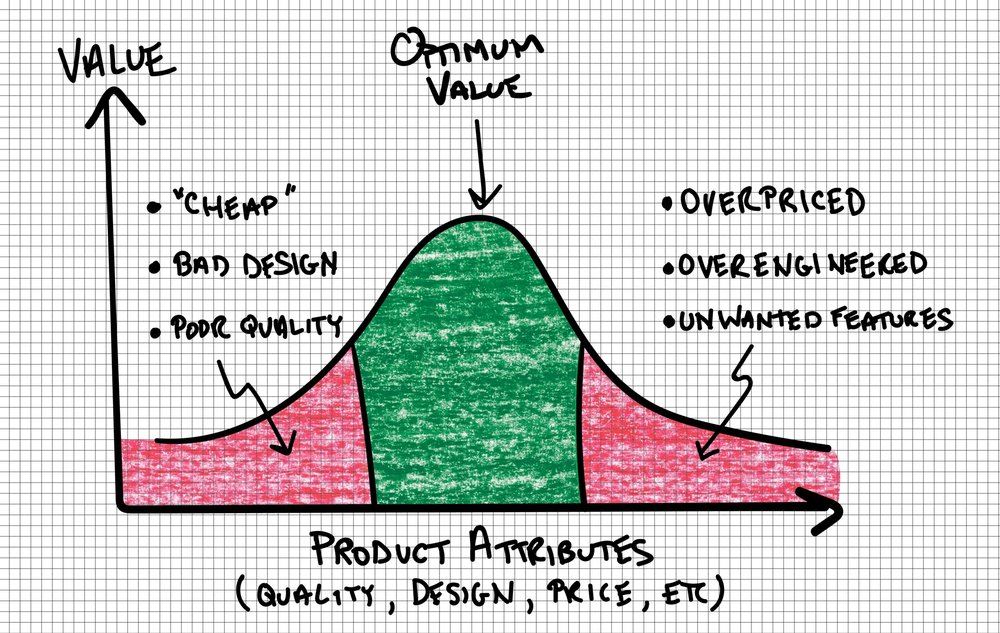
Big Business Ideas
Stephene Chikozho
THE goal of every company is to discover how to build a sustainable business around its vision through a resilient and resource-efficient customer acquisition strategy.
For many businesses, especially in African markets, an innovative and customer-driven strategy is vital for growth and profitability.
Being innovative and customer focused is about building awareness on how the client uses your product.
To achieve that, every successful business should gather data about the needs of its present and potential customers, and assess the market environment — including competitors, distributors, the economy, technology and social trends.
The business can then develop products that will solve customer problems and meet an existing demand.
A product that meets customer expectations will always sell itself.
To be successful in a market, an enterprise needs to understand both the environment in which it wants to do business and the way consumers in that environment think and act.
The marketing environment is the world beyond the confines of the organisation and the world that its customers live in.
It also includes the state of the economy, government regulations, social attitudes, current issues, competing companies, distribution infrastructure and partnerships, as well as technological changes.
At the core of this market is the prospective customer, who will be influenced by many of those environmental factors, but will also be driven by individual needs and preferences, which will affect what products and services he or she buys.
This means, to understand the market, a company must make sense of the external environment and, at the same time, fathom the psychological profile and personality of the consumer.
The reason for this analysis is to identify the biggest problems that consumers are struggling with.
Once these are identified, a business needs to respond innovatively to deliver the products and services that will be seen as perfect solutions.
Customer profiling
This analysis may sound simple, but given that any particular market might have thousands or millions of individuals, how does a business go about understanding how those people think and behave, let alone what problems or unfulfilled wants they have, both individually and collectively?
The starting point is to fully explore the world in which the customer lives.
What are the basic motives that drive buying decisions?
What value does the customer place on price, quality and design?
Among all the psychological, social, cultural, financial and technological forces in the environment, which ones particularly affect the customer?
A business executive needs to know the practical details of the customer’s daily life:
How does that person live on a day-to-day basis?
Does he or she have tasks that could be made easier?
What other kinds of problems could the business potentially solve?
A business centred on the customer can easily grow its market.
There is only one valid definition of business purpose, and that is to create a customer.
A customer’s willingness to pay for goods or services is the catalyst that propels businesses to turn raw materials and resources into products for sale.
Without the customer’s desire or need, there is no impetus for commercial activity; and conversely, without commerce, nothing can be produced to meet the customer’s demand.
When customers buy something, they are not thinking about the product or service itself, but about the usefulness of it to themselves.
For them, value lies in the problem-solving ability of the purchase.
Inasmuch as the maximisation of shareholder value is important in building a sustainable business, it is apparent that a customer-driven strategy is perhaps equally or more important to guarantee longevity.
Understanding the market
Every business must get to know the customer intimately. The marketplace is unpredictable, making the task of understanding the consumer, customer groups and the market as a whole far more complex.
One of the reasons is fragmentation, meaning that consumers are now divided among many small markets that are constantly in flux, and may suddenly emerge from nowhere.
These micro-markets are defined by the common aspirations, likes or needs of the consumers within them.
Each consumer is subject to a wide spectrum of external factors, so it is crucial to understand these to get to their hearts and minds.
A business, therefore, needs to know how sensitive their existing and potential customers are, especially to price.
The distribution system, which determines how products and services get to potential buyers, is also a vital aspect to consider.
A business should figure out how to deliver products and services in a way that best suits purchasers.
E-commerce platforms have transformed how this happens and customers now expect sellers to understand where, when and how they want to buy.
In line with technological advancements, customer personas have also evolved.
These encompass gender, life stage, income, trends, current issues and the influence of key players such as social media and other influencers.
The challenge for the business executive is finding out how all of these things influence customers and, consequently, what motivates them to buy.
Niche marketing
In the last few decades, business has forged a direct path of communication with the customer online. Business executives have also developed new strategies for online information gathering, such as personalised or one-on-one marketing, in which a single consumer’s interests and wants can be recorded and compiled to create a detailed profile.
Psychographic profiling is one way business executives make sense of diverse consumer interests, by corralling individuals with shared interests and motivations into groups that can be targeted.
While businesses used to define their customers demographically, for example, as Generation X, Millennials and Generation Z, a psychographic profile is much more detailed.
It is put together by using information about a consumer’s daily habits; favourite brands, music and athletic personalities; media habits; leisure activities; vacation destinations; and much more.
Software that tracks and analyses customer preferences via their online and mobile activities has enabled companies to engage in customer relationship marketing, using the data extracted about customers and their preferences to sell more products and services to them.
African e-commerce platforms such as Takealot, Jumia, mydawa, Killimall, Konga and many others use a customer’s shopping history to recommend similar products and show online browsers what other customers with the same interests have recently bought.
Conclusion
In this age, what the customer buys and considers valuable is far more than a product. It is always a utility; what a product or service does to the customer. With advancements in technology, the marketplace has evolved marginally.
As such, for growth, longevity, profitability and sustainability, businesses should adopt innovative and resilient customer-driven strategies.
Stephene Chikozho is the managing director of Urbane Create Agency — a strategy, marketing and advertising agency. He writes in his personal capacity. You can follow him on social media (Instagram, Facebook, Twitter, LinkedIn), WhatsApp +263772409651 or email [email protected]



 Bongani Ndlovu
 Online Reporter