Chronicle Editor
Nokuthaba Brita Ncube, [email protected]
ONCE confined to rural settings, backyard chicken keeping has steadily migrated to suburban neighbourhoods. This growing trend is fuelled by a desire for sustainability, self-sufficiency, and a touch of rural living in urban spaces.
Poultry farming offers a pathway to socioeconomic upliftment for vulnerable communities. In line with the Second Republic’s commitment to alleviating poverty and boosting rural incomes, President Mnangagwa launched the Presidential Rural Poultry Scheme in August of last year. The initiative aims to provide three million rural households with 10 free-range chicks each over a five-year period. Such measures are integral to Zimbabwe’s ambitious goal of becoming an upper-middle-income society by 2030.
For people like Mlindisi Tsheza (30), who is now a full-time farmer, chicken keeping started as a family business which she later ventured into.
“It all started when I was young. At that time, I had zero knowledge about keeping chickens, but I told myself I would learn as I go. My mum and dad built fowl runs to keep layers, so as they grew old, they retired from the chicken business,” said Mlindisi.
In addition, she said after completing her tertiary studies, she tried to venture into the business of selling clothes, which did not bear positive results, leading her to revive her parents’ chicken keeping business.
“After finishing college, I tried a few things that I wasn’t passionate about. I went to South Africa for a few years, then later came back in 2022 where I sat and thought of a lucrative business that I could venture into,” she said.
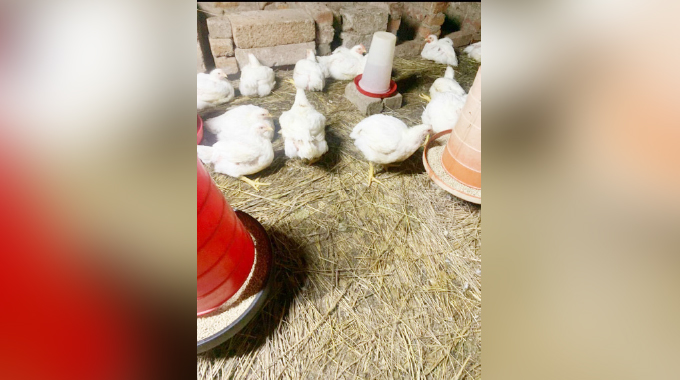
Mlindisi said in 2023, she tried selling clothes but felt it was straining due to travelling a lot for orders. She thought of venturing into what used to be her parents’ business this year.
“Then this year, I thought of doing my parents’ business again. I mean, the fowl runs were still there,” said Mlindisi.
According to Mlindisi she started the project early March this year with only 50 chickens but now has about 1 000.
“I started with only 50 chickens, went to 75, then 100, now I have 1 000 chickens. I’ve learnt a lot about chickens since I’m passionate about the business. However, it’s a very tough business because sometimes I wake up to 50 mortalities. It’s crazy,” noted Mlindisi.
“Raising chickens in your suburban yard is really no different than raising a flock on a farm. The challenges that are really frustrating are waking up to a big number of mortalities or the birds catching a virus. Chickens are gross; they poop, they walk in their food, they eat the food they’ve pooped in, but trust me, keeping chickens has been the best experience ever,” she said.
Mlindisi also noted that the chicken business is profitable.
“I sell my chickens for US$6 each. The business is profitable if you do it in large volumes,” she said.
She urged people willing to venture into chicken keeping to follow their passion and not give up.
“Keeping chickens is addictive. It’s more work than you think. There is something called chicken math: basically, getting 50 chickens leads to getting 100 more, and when you say I’m just going to get 100 more, you end up with 500. It’s a very interesting business,” she said.
In an interview, some of Nketa 7 suburb residents in Bulawayo who are into suburban chicken keeping expressed how they have adapted to the growing trend and are able to sustain themselves from chicken keeping.
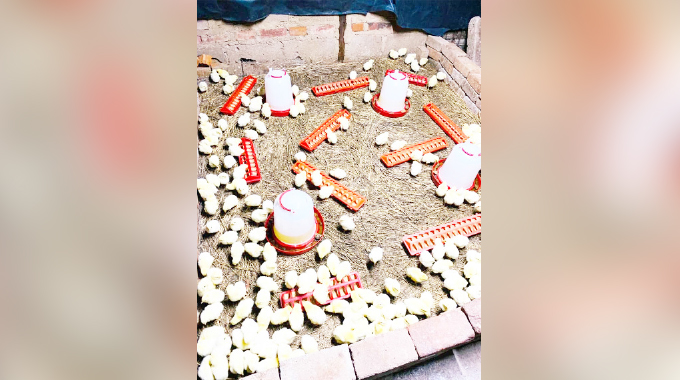
Smile Gama (58), who is self-employed and keeps road runners and broilers, started chicken keeping in 2012 with only 25 chickens. She said sometimes she would fail to buy proper chemicals for the chickens, but she never gave up. Gama managed to put all her three kids through school and has also managed to plaster her house from the income she gets from selling chickens.
Former Manondwane Primary School teacher Unami Ndebele started off with 20 chicks and now has over 1 000, consisting of broilers and road runners.
“I started with 20 chicks which later boomed into a profitable business. I was able to buy myself an incubator which hatches about 2,000 chicks,” said Ndebele.
Ndebele noted that her business is now being affected by power outages, which has seen a reduction in people coming to her for her incubator.
For residents like Pritchard Nyathi (23), keeping chickens started as an enjoyable hobby which later turned into a serious business.
“Keeping chickens started out as just a hobby for me. I wanted to give it a try and see if I could manage it. I started with five chickens which I had gotten from the rural areas, which later turned into a serious business as I started selling eggs and chicks of those chickens. What started off as a hobby has turned into a real passion of mine,” said Nyathi.
Apart from chicken keeping, Nyathi runs a small tuck shop in the local community. Nyathi said he is not yet financially stable to have his own house, hence he keeps the chickens at his parents’ home, who do not have any problem with it.


 Online Reporter