Online Reporter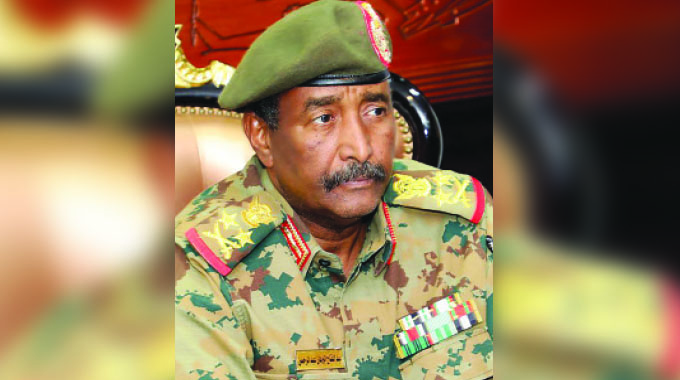
Gibson Nyikadzino in Uppsala, Sweden
AT least 40 percent of the wars and armed conflicts occurring worldwide are taking place in Africa. According to the Red Cross, there are over 50 active armed conflicts on the continent — a 45 percent increase since 2020.
These statistics are deeply concerning, especially as the war in Sudan casts a spotlight on the African Union’s (AU) commitment to “silencing the guns” and achieving the goals of Agenda 2063, which is anchored on peace and security among other pillars.
This conflict must be addressed within the African context. Various African states have engaged in mediation efforts to resolve the Sudan crisis. However, these efforts have been hampered by external interference, internal divisions and competing initiatives.
What makes the Sudan situation particularly heartbreaking for Africa is that the main protagonists — General Abdel Fattah al-Burhan and warlord Muhammad Hamdan Dagalo — appear to be incentivised to keep Africa’s peace efforts fragmented, dysfunctional and ineffective, thereby allowing external actors to assume central roles.
Sudan is of particular interest due to the geostrategic, economic, resource-based and external factors that have shaped its crisis, displacing millions in the process. It is a complex interplay of internal and external dynamics that Africans must confront and understand in the following context.
Origins of the current problem
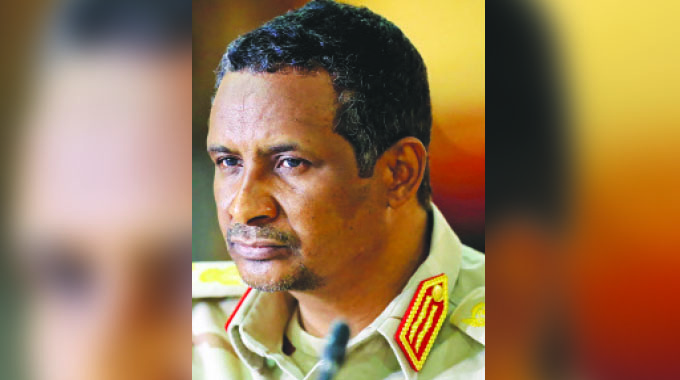
When former Sudanese President Omar al-Bashir came to power in 1986 during the country’s second civil war, he consolidated his rule by assembling militias in the west of the country as his personal military force. The current leader of the paramilitary Rapid Support Forces (RSF), Dagalo, was one of al-Bashir’s key enforcers.
Al-Bashir thus commanded two armies: the conventional Sudanese Armed Forces and a special unit of loyal fighters drawn from militia groups. He used these militias to suppress dissent from non-Arab groups in Sudan who felt marginalised by the Government.
In 2013, he rebranded his personal militia as the RSF. The RSF is believed to be involved in smuggling operations, border patrols, mercenary activities in regional conflicts and facilitating illicit trade with foreign powers.
The end of the civil war in 2005 between North and South Sudan, followed by South Sudan’s independence in 2011, significantly altered Sudan’s trajectory, as the South took 75 percent of the oil reserves — a major blow to Sudan’s economy.
Following al-Bashir’s departure, General al-Burhan assumed leadership and worked with a transitional Government, supported by Dagalo and the RSF, with the aim of ushering in a democratic dispensation.
A key condition of the transition was the integration of the RSF into the official Sudanese army — a condition Dagalo rejected. On April 15, 2023, he sent 2 000 fighters to attack al-Burhan’s residence, killing at least 35 people.
This marked the beginning of the current war.
Sudan’s geostrategic importance
Since the outbreak of civil war, Sudan has attracted the attention of major global powers due to its strategic location. The country straddles the Nile River — Egypt’s lifeline — and hosts ports near critical global trade routes, including the Suez Canal and the Horn of Africa, through which 10 percent of global trade flows, including vast quantities of oil.
Powerful nations are vying to establish military bases and control ports in Sudan due to its significance in global trade. Sudan also possesses abundant natural resources, including iron, gold, zinc, silver and chromite — minerals that foreign powers are keen to access.
As a result, global powers are closely monitoring the “military commander showdown” and assessing, which side to support to secure their future interests. The United Arab Emirates (UAE) is considered a major player in this dynamic.
Layers of complexity
The Sudan conflict has evolved into a complex power struggle involving multiple actors, making peace elusive. For instance, the UAE has engaged with the Sudanese Government to secure access to ports and minerals. Reports also suggest that Sudanese Armed Forces have participated in conflicts in Yemen in recent years.
There appears to be a mutually beneficial alignment among the various players involved. Simultaneously, the UAE is believed to have engaged with the RSF, effectively supporting both sides of the conflict. Another layer of complexity is the RSF’s involvement with Libya’s warlord Khalifa Haftar, who has strong ties to Dagalo.
Haftar is now reciprocating by supporting Dagalo — sending fuel shipments and acting as a conduit between the RSF and other entities seeking to fund Dagalo. This has facilitated the transfer of supplies and weapons to the RSF, backed by military-industrial complexes and weapons manufacturers viewing Sudan as a lucrative market.
Other global powers are hedging their bets by supporting both the Sudanese Government and the RSF, hoping to benefit regardless of the outcome.
Egypt, Ethiopia, Eritrea
Egypt, Sudan’s northern neighbour, is delicately balancing its interests amid the conflict. While Egypt naturally aligns with the Sudanese military, analysts suggest it cannot openly oppose the RSF due to economic constraints. The Egyptian pound has lost over half its value, and Egypt has received over $100 billion in aid from the UAE since 2013. As such, Egypt is maintaining a neutral stance to avoid jeopardising its relationship with the UAE.
Other African nations such as Ethiopia and Eritrea have also remained neutral but are key players. In 2023, Ethiopian Prime Minister Abiy Ahmed met with General al-Burhan, while Eritrean President Isaias Afwerki hosted Dagalo a month before the war erupted.
These meetings suggest that Ethiopia and Eritrea may align with opposing sides depending on how the conflict unfolds.
External mediation and Africa’s role
In this complex geopolitical landscape, Saudi Arabia and the United States have offered to mediate, aiming for a peaceful resolution. US officials have already begun working with counterparts from Egypt, Saudi Arabia and the UAE. Yet, Africa’s role in these negotiations remains marginal.
Some observers are hopeful that China may also contribute, especially after successfully brokering a deal to normalise relations between Saudi Arabia and Iran.
As these developments unfold, critical questions remain: Does the African union have a seat at the negotiating table? Are external actors willing to consider its peace proposals and plans?