admin
admin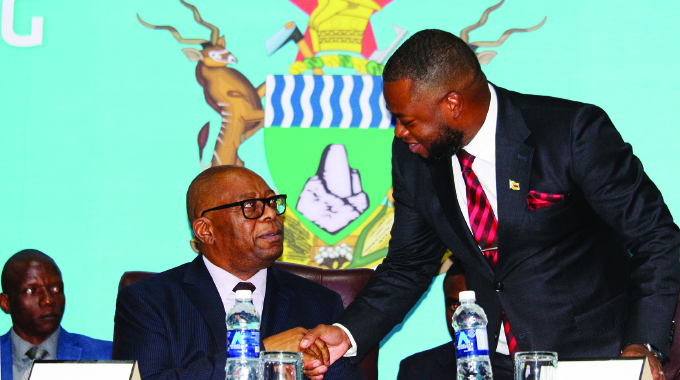
Trust Freddy, Herald Correspondent
TREASURY has so far raked in more than US$100 million from airtime and sugar tax levies that will go towards bolstering the country’s health sector.
Through the Health Fund Levy, which deducts five percent from duties charged on airtime and the recently introduced sugar tax, Government seeks to enhance access to quality healthcare for all Zimbabweans.
Finance, Economic Development, and Investment Promotion Deputy Minister David Mnangagwa said this yesterday during the national health financing dialogue for Zimbabwe, held in Harare under the theme, “More health for the money: More money for health.”
The dialogue, which was officially opened by the Minister of Health and Child Care, Dr Douglas Mombeshora, brought together participants from the African Union Commission, New Partnership for Africa Development (NEPAD), the SADC Secretariat, development partners, United Nations (UN) agencies, implementing partners, and the private sector.
Deputy Minister Mnangagwa reaffirmed Treasury’s commitment to collaborating with the Ministry of Health and Child Care to address the financial needs of the health sector.
“It is an aspiration for us as the Ministry of Finance to reach this 15 percent as stipulated in the budget declaration,” he said.
“There are also very deliberate measures that we take. For example, the Government has initiated several projects to boost health resources. As of September 2024, we had collected the USD equivalent of US$78 million in excise levy duty on airtime, while the sugar tax had raised US$28,6 million.
“Efficient allocation of these resources is expected to improve health outcomes, particularly emerging lifestyle-related diseases such as cancer.” His Ministry, Deputy Minister Mnangagwa said, will enhance collaboration with the Ministry of Health and Child Care to ensure the achievement of set targets.
“Periodical meetings between Treasury and the Ministry of Health and Child Care to discuss the major challenges facing the health sector, including budget utilisation, disbursements and cash support as well as coming up with minimum monthly health sector requirements to guide our cash flows are being held.”
He also revealed that the Government was working on introducing more specific health levies.
“Government will explore more options for progressive earmarked taxes and levies to raise additional resources for the health sector.
“This will be over and above the current earmarked health revenues that include the AIDS Levy (3 percent income tax), the health levy (tax on airtime and data), and the sugar content tax, among others,” Deputy Minister Mnangagwa said.
Speaking at the same occasion, Minister Mombeshora said his Ministry is grateful for the support from Treasury.
“We are benefiting from innovative domestic resource mobilisation initiatives. Recently, a Sugar in Drinks Tax was introduced to fight non-communicable diseases. This has been availed to complement other resources the Ministry receives from the National AIDS Trust Fund and the airtime levy.”
However, Dr Mombeshora called for more budgetary support, saying Treasury allocations towards health have consistently been below the 15 percent Abuja Target.
“Zimbabwe’s health sector has faced significant challenges, with allocation towards health standing at 9,8 percent of the national budget in 2024, which is still below the 15 percent target set by the Abuja Declaration,” he said.
“We have made budget bids to Treasury and we are waiting for the final allocations after Parliament approvals for 2025 and we hope that we will be closer to the Abuja Target.”
Dr Mombeshora said despite Government’s commitment to increase the allocations, public resources alone cannot meet the growing demands for quality healthcare services.
“This calls for strategic investments from both the private sector, international partners, and civil society. We are focused on attracting high-impact investments in the health sector.
“This includes capital projects such as modern and tertiary hospitals with the capacity to treat communicable and non-communicable diseases such as cancer and diabetes, advanced diagnostic facilities, market shaping to boost local manufacturing of widely used and essential medicines, equipment, and resilient supply chains.”
Key stakeholders also called for the introduction of more specific health levies and earmarked taxes to prioritise healthcare in national budgets.


 Online Reporter