admin
admin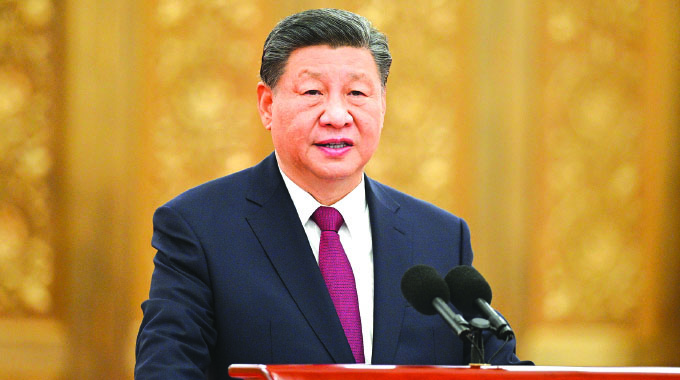
Tichaona Zindoga
Herald Correspondent
Continued from yesterday
Zimbabwe and other countries in the Global South — or, in the language of development, “the periphery” which covers the developing world — are facing an existential threat of “super-imperialism”.
In his book, Why the World Needs China, released a few months ago, Kyle Ferrana explains that super-imperialism is the latest, and most profitable system of exploitation by powerful economic interests; following on such brutal systems as feudalism, slavery, colonialism and neo-colonialism that were driven by powerful capitalist classes over centuries at the expense of the “lesser” peoples and classes of society.
Ferrana is an American writer and software engineer.
According to Ferrana, the “super-empire” is currently led by the United States and its junior partners in Europe and elsewhere, and presently extracts enormous quantities of wealth from the rest of the world every year.
Sanctions on Zimbabwe and other countries are the manifestation of economic isolation, domination as well as an instrument to transfer the wealth of poor countries to the US.
Ferrana noted that the use of economic isolation as a weapon has increased tremendously since the collapse of the socialist bloc, and points to a study in 2000, which tracked the applications of sanctions through the 1990s imposed by the US or the European Union.
What is more interesting in Zimbabwe’s case, as correctly observed by Ferrana, is that sanctions spawned and supported opposition which thrived in the economic meltdown and what has taken place in Zimbabwe in the past quarter of a century remains a textbook example of an evil “super-empire” at work in a much smarter and ruthless efficiency.
It will be interesting for experts and economic scholars to unpack just how Zimbabwe has lost through currency destabilisation, which has happened in consistent episodes, and how in particular, the use of the US dollar is a vehicle for transfer of wealth to America itself.
The super-empire’s resolve to collapse and destroy Zimbabwe through military means — another weapon in the toolkit —would have been achieved in 2008, when western countries led by the US, brought the issue of Zimbabwe to the United Nations Security Council to invade the country in the fashion of what would take place in Libya years later.
It was China, exercising veto power for the first time; and Russia who voted against a draft resolution that would also have imposed an arms embargo on the country, as well as a travel ban and financial freeze against the then President and 13 senior Government and security officials.
The sponsors had sought to designate Zimbabwe as a threat to international peace and security in the region, as well as cause the international community to intervene in the country militarily.
That would have been the end of Zimbabwe as we know it.
The example of Libya sticks out in Africa; but cases of US military interventionism abound elsewhere from Kuwait, Yugoslavia, Serbia, Afghanistan and Iraq.
Zimbabwe could also have succumbed to the fourth “mechanism of super-imperialism” through the so-called colour revolution — not unrelated to growth of sponsored opposition through sanctions — which entail use of mass protests seen in Eastern Europe in former Soviet countries, but this failed.
To achieve these colour revolutions, which are essentially led or exclusively aided by Western non-governmental organisations (NGOs), or funded by the governments of the super-empire, as Ferrana explains, the US uses its “soft power” and has at the front organisations such as the National Endowment for Democracy (NED) which administers a convoluted ecosystem of “charitable” foundations and “civil society” organisations that revolve around Washington.
As been noted in a lot of literature, the NED does openly what the Central Intelligence Agency does covertly, that is, toppling governments that the US does not like.
Zimbabwe has survived all these.
In all this depressing maze about the evil activities of the super-empire, it could be easy to fear and suggest that there is no way the world can extricate itself from the tentacles of America’s global super-empire.
Yet, Ferrana’s book offers key insights into how the monster can be dismantled.
The answer lies largely in part, in China’s rise as the world’s second-largest country by population, and the world’s second-largest economy, whose status and orientation will “naturally” be the most consequential to world affairs throughout the next several decades; in essence challenging US super-empire in a number of key areas, economically and politically and leading to the reconfiguration and thinking of the world.
Already, China has made its influence felt, from assisting African countries defeat colonialism, stooping the UNSC intervention in Zimbabwe, to current alternatives in global economic and development; peace and security and even cultural systems through the enunciation of such blueprints as the Belt and Road Initiative, Global Development Initiative, Global Security Initiative and latterly, Global Civilisation Initiative.
China, which has achieved phenomenal economic success on the back of “peaceful development” and advocates a conflict-free world based on the philosophy of peaceful coexistence among countries of the world, has proposed the concept of a “global community with a shared future for mankind”, which is in direct contrast with Western values and practices.
In fact, as China is pursuing a modernisation path for itself and the Global South, it has taken note of the atrocities of previous imperialist regimes, and their disservice to humanity.
Speaking at the Forum on China Africa Cooperation, (Focac) held in Beijing, China, last month, President Xi Jinping denounced this and laid out an inclusive development and modernisation path to his African counterparts — 53 countries, including Zimbabwe, that participated.
“Modernisation is an inalienable right of all countries,” he said.
“But the Western approach to it has inflicted immense sufferings on developing countries. Since the end of World War II, Third World nations, represented by China and African countries, have achieved independence and development one after another, and have been endeavouring to redress the historical injustices of the modernisation process.
He continued: “China is ready to increase exchanges of governance experience with Africa, support all countries in exploring modernisation paths befitting their national conditions, and help ensure equal rights and equal opportunities for all countries.”
He explained that nations should jointly advance modernisation that is open, win-win and mutually beneficial; that puts the people first, featuring diversity and inclusiveness, eco-friendly, and underpinned by peace and security.
“Modernisation would not be possible without a peaceful and stable environment for development,” he said.
President Xi stated that China was ready to help Africa improve its capacity in safeguarding peace and stability independently, prioritise Africa in implementing the Global Security Initiative (GSI), promote mutual reinforcement of high-quality development and greater security, and work together with Africa to uphold world peace and stability.
Unlike the United States, China is not seeking to use its growing power to become another hegemon.
In articles subsequent to this one, we will examine China’s role in dismantling the mechanisms of the super-empire and, in Ferran’s words, Why the world needs China.


 Online Reporter