Online Reporter
Trust Maanda
Legal Position
A PARTY to a contract may be discharged from it on the basis of supervening impossibility.
Supervening impossibility is a legal doctrine in terms of which a party may not perform their side of the contract because an unforeseen event has arisen after a contract’s formation which makes performance objectively impossible.
Where this even happens, it excuses the obligated party from fulfilling the contract without liability.
The impossibility must not just be one that makes performance harder or more expensive or inconvenient but must make performance objectively impossible. The impossibility must supervene in that it comes after the contract is entered into but before performance. That event of impossibility must not have been foreseen.
For example, if the subject matter of the contract is destroyed without the fault of the other party, or if a new law making the contract illegal comes into effect, this will constitute a supervening impossibility.
If a law is made, outlawing payment of money in foreign currency, that change in law is a supervening impossibility.
The event of supervening impossibility must be truly unavoidable and not the fault of either party.
The doctrine of supervening impossibility is invoked when unforeseen circumstances occur and render a contract’s performance impossible, through no fault of the involved parties.
Grounded in the maxim that the law does not compel the impossible, this doctrine applies under conditions like war, acts of God, law amendments and the like.
For the doctrine to be applicable, the event causing impossibility must be one that the parties could not have foreseen at the contract’s inception.
Moreover, the unforeseen event should not be attributable to either party’s fault and the contract’s fulfilment under such conditions would diverge significantly from the original agreement.
Key characteristics are that the occurrence must be post contract in that it happens after the contract is formed, unlike original impossibility.
The impossibility must be in that performance must be absolutely impossible for anyone, not just difficult or costly for one party.
The event giving rise to the impossibility must be unforeseeable in that neither party could have reasonably predicted the event when making the agreement.
The event must be due to no fault of the party claiming impossibility. He or she must not have caused the event.
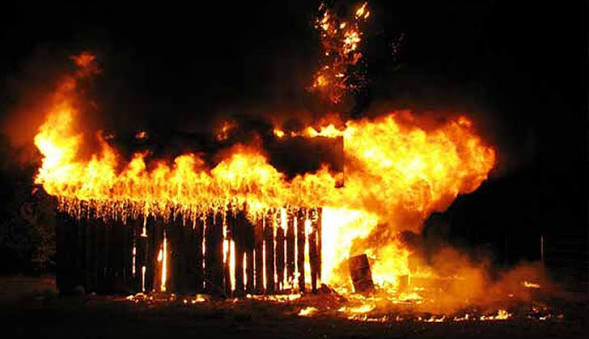
An example of a supervening impossibility is a contract to rent a specific, unique building, which becomes void if the building burns down.
It is not every difficulty you face in the performance of the terms of the contract that amounts to supervening impossibility.
In Firstel Cellular (Private) Limited V Netone Cellular (Private) Limited SC1/15, Firstel Cellular advanced the defence of supervening impossibility. It said that its failure to recover payments from its customers constituted a supervening event suspending its obligation to remit payments that were due to Netone Cellular.
It argued that this was occasioned, by the advent of dollarisation between January and March 2009 when, for some unexplained reason, a significant number of the appellant’s customers defaulted on their payments.
The court said it will be astute not to exonerate a party from performing its obligations under a contract that it has voluntarily entered into.
Thus, the suspension of a contractual obligation by dint of supervening impossibility can only be allowed in very compelling circumstances.
The courts must consider the nature of the contract, the relationship between the parties, the circumstances of the case and the nature of the impossibility that is being alleged.
It must be shown that the impossibility is objective and absolute and not one that is merely subjective or relative.
In Chiraga v Msimuko 2002 (2) ZLR 368 (H), it was held that shortage of foreign currency did not constitute an absolute supervening impossibility. Again, the contract must have become completely and permanently impossible of performance as opposed to the situation where one party is only temporarily disabled from fulfilling its obligations.
In Firstel Cellular case, Firstel’s subjective inability to pay its debts could not be confused with the objective impossibility that must prevail for a defence of supervening impossibility to succeed.
When a supervening impossibility occurs, the contract is often considered incapable of performance, releasing parties from future obligations.
Trust Maanda is a legal practitioner and a partner at Maunga Maanda And Associates. He writes in his personal capacity. He can be contacted on +263 772432646 or [email protected]