Online Reporter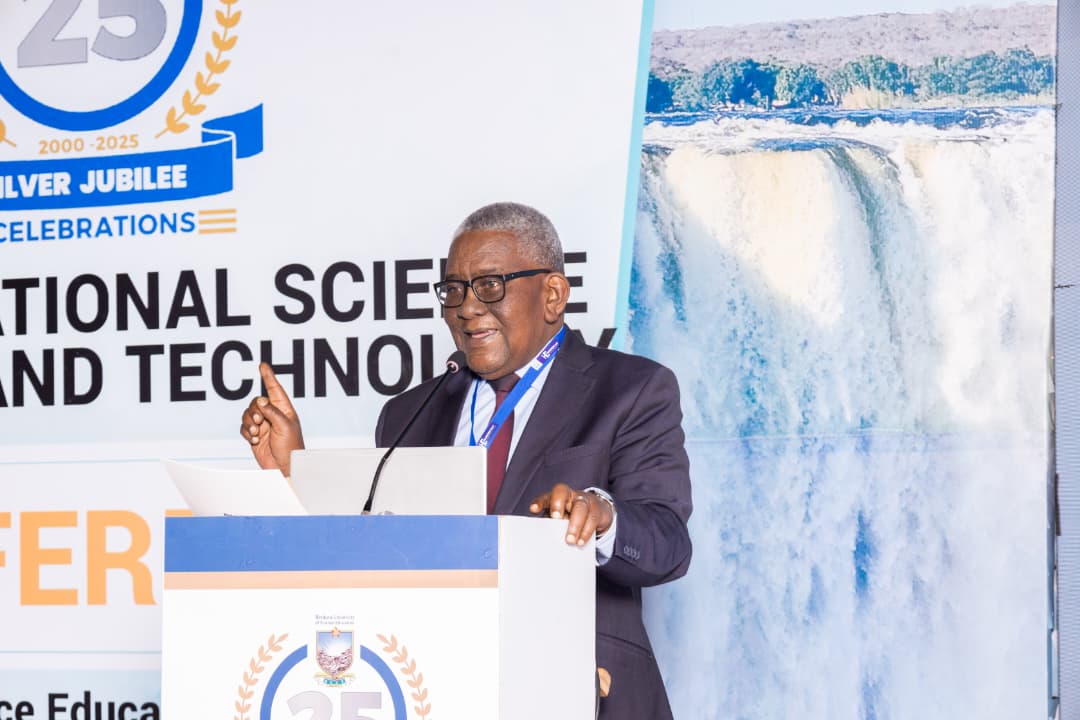
Rutendo Nyeve, Victoria Falls Reporter
ZIMBABWE’S future development is deeply intertwined with the sustainability of its Science and Technology Education, a sector recognised as central to the nation’s developmental vision.
This was revealed by scholars at the recently held 4th International Conference on Sustainable Science and Technology Education, hosted by the Bindura University of Science Education in Victoria Falls.
One of the speakers, Professor Felix Maringe of the University of Kigali commended Zimbabwe, saying the post-independence era has seen notable strides in the sector.
“The Government in Zimbabwe has worked to widen participation, particularly in previously disadvantaged communities, through initiatives like the development of technical colleges across all provinces and the establishment of specialised institutions such as the Chinhoyi University of Technology and the Harare Institute of Technology.
“Policy frameworks like the STEM Initiative of 2016 and Education 5.0 demonstrate a national commitment to aligning education with innovation and industrialisation,” he said.
To build on this progress and create a truly sustainable STE ecosystem, Professor Maringe proposed a comprehensive nine-point framework.
This includes stronger monitoring of policy intentions, innovative financing models, and institutionalised Teacher Professional development and support.
“A critical component is expanding low-cost, context-appropriate digital learning platforms, such as offline e-libraries, solar-powered computer labs and greater use of mobile learning to bridge the resource gap,” he said.
Furthermore, he passionately called for promoting gender equity and inclusion in STE and integrating Green and climate-responsive STE to ensure the sector is both inclusive and forward-looking.
The implementation of this vision, however, faces potential hindrances.
The primary obstacle remains the reliance on scarce funding.
“The mitigation lies in recognising and actively pursuing innovative financing models at institutional levels to minimise dependence on government and donor funds,” he said.
Another hindrance is a resistant academic culture that may privilege traditional disciplines over the interdisciplinary approach required for innovation.
“This can be overcome by investing more heavily in interdisciplinary and transdisciplinary learning, which are more problem-focused,” he said.
Professor Maringe said there is a dire need for a coordinated and integrated approach and advocated for the funding of CUT and BUSE to become the brand leaders in Technology and Entrepreneurship Education and to reconfigure curricular in universities to embed entrepreneurship.
Crucially, he emphasised that none of this is possible without a motivated workforce, insisting on the need to support and remunerate staff in universities and schools well to keep them motivated and committed.
However, Prof Maringe noted that while STE is acknowledged as a key pillar for progress, its foundational underpinnings in relation to resources place considerable strain on its capacity to contribute to a sustainable future for the country.


 Bongani Ndlovu