admin
admin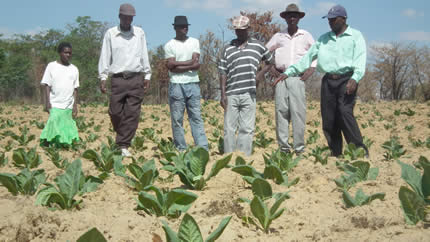
It is here, at the turn of the century, that the people of Svosve started reclaiming the land of the ancestors, telling settler white farmers, “Your farm is on our land”.
While not much has been shown of the success of the community as “new” farmers, the giant in the spirit of Svosve could slowly be awakening — and making itself heard.
Tobacco farming, for long an exclusive cash cow for white commercial farmers and now an increasingly growing niche for resettled farmers, is taking root here.
And to add to the beauty of the growing prospects, the Zimbabwe Open University has rolled out a programme that will see farmers get technical and professional knowledge.
ZOU’s Centre for Professional Development has moved to unlocking human capital and empowering tobacco farmers in Svosve.
The programme, the first of its kind, began last year with 18 training centres and 639 farmers.
The figures has since risen to 43 centres and 4 500 farmers.
ZOU director of CPD Dr Miidzo Mavesera said their motive was to empower farmers through open and distance learning.
“We train their leaders who further teach their people,” Dr Mavesera told The Herald on a field trip recently.
“We mainly focus on soil testing, seedbed management and budgeting their finances. We do not provide inputs as other might think of but our mission is to unlock human capital and ignite the vested potential in them,” he said.
He noted that tobacco is a very delicate crop which needs extra care.
But farmers are up to the task, though, as to them growing maize has become a second priority witness the whole community utilising every piece of land under tobacco.
Tonderayi Madekufamba (35), an A1 farmer at Igava, who is also enrolled in the programme has a lot to show now with the knowledge he got from ZOU.
“I have been into tobacco farming for six years but it took me many years to come into terms with the actual techniques of tobacco.
“I joined this programme last year I managed to harvest 15 bales which earned me about US$5 000 and I electrified my homestead, built a better house and extended my barns all in one season.
“This was because of the progress and knowledge I am continuing to get I am sure to harvest more this season.”
The farmer said he was in a contract with the Zimbabwe Leaf Tobacco who was supplying all chemicals from seedbed and spraying solutions.
Athansious Masangomai of Village 16B Wenimbe Resettlements has learnt his lessons.
After recently buying seedlings from another farmer who had scant knowledge of the crop, he had to start afresh after his crop failed.
He said: “I made a mistake of buying seedlings from outside rather than doing it myself. When I planted it, I did not know that they were not hardened so they failed to resist the heat.”
Now he can look into the future with confidence, courtesy of the new knowledge he is acquiring.
“For the past three years I have been into tobacco farming but my yields were unproductive until I joined this programme and now I can implement it,” cooed Masangomai.
Titus Maforo (32) said when he started growing tobacco in 2004, the yields were not pleasant at all.
He said with the newfound knowledge, he has increased his hectrage from one hectare to three hectares.
“I thought of resigning to farm tobacco again for the rest of my life since instead of enjoying my fruits everything I got deteriorated leaving me indebts,” he said.
And here, tobacco is not a preserve for men.
Women have also risen to the challenge.
Evelyn Madekufamba (52) is one of them.
She has three ha of the crop this season.
She says from 2002 when they got land the yields were not improving but things are getting better.
“Last year I managed to buy inputs and grow two hectares and now I have planted three hectares,” boasted Evelyn.
Farmers at Two-Boy shopping centre are trying to preserve their natural resources by using coal for curing their tobacco.
Simbarashe Mahufe who planted a plantation of gum trees acknowledged the improvement of farming in their community.
“We resorted to planting gum trees after realising that tobacco was now at an advanced stage so our indigenous tress were falling prey to farmers who want to cure their tobacco,” he said.
The availability of irrigation water in Svosve cannot be a bigger boon.
Wenimbi Dam, some 25 kilometres from Marondera, has the comparable potential of the legendary Nile River in North Africa.
Wenimbi Dam, which has a surface area of 330 hectares, was designed and engineered by the Department of Water Development and built to service irrigation projects at Munyembi, Dewenimbi and Arcadia farms as well as in Svosve communal lands.
However, Wenimbi Dam, has been over the years been underutilised since its construction over a decade ago.
Funds have been an impediment as farmers have not been able to fully embrace irrigation activities. It is on record that initially, the original irrigation plan was to draw water from the dam using trenchesto Muyembi Hill before releasing the water to the irrigation scheme using the drag-horse method.This was considered low-cost technology that is easy to operate, maintain and replace in comparison to the laying of aluminum pipes.
Svosve’s rising profile is adding to the national surge of the growth of the sector.
Latest statistics from a weekly Flue cured tobacco 2013 season registration report from Tobacco Industry and Marketing Board reveals that to date about 62 405 tobacco growers have registered for 2013 season compared to about 31 941 who had registered the same period last year.
In Mashonaland Central 19 842 growers registered, followed by Mashonaland West which recorded 19 115 farmers, Manicaland 11 528, Mashonaland East 11 153, Midlands 403, Masvingo 362 and Matabeleland recorded the lowest 2.
The report shows that new growers for 2013 reveal that tobacco farming has taken centre stage in all the communal and commercial farmers.
In communal areas 24 744 have registered to grow tobacco and small-scale commercial farmers 5 965, A1 farmers 27 070 and A2 farmers 4 666.
Finance Minister Tendai Biti said with the high rate of registered tobacco farmers, output in the coming season will be high.
He said 170 million kg is expected in 2013 from 14 million kg tobacco output in 2012 basing with the increase of registered tobacco farmers.
Zimbabwe Farmers Union vice-president Berean Mukwende has advised farmers to take appropriate measures in transplanting seedlings since yields are determined by the quality of plants.
“Tobacco plants need to be hardened at the seedbed and after transplanting. Hardening is when the plant is left for a couple of days without water and this operation is repeated after the plant is transplanted.
This helps the plant to resist harsh conditions especially on sunny days.
“They should continue farming because anytime rains will come, this will be the only chance this season,” said Mr Mukwende.
Zimbabwe Tobacco Association chief executive officer Rodney Ambrose acknowledged the developments in the production of tobacco surpassing 2011 level.
“The tobacco production, considering some years back, is very good and more positive results are expected. As for the end of November and the beginning of December we will be curing irrigated tobacco.
“They prove to be healthy and may reach the highest grade,” said Mr Ambrose.
Tobacco is the Zimbabwe’s top agro export.



 leeroy