

 daniel chigunwe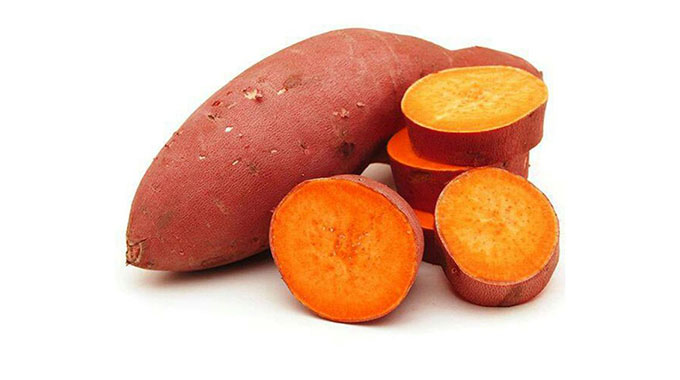
Tariro Stacey Gatsi
AS Government warns farmers against continued planting of cereals, planting of sweet potato has increase with 3 334 000 vines expected to have been planted as of January 24 up from 3 310 000 a week earlier.
Virus free sweet potato vines are being distributed under the Presidential Horticulture Recovery and Growth Plan’s (HRGP) meant to transform rural horticulture sub-sector.
Under the Presidential Sweet Potato Programme, 1,8 million households are set to benefit from the elite virus-free sweet potato vines at distributed as 50 vines per household which translates to 90 million sweet potatoes by 2025.
Agricultural and Rural Development Advisory Services (ARDAS) principal horticulture specialist, Mrs Hilda Manditsvara, said the Government through the HRGP was distributing virus eliminated sweet potato vines to boost production.
“Since inception 3 334 000 sweet potato vines have been distributed to date. From December 150 000 sweet potato vines received from Kutsaga and Horticultural Research Institute (HRI) were distributed to Mashonaland East province for propagation while 160 000 were sent to Mashonaland West with 124 000 going to Mashonaland Central.
“Farmers practising rain-fed agriculture have until March to plant their sweet potatoes, while those with irrigation can continue to plant even in winter if there are no frost challenges.”
The distributed vines package also contains some very nutritious bio-fortified lines, which are rich in vitamins and iron.
“Among the basket of bio-fortified orange fleshed vines that are high in vitamins A are Beauregard, Alish and Belvia varieties. There are also other varieties like German II, Alisha and Chingovha. We are in the process of churning out more vines,” added Mrs Manditsvara.
The distribution of the sweet potato plants follows Government’s push to move citizens from overreliance on wheat bread and embrace other nutritional options.
The HRGP’s rural horticulture transformation plan seeks to create and sustain a US$1, 217 billion rural horticulture economy by 2025 and a US$3, 5 billion economy by 2030.
The increasing interest in sweet potato as a food security and cash crop has stimulated research and development projects aimed at realising the full potential of the crop.
Meanwhile, The Smallholder Irrigation Revitalisation Programme (SIRP) nutritionist, Mrs Fungai Kutyauripo said her organisation was supporting the Government’s call production and consumption of nutritious crops, chief among them bio-fortified sweet potatoes.
“SIRP has managed to distribute about 7 750 bio-fortified sweet potato vines this season. The crop is mainly grown in summer after the onset of the rains and only a few farmers with irrigation facilities grow sweet potato in winter,” said Mrs Kutyauripo.
The country requires about 318 080 tonnes of sweet potatoes annually and the crop is generally an easy to farm venture that requires limited inputs, not capital intensive and can be planted on small pieces of land, though it can yield up to 30 tonnes per hectare.
In a recent X post (formerly twitter), Kutsaga emphasised that sweet potatoes grow well under marginal environmental conditions such as low rainfall and relatively poor soils and also grows quickly covering the ground thereby reducing the need for weeding.
The tubers are always in short supply after September resulting in high prices. The national target is to increase sweet potato production to 1 000 000 tonnes per year.



 Peter Tanyanyiwa
 Online Reporter