admin
admin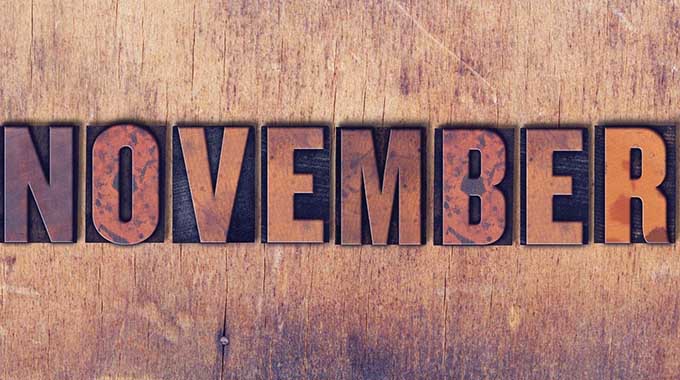
Munyaradzi Chimanye Features Reporter
The nuance of tradition has been known to often become muddled when countries choose to adopt a more globalist agenda for their futures.
Entire histories have been lost, and in the worst of cases civilisations have been cruelly ushered from this world, all for the sake of achieving a “modern civilisation,” relieving colonial powers of the tension that traditional matters can create.
Zimbabwe too suffered its fair share of loss in the sense of the destruction of a portion of the country’s history, notably that of the Munhumutapa empire at the Great Zimbabwe Monuments and the years of artistic tradition that were decimated, leaving only traces in rural communities and oral traditions.
The repatriation of these lost artefacts, skills and knowledge has been of concern to many African countries, including Zimbabwe: as they move forward in becoming better nations, the past beckons them to find the lost secrets that formed their culture.
One part of culture that was never lost are traditional practices and beliefs that, to this day, hold a levy over the people of Zimbabwe.
Although the beliefs are widespread, applying to almost all stages of life, this article’s focus is the superstition that surrounds the penultimate month of the year: November, “mwedzi waMbudzi”.
November holds in its 30 days, one of the biggest taboos in the Shona culture of Zimbabwe.
It is a taboo in practice and belief to marry within the month of November, or, in fact, to do anything that would require a cultural ceremony.
The reason for this has been given by traditional leaders in Zimbabwe as a hiatus in the dealings of man in the realm of the gods where practitioners of traditional ceremonies, or “sangoma”, the conduits between the physical and spiritual word, convene with the spirits and gods as they conduct only heavenly business.
This heavenly business is what makes the month, in all consideration, a sacred month in which issues cannot be brought forward to be sanctioned or blessed.
Despite being viewed as an antiquated belief for urban citizens, the unnerving air around marriage in the month of November is for the most part a sufficient deterrent for indigenous populations fearing the consequences of caveats that promise a failed marriage from the taboo be broken.
As of 2021, customary marriages have been pushed a great distance from the importance they used to hold for Zimbabwe as a country, with recent years showing that populations in metropolitan areas generally prefer civil unions to customary ones.
This writer’s own parents were married in a civil union in the month of November in the year 1993 and will celebrate 28 years of marriage at the end of the month.
As Zimbabweans, the feeling of the younger generations shows a reticence towards a certain curiosity that is amiss in our belief of the traditions that are allowed to govern our activities.
The goings on in the realm of the spiritual will continue to elude those who do not practice it closely, but could this belief, which so many hold close, be closer to a superstition. Many of the instructive cautionary tales of a Shona childhood can be seen as being didactic metaphors instead of real life threats.
For example, as a warning against premarital sex, in rural communities, young men, normally those in their teenage years, have in the past been told that if they were to engage in the act, they would err upon the gods, resulting in severe punishment, losing their manhood.
Any medical practitioner could tell you the unlikelihood of such a leper-like loss of a limb, but this warning would serve to stave off hormonal teenagers from unnecessary indulgences.
There just so happens to be morally instructive threats from the gods for about any situation, some warn children against asking guests in their home for their food as a way of teaching manners, others forbid children from eating eggs, under duress, as a way of keeping the nutritional breakfast food on the plates of those that need the energy they provide.
Not as a point of pontification, merely as postulation: perhaps such a reason exists as well for the wayward view of marriage in November.
Historically in rural communities in Zimbabwe, which in truth represents all communities, considering those in urban areas are merely products of a constant urban migration, November is the month of planting.
The November sun at highest reaches peaks in the high 30s and 40s degree Celsius, and as a respite from the scorching sun, the heavens open for the first time since the start of the year, signifying the start of the rainy season: this can be evidenced by the very weather we are experiencing now.
As soon as the first signs of rain appear, crops must already be laid under soil to receive the bountiful rain. In a conversation, Gibson Gowha (56), described the all-hands on deck approach that first rains require, everyone has a part to play.
“To even think of eloping in such a time is unheard of, we have a responsibility to prepare these fields for crops if the family wants to eat,” said Gowha.
Could, at the core of the issue, the true intentions of the curse of marrying in November be to mandate a healthy harvest come the start of the following year.
One can neither write with certainty or theorise with confidence considering the age of such a tradition.
Where there is no harm, there is no problem in a belief like this, but a natural curiosity will continue to ask why?
Why must love be taboo in the month of November?


 Online Reporter