

 Online Reporter
Zvamaida Murwira
Senior Reporter
PRESIDENT Mnangagwa has directed the Ministry of Health and Child Care to remove all bureaucratic obstacles in the importation and procurement of medical care facilities and services as part of a deliberate move to modernise and upgrade health infrastructure.
By streamlining the acquisition of medical equipment and pharmaceuticals, the Government seeks to improve service delivery and patient care.
The directive reinforces the Second Republic’s commitment to Vision 2030, with the ministry now expected to implement the changes swiftly to ensure tangible benefits for all citizens.
Writing on his X handle, the President said the Presidential Hospital Innovation Programme was performing wonders in the health sector and would not require unnecessary impediments occasioned by unscrupulous business practices.
His administration, the President said, would upgrade Mpilo Hospital in Bulawayo following the successful rehabilitation of Parirenyatwa Group of Hospitals, where he recently commissioned the newly-refurbished Adlam House and Nurses’ Home to improve living conditions for medical personnel.
“The Ministry of Health and Child Care, together with related Agencies, are strictly directed to remove all barriers to entry in the establishment of specialist healthcare facilities and services. Hatidi magate-keepers nemacartels muhealth sector vanhu vedu vachitadza kurapwa zvakanaka nemutengo uri pasi. Kwete. Ngative nehanya tikoshese hutano hwevanhu vekwedu. Let those with ears hear this stern exhortation,” said President Mnangagwa.
“Our goal remains clear: to build a resilient, world-class public health system that provides high-quality, affordable care to every citizen, leaving no place and no one behind.”
President Mnangagwa said several upgrades of health facilities, particularly at the country’s largest referral facilities like Parirenyatwa and Mpilo Hospitals, showed that the Second Republic was delivering on its promise.
“Upgrading our health sector is a top priority for the Second Republic, and we are delivering on our promise. The Presidential Hospital Renovation Programme is moving at an accelerated pace across our nation’s primary medical complexes, including the 2 800-bed Main Hospital block at the Parirenyatwa Group of Hospitals in Harare and the historic Mpilo Central Hospital in Bulawayo!” said President Mnangagwa.
“Following the successful modernisation of supporting facilities like Adlam House at Parirenyatwa—now fully equipped with solar power and clean borehole water—we are simultaneously rolling out extensive, long-overdue infrastructure upgrades at Mpilo Hospital to overhaul clinical spaces and staff residences.”
President Mnangagwa outlined the several development initiatives that have been covered throughout the country and have had an impact in transforming the health service delivery in the country.
“This nationwide, targeted phase focuses on rehabilitating critical patient wards and healthcare spaces, upgrading diagnostic and surgical equipment with 21st Century modern technologies, integrating new medical systems to support our hard-working personnel and eliminating long-standing structural and utility bottlenecks across our referral centres,” he said.
Following several Government initiatives, Mbuya Nehanda Maternity Ward at Parirenyatwa Group of Hospitals is now matching world-class standards after undergoing extensive refurbishment under the Presidential Hospital Renovation Programme, which is expected to improve maternal healthcare and outcomes.
A recent tour meant to monitor and evaluate facilities, led by contractor Prevail Group of Companies, showed that milestones had been covered at Parirenyatwa Group of Hospitals, as the refurbishment had expanded the hospital’s critical care capacity.
Prevail Group Chairman Dr Paul Tungwarara said his company is determined to deliver world-class health facilities, leaving no one and no place behind.
“We are committed to delivering world-class facilities through this Presidential Hospital Renovations Programme within a very short space of time; watch the space,” said Dr Tungwarara.
The refurbishment highlights how partnerships between the Ministry of Health and Child Care and private contractors are strengthening healthcare infrastructure in line with the country’s Vision 2030 aspirations.
As a result of the Government initiatives, the upgraded facilities would enhance maternal health outcomes by providing health workers with improved infrastructure and equipment to deliver quality care.
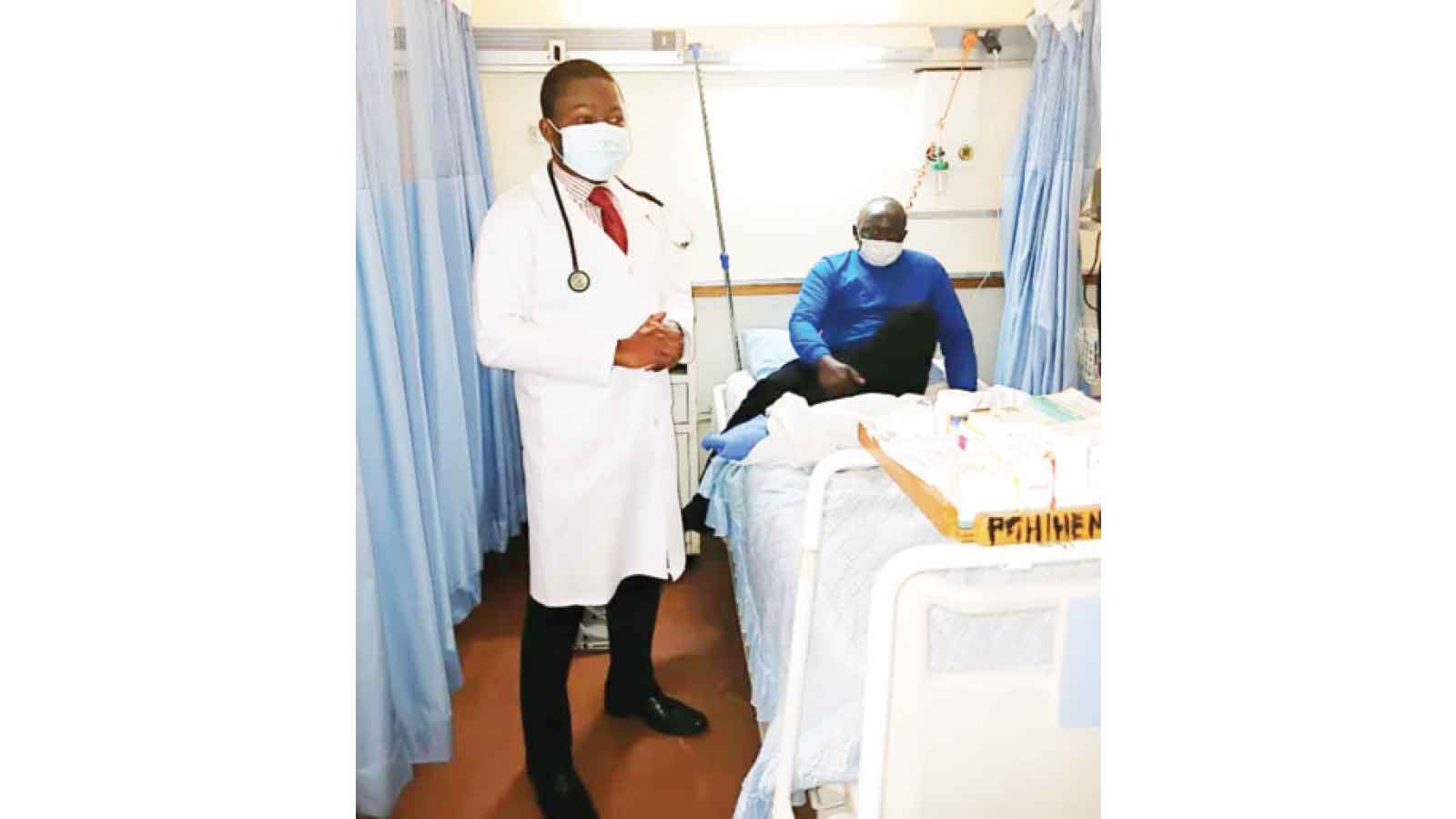
The refurbishment has expanded theatre and high‑dependence unit capacity, equipping staff with new resources to deliver better care and improve patient outcomes.
Government has also introduced a sugar tax, where revenue generated from it on beverages and fast foods has funded the acquisition of modern linear accelerator radiotherapy machines for Parirenyatwa Group of Hospitals and Mpilo Hospital.
At least US$27 million to US$30 million has been invested to upgrade oncology services at these public institutions.


 daniel chigunwe