Business Reporter
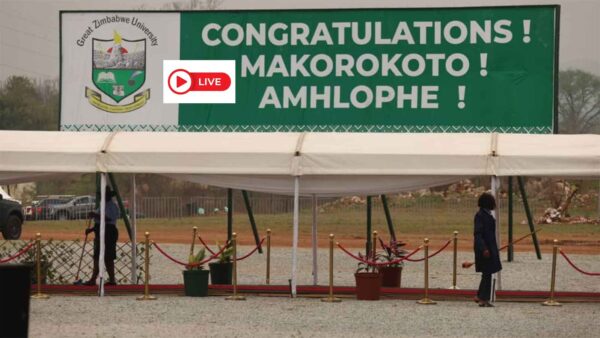
ZIMBABWE has been hailed for delivering one of the most successful editions of the Common Market for Eastern and Southern Africa (COMESA) Business Forum, with regional business leaders adopting a declaration aimed at accelerating investment, industrialisation and cross-border trade.
The 19th COMESA Business Forum and COMESA Green Industry Connect closed in Harare on Tuesday with the adoption of the COMESA Business Declaration 2026, capping two days of high-level engagement, strategic partnerships and exhibitions involving regional and national enterprises.
Held on October 19 and 20 on the sidelines of the 25th COMESA Summit, the forum was convened under the theme “One Market, One Future: Advancing Inclusive Industrialisation, Investment and Regional Integration in COMESA”.
In the declaration, the COMESA business community congratulated President Emmerson Mnangagwa and the Government and people of Zimbabwe for hosting the forum, the Green Industry Connect and the COMESA Multi-Sectoral Trade Exhibition.
The declaration expressed gratitude to the COMESA Secretariat, COMESA Institutions, conveners ZimTrade and the Zimbabwe National Chamber of Commerce (ZNCC), and partners and sponsors for their support in delivering “one of the most successful editions of the Forum”.
It said the forum was marked by high-level engagement, strategic regional and international partnerships vibrant exhibition of regional and national enterprises, in advancement of a business-led regional integration agenda.
The declaration commits the private sector to shifting “from commodity dependence to value addition” and building regional value chains, while expanding investment opportunities for small and medium-sized enterprises, women, youth and informal businesses.
The declaration outlines six priorities, including strengthening regional supply chains, expanding access to finance, promoting green industries, advancing digital trade, improving transport corridors and supporting inclusive, private sector-led integration.
It also calls for reported non-tariff barriers to be resolved within agreed timelines.
The challenge now is implementation, with regional businesses urging governments and private sector players to turn commitments into competitive industries, increased trade and jobs.
Speaking on Day 1 of the Business Forum, Foreign Affairs and International Trade Minister Professor Amon Murwira stressed that Africa’s industrialisation cannot be achieved simply by possessinc natural resources. “For Africa, industrialisation shall not simply be the existence of factors. It must be in the form of an organisation a uniform or systematic vision of knowledge and natural resources,” he said.
He warned that the global economy is being reorganised around strategic sectors – including sustainable energy security, digital technologies and industrial capacity – and that Africa must build matchinc capabilities or risk being left behind.
“No country, not even one on this day, can go bevond the level of what they know they wanted,” he said. “Capability is up here,” he added, pointing mind.
Industry and Commerce Minister Mangaliso Ndlovu, addressing the Green Industry Connect, called for greater regional productive capacity and investment in emerging value chains.
“Our ambition must extend beyond importing finished products to developing the skills, technologies and productive capabilities required to capture a greater share of emerging value chains,” he said.