admin
admin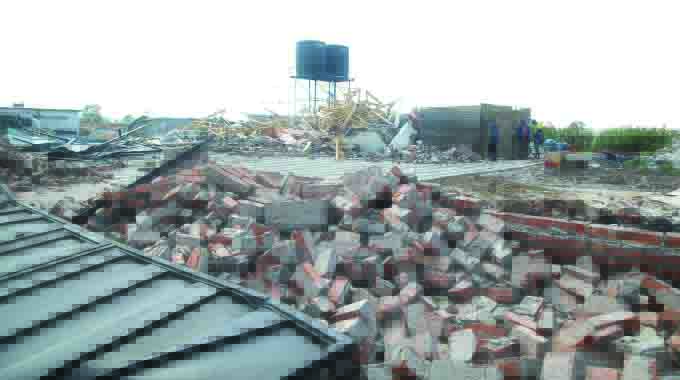
Nick Mangwana
Government Up Close
AS Zimbabwe continues to move towards Vision 2030, there is a lot of urbanisation and growth.
Therefore, the need for proper planning and regulation in the construction industry has never been more pressing.
The recent spate of demolitions of illegal buildings by the Harare City Council has left many property owners reeling, highlighting the importance of doing things the proper way through making sure one has a right to the piece of land they want to construct on and obtaining permits before building.
At the heart of all the seemingly heartless demolitions is the role played by land barons.
In Zimbabwe, a land baron refers to an individual or entity that illegally acquires, sells, or allocates State or council land or another person’s land for personal gain, often exploiting desperate home seekers.
This contextual use of the term land baron is unique to Zimbabwe because in other jurisdictions, it is not so pejorative and does not have such a negative connotation.
Internationally, a land baron typically denotes a historical figure or entity owning vast tracts of land, often acquired through inheritance, conquest, or strategic investment. Examples include European aristocrats and American ranchers.
In contrast, Zimbabwean land barons operate outside legal frameworks, usurping State authority and disregarding property rights.
While global land barons may wield significant economic influence, Zimbabwean land barons undermine the rule of law, perpetuating corruption and social injustice.
Now, these land barons in Harare have become notorious for their unscrupulous tactics, fleecing unsuspecting citizens of their hard-earned money. These opportunistic individuals illegally acquire pieces of land, often through fraudulent means, and then sell them to desperate home seekers.
With no regard for the law or consequences, they peddle fake title deeds and forged documents, leaving innocent buyers vulnerable to financial ruin and legal headaches.
The most egregious aspect of their operations is selling land that does not belong to them, perpetuating a cycle of deceit and exploitation.
To illustrate how this works, an example may help. Recently there were demolitions in Ridgeview, Belvedere, west of Harare Central Business District. This was actually the third time there was such a demolition in the same area, but the victims still do not learn.
Land barons forged some Government documents and purported that these were legitimate. They then hoodwinked some desperate and gullible victims into believing these documents were kosher.
These then bought the stands and constructed the beautiful houses we saw on some video clips being demolished.
Tragically these houses were built without planning permissions.
By going into the construction of these houses without seeking development permits, the owners missed a lot of opportunities which could have alerted them to the perils of investing money in something so irregular.
We are also aware that some were misled by the land barons into believing that even though what they were doing was illegal, it would be regularised in future.
We will always sympathise with victims of crime, but that does not fully absolve them from taking responsibility.
Firstly, they did not draw and submit architectural plans for their proposed buildings to council. This was a missed opportunity because if they had done so, they would have been made conscious of the problems surrounding that piece of land.
Secondly, at various key stages of the construction process, the development was supposed to be inspected by inspectors from the city council.
These prospective homeowners seemed to have decided to totally ignore this procedure.
If you are going to pour tens of thousands of dollars into something, you are expected to do proper due diligence otherwise the classic proverb, “A fool and his money are soon parted” will hold true for you.
In case, there are others still ignorant among us, let me outline in layman’s terms, the processes one should follow when acquiring residential land in Harare;
Firstly, one has to get on the waiting list after paying a moderate sum at the council offices and specifying the preferred area for example, low density.
When land is available the person is called in for an interview and given an offer letter if he or she qualifies. Afterwards, an evaluation will be done of how much the piece of land one has been allocated is worth and due payments are made.
When it is now time to build houses such as those beautiful ones we saw in Belvedere, individuals must have in their possession; the allocation letter from council, receipts from council which show purchase of land, approved road design, sewer and water drawings as well as approved building plans of structures to be constructed.
This is the most important part, ALL STAGES of construction must be inspected and signed off by a council building inspector.
When the house is complete, one is given a certificate of occupation. If everyone follows these basic steps in whatever town or city, I do not think we will relive the sad scenes of mansions being razed down.
Now that we have said what is needed to be said about the role of victims in this whole saga, let us go to the central role played by the land barons.
The activities of land barons do not only undermine the rule of law, but also perpetuate social and economic injustice.
They prey on the dreams of ordinary Zimbabweans seeking decent housing and shelter, leaving many financially devastated and without recourse.
President Mnangagwa has made it a key policy of his administration to prosecute land barons. The Zimbabwe Republic Police (ZRP) has launched operations targeting illegal land dealers, resulting in the arrest of over 200 suspected land barons since 2020.
The Harare City Council has also collaborated with the Zimbabwe Anti-Corruption Commission (ZACC) to investigate and prosecute some of its corrupt officials complicit in land barony.
Furthermore, the Government has established special courts to expedite land-related cases, demonstrating commitment to tackling the scourge.
Despite challenges, these efforts aim to restore order in the land sector, protect citizens from exploitation, and ensure accountability.
After all this has been done, demolitions can only be carried out when a competent court has so ordered. That said, that will not take away the pain experienced by the victim.
Demolitions have a profoundly devastating impact on victims, leaving them emotionally shattered and financially ruined.
The sudden loss of a home, business, or livelihood can trigger feelings of trauma, anxiety, and despair. Victims often invest their life savings into properties, only to see them reduced to rubble.
The demolition process itself can be traumatic, with families watching their homes being destroyed, and cherished memories being erased.
The aftermath can be equally distressing, as victims struggle to find alternative shelter, replace essential belongings, and rebuild their lives or simply surrender themselves to the elements.
The financial consequences of demolitions can be crippling. Victims often incur significant debts, having invested in properties that are now worthless.
The emotional toll can also have long-term effects, including depression, stress-related illnesses, and strained relationships.
Children’s education and well-being may suffer due to displacement and uncertainty. Demolitions can also erode community cohesion, as families are displaced and social networks disrupted. In extreme cases, victims may become homeless or internally displaced, relying on precarious living arrangements.
Despite victims’ partial culpability in all this, the human cost of demolitions demands compassionate consideration and support for affected individuals.
Councils must put safeguards in place for vulnerable victims such as children, the disabled or sick caught in the crossfire.
That said, everyone should protect their vulnerable from experiencing these catastrophes.
Buying land from land barons is a reckless and ill-informed decision that can lead to financial ruin and endless legal headaches.
These unscrupulous individuals sell fake or already allocated land, often with forged documents, leaving unsuspecting buyers vulnerable to eviction, demolition, and prosecution. Purchasing from them legitimises their illicit activities, perpetuating a cycle of corruption and exploitation.
It is staggering that despite widespread warnings and cautionary tales; some individuals still fall prey to these predatory schemes. Imagine building where people have been evicted from and their structures demolished twice!
The wise approach is to prioritise due diligence, verifying ownership and documentation through official channels, and purchasing from reputable sources or Government-approved land distributors.
We cannot finish this piece without censuring the Harare City Council’s handling of illegal land occupations.
In many a case it has been widely criticised, and for good reason.
Allowing individuals to build houses on illegal grounds, only to emerge and demolish them after occupation, is a recipe for disaster.
This approach not only leaves homeowners devastated but also raises questions about the council’s effectiveness in preventing such illegal activities.
In some cases, people have taken up to two years to construct their homes, with council officials seemingly turning a blind eye until the very end.
It is staggering that the council does not intervene earlier, especially considering the emotional and financial investment homeowners make on their properties.
The council’s inaction has been attributed to alleged ties between some officials and land barons, who exploit desperate home seekers by selling stands illegally.
This lack of accountability enables land barons to operate with impunity, further complicating the city’s housing challenges. Justice Minister Ziyambi Ziyambi has publicly expressed frustration with the council’s approach, emphasising the need for preventive measures rather than destructive solutions.
The council must take proactive steps to identify and prevent illegal land occupations, rather than waiting until it is too late. This includes increasing transparency in land allocation, enhancing community engagement, and holding officials accountable for their inaction. Only then can the city begin to address the root causes of this issue and provide safe, legitimate housing options for its residents.
While demolitions carried out by Harare City Council with court orders are legally unquestionable, what is controversial is the heartless way in which they are executed, leaving residents traumatised and financially devastated.
The council’s heavy-handed approach denies homeowners the basic dignity of salvaging their belongings, as bulldozers mercilessly smash electrical appliances, ruin clothing, and render recoverable building materials unusable.
This seemingly sadistic destruction appears designed to maximize suffering, rather than simply enforcing zoning regulations and court orders.
The council’s refusal to allow residents to retrieve essential items, such as identification documents, medication, or valuable family heirlooms, adds to the emotional toll.
This callous disregard for human well-being betrays the council’s responsibility to serve and protect its citizens, instead it perpetuates a culture of cruelty and dispossession. By prioritising punishment over compassion, the council exacerbates the trauma of displacement, leaving already vulnerable individuals to pick up the pieces of shattered lives.
The issue of illegal land occupations in Harare, fuelled by the nefarious activities of land barons, has reached a boiling point. Now we learn the city council wants to demolish 5000 houses.
While it is crucial to acknowledge that homeowners also bear responsibility for their lack of due diligence and failure to follow procedure, this does not justify the cruel destruction of homes, often carried out with little regard for human dignity. Court orders executed during the rainy season or winter smirk of sadism calculated to extract the worst kind of human suffering.
Let us have a human face as we implement the rule of law.
Nick Mangwana is the Permanent Secretary for Information, Publicity and Broadcasting Services



 Online Reporter