Online Reporter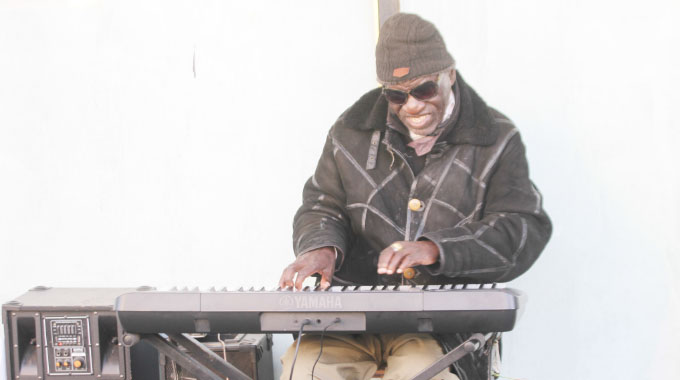
Bruce Ndlovu, Sunday Life Reporter
TO many, Tafi Dube is a landmark — an immovable fixture in the City of Kings and Queens.
His little spot at the intersection of 8th Avenue and Fife Street in Bulawayo, where he sits with his organ and microphone serves as a kind of compass for the disoriented.
For anyone familiar with Bulawayo, Mdala Tafi’s corner is not just a place, it is part of the city’s very fabric.
To others, Tafi is a medium, channelling the spirit of country legend Don Williams. Eight years after Williams’ passing on, his unmistakable voice still echoes through Bulawayo’s streets — if you know where to listen.
Yet, despite being an easily recognisable and beloved figure, Dube carries the weight of bitterness.
Last month, as the city celebrated its birthday, he sat on his usual corner and heard the festivities unfold nearby at the City Hall.
The fanfare was loud and joyful, yet Dube, who has serenaded Bulawayo for decades, had not received an invitation. He was not even acknowledged.
“I feel sad because I am left out of things that I feel I should participate in,” he told Sunday Life.
“If I am really part of Bulawayo, like people say, then I should be included in events. There was a recent celebration of the city and I was not part of it. That was painful. Maybe it is only for young people now.”
As arguably the city’s longest-serving street performer, Dube believes that life in Bulawayo is less kind to him than it was back in the 1990s.
Dube, who left a band to become a street performer first started playing outside the prestigious Meikles before a man known only as Simpson enticed him to come to Pioneer House by giving him an amplifier.
“Things have gotten harder over the years. When I came here, people were a lot more willing to offer something in return for the music that I play, but now things are different. We have a lot of more people who want to steal from me and there is just a greater level of chaos compared to the older days,” he said.
Over four decades after he came to Bulawayo, Dube only has a fading picture of the city in his mind, having lost his eyesight at the tender age of four.
After being struck down by a suspected case of measles back in the 1970s, when vaccination campaigns were not as prevalent as they are now, he never regained his sight.
In the new Bulawayo, shop owners show little regard for the craft through which he earns his living, blaring loud music that sometimes drowns out his smooth country tunes.
“The city is changing,” said his manager, Sally Sendu.
“It is now harder for him to survive here. The new shop owners that surround us insist on playing loud music, which makes it harder for him to make money because people cannot hear what he is playing.”
Nowadays, Dube is reluctant to interact with strangers, as some have taken advantage of his visual impairment, soliciting donations on his behalf without giving anything in return.
It is for this reason that he asked Sendu, who runs a shop nearby, to take care of his affairs.
“We regard ourselves as his family even though we are not related. It is important that we look after his interests because we have been here a long time, and we have seen him go through the ups and downs.
“So, we have to make sure that he at least gets breakfast every morning because some days can be tough. There are days when he does not make anything. Things are particularly hard in winter. It is cold and he is playing outside, so does he have sufficient clothing to keep him warm?” she said.
In January 2024, Dube found himself stranded after ruthless thieves pounced on his musical instruments during the festive season.
Such incidents illustrate the changing nature of the streets of Bulawayo, where even the disabled do not receive any mercy.
“People tend to take advantage of him. Of course, we can all claim to love him but what does he get out of it in the end? He can play all day here and not make a single rand coin. He is someone who pays rent in his home and his wife is also blind.
“So, there has to be something tangible that comes from everything that he does. It is sad that people also do not realise how damaging it is for him mentally to come here, promise him heaven and earth and then nothing materialises.
“After every such promise, he starts to feel that something is coming his way that may help him and if something does not pan out, he is crushed,” said Sendu.
Of concern to Sendu and others who are taking care of Dube’s welfare is the fact that even people hosting events have been short-changing the street performer, giving him less than they would other artistes.
“Some people come here and ask him to play on their birthdays and some on their weddings. However, most of those people do not pay him anything; they only give him food.
“They will wrap something up in a kaylite and we will only discover that this is what they have given him because they will dump him here and he has to call us so he can get transport to get back.
“Then you have platforms that are promoted by authorities that also do not seem to have space for disabled artistes. He cannot put himself on a pedestal because of his condition, but it should be the responsibility of those with the power to do so,” she said.
In a city that prides itself on celebrating its history and landmarks, Sendu said the little regard for Dube gave the impression that disabled artistes were seen in a lesser light compared to their able-bodied counterparts.
“A lot of people take advantage of him. Some people will come here with their cameras and get a lot of publicity for interviewing him. What we learnt, sadly, is that there are people who are nostalgic for all things Bulawayo and will say, ‘Wow, Mdala Tafi is still on that corner,’ and send money through those people. Those people then pocket the money and not a cent makes it to him.
“His story is sad because he is someone who has become a landmark in Bulawayo. When we are out there, we can use him as a sort of reference point. You can tell anyone that they can find you by Mdala Dube’s spot and they would know what you mean. So, someone who has that sort of significance in the city should be looked after in a much better manner,” notes Sendu.
*Those wishing to donate to Dube can contact him on +263772900593