

 admin
admin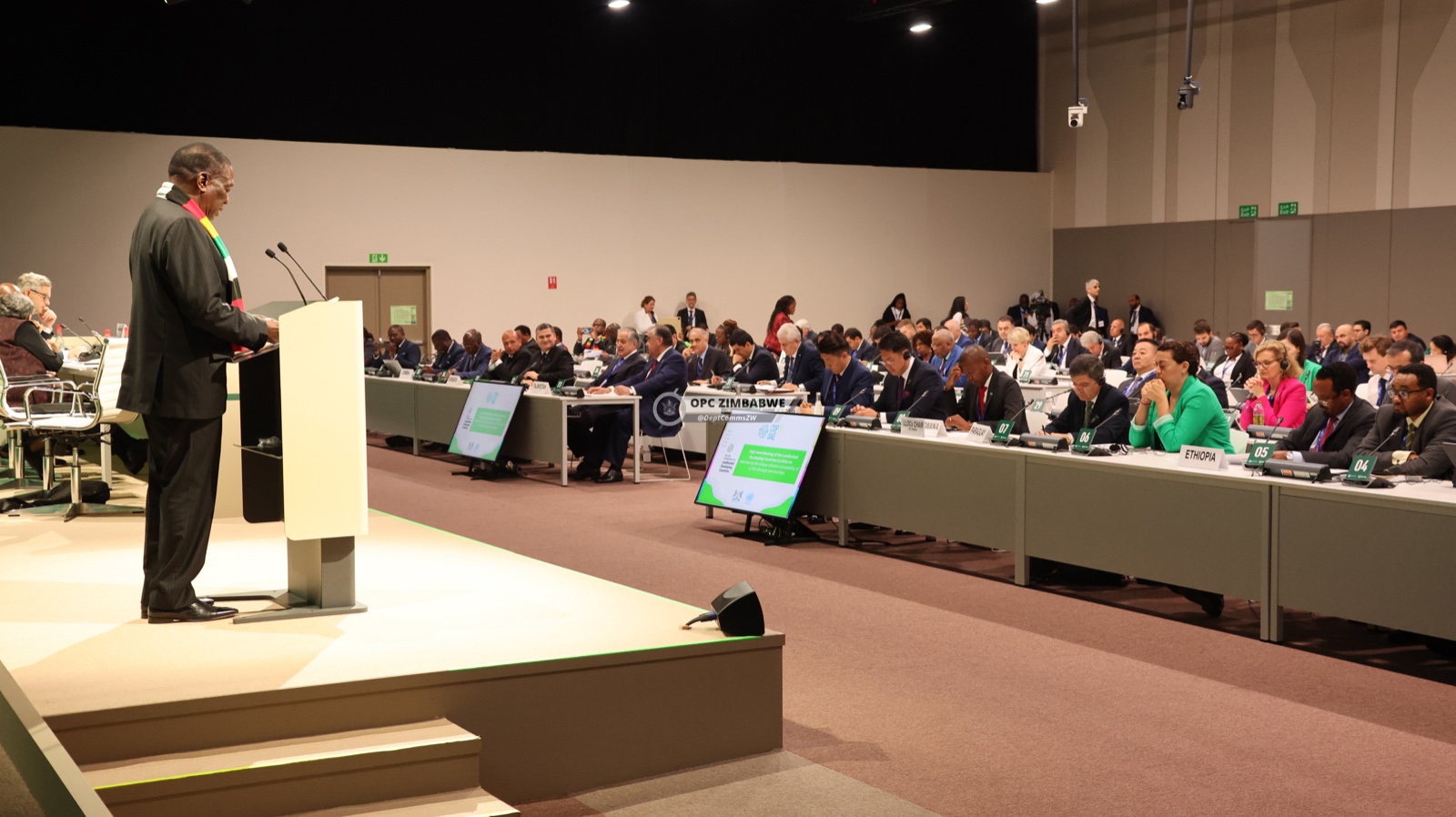
Kudzanai Sharara in Dubai, UAE
Landlocked developing countries must take concrete actions to redress desertification and land degradation and mitigate the negative impact of global warming on the agriculture sector, President Mnangagwa has said.
Landlocked Developing Countries (LLDC3) held a meeting on the margins of the ongoing 2028 United Nations Climate Change Conference or Conference of the Parties of the UNFCCC (COP28) to deliberate on the impacts of climate challenges they faced and identify their needs to adapt and mitigate impacts to foster sustainable development.
The meeting was convened by the Republic of Botswana President Mokgweetsi Eric Keabetswe Masisi in his capacity as the Chair of LLDCs, jointly with UN-OHRLLS.
The outcome of the meeting will make important contributions to the United Nations Conference on Landlocked Developing Countries to be held in Kigali, Rwanda on 18-21 June 2024.
President Mnangagwa said greater cross-border infrastructure investments should be pursued to address insecurities related to energy security and high costs of transport which militates against competitiveness.
He said there is a need to unlock available and affordable financial support and technical capacities to strengthen adaptation and mitigation efforts.
“We, thus, continue to call for stronger partnerships from the developed North towards addressing our unique climate vulnerabilities and delivering on climate action.”
President Mnangagwa said Zimbabwe has embarked on transformative actions towards climate resilience.
“The construction of dams and expansion of irrigation capacity, coupled with renewable energy continues to improve water and energy use efficiencies,” he said.
“The Climate Smart Agriculture, “Pfumvudza/Intwasa” Model adopted by our country is mitigating climate vulnerabilities and guaranteeing household food security, especially among communal and smallholder farmers.
“Research and development, improvements in genetics and innovations, have also promoted resilience of our livestock sector.
“As we move from pledges to implementation, coordination and partnerships with all stakeholders including the private sector should be scaled up,” said President Mnangagwa.
Earlier President Masisi said the theme of the event: “Addressing Unique Climate Vulnerability of LLDCS Through Partnerships”, speaks for itself.
He said a lot of factors faced by LLDCS are attributable to their uniqueness such as their geographical nature which forces them to rely on their neighbours for business transactions with the rest of the world.
“We have to go through complex transit routes and these often face serious threats due to extreme weather events.”
This, according to President Masisi, “jeopardises connectivity” and “slows trade” and negatively impacts competitiveness.


 Peter Tanyanyiwa
 Online Reporter