Online Reporter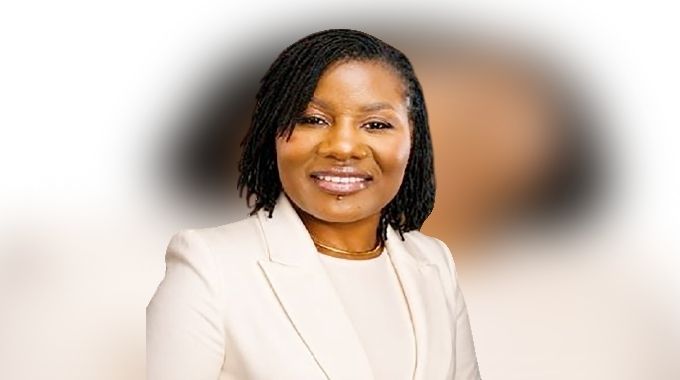
Thandiwe Chidzungu
THERE is a particular kind of strength that grows in places where people learn to make something out of very little. For Ms Viola Moyo, that strength has its roots in Bengo Village in Gwanda, Matabeleland South, where she grew up watching women carry families, work the land, solve problems and stretch limited resources to meet the needs of those around them.
Today, Ms Moyo is a woman of faith, a development practitioner, coach, accomplished humanitarian professional specialising in food security, livelihoods and Disaster Risk Management, and an author. She has worked extensively across Southern Africa with organisations including World Vision, Save the Children and ForAfrika.
But before the professional titles came the lessons of home and community, lessons that would ultimately shape her understanding of women, resilience and the difference between carrying responsibility and truly occupying one’s position.
“My first education was life itself,” she says.
Growing up, Ms Moyo remembers a community where family mattered, farming was woven into everyday life, and people understood the importance of supporting one another through challenges.
The women around her were strong, capable and resourceful. Yet, looking back, she also recognised something else: the danger of allowing strength and self-sacrifice to become an identity.
“A woman could become so accustomed to carrying everyone else that she could forget to ask what she herself was called to carry,” she says.
That observation followed Ms Moyo into her professional life. Her work in agriculture, food security and livelihoods brought her into close contact with farmers and communities across the region. She watched people plant despite uncertainty, organise themselves, pursue markets and make decisions about their futures. In many ways, the farmer became a metaphor for the work she would later do with women.
A farmer places seed into the ground without knowing exactly what the season will bring. Yet they do so believing something can emerge from what has been sown. As she reflected on this, Ms Moyo found herself asking a deeper question: Why do some people take their seat in life while others, despite possessing the ability, experience and opportunity, continue to hesitate?
For her, the answer is deeply connected to identity and faith.
Her understanding is rooted in the belief that God gives people grace and abilities, and that there are positions they are called to occupy. She often returns to the words of Esther 4:14: And who
knows but that you have come to your royal position for such a time as this?”
For Ms Moyo, the verse is more than an inspirational quotation. A position, she believes, is not simply somewhere you sit. It carries responsibility.
From circling the seat to taking it
And so began her thinking about SEAT Coaching: from circling the seat to taking it.
SEAT Coaching is Ms Moyo’s one-on-one approach for capable people who may not be fully occupying the position from which they are capable of leading. At its heart is a deceptively simple idea: many people are capable of more, but capability alone does not guarantee that someone will step forward and use it.
SEAT stands for Secure, Embrace, Activate and Thrive.
To Secure is to understand who you are beneath the roles, titles and achievements.
To Embrace is to own your story and recognise what you carry.
To Activate is to turn understanding into movement.
And to Thrive is to build a life that can be sustained rather than moving endlessly from one form of survival to another.
The philosophy is anchored by what Ms Moyo calls the Position Principle, the belief that people tend to live from the seat they believe they occupy. Taking that seat, therefore, is not passive. It means recognising what has been entrusted to you and accepting the responsibility that comes with it.
Yet certain patterns can keep people circling the seat. One is waiting until you feel completely ready.
Another is adapting so thoroughly to every environment that you lose sight of your own identity. Ms
Moyo calls this the Chameleon, the tendency to change colours so effectively for every room that eventually you are no longer sure what your own colours are.
The gap is not capability
Ms Moyo’s work with women has led her to an important conclusion. The problem is not that
Zimbabwean women lack capability. Far from it.
Zimbabwean women are resourceful. They know how to survive, stretch limited resources and hold things together. They have done so for generations.
However, Ms Moyo repeatedly observed a disconnect between carrying responsibility and fully occupying one’s position.
A woman can manage a household, provide for others, meet expectations, solve problems and remain dependable, yet still hesitate when an opportunity arises to step into leadership or pursue something for herself. She may wait for permission. She may tell herself she needs more experience, more confidence, more money, or simply a better time.
While conventional empowerment messages often tell women, “You are strong. You are capable,”
Ms Moyo believes another conversation is necessary. Being capable is not the same as acting from that capability.
“That gap,” she says, “I could not ignore.”
When survival becomes an identity
Survival mode does not always look like crisis. Sometimes it looks remarkably productive.
It can look like a woman who is constantly working, providing, solving problems and responding to everyone else’s needs. Her days are full. She is getting things done. But beneath the activity may be a different reality. There is little space to ask: What do I want? What am I building? What seat am I meant to occupy?
Survival keeps attention fixed on urgency. It can make postponement feel responsible and hesitation appear wise. Ms Moyo understands how easily this can happen, particularly in cultures
where women are taught from an early age to be responsible, careful, self-sacrificing and protective of their families.
These qualities are not inherently negative. Responsibility, dependability and sacrifice can be expressions of love and strength. The danger arises when the role becomes identity.
“I am the responsible one.”
“I am the strong one.”
“I am the one who holds everything together.”
When these become the dominant answers to the question of who a woman is, there may be little room left to discover who she is beyond what everyone needs from her. If a woman does not know who she is beyond her roles, Ms Moyo argues, it becomes much harder to recognise the seat that belongs to her, let alone take it.
What women carry but don’t count as capacity
Coaching has taught Ms Moyo something she says she continues to encounter time and again: women often carry enormous capacity without recognising it as such.
A woman may sit across from her convinced that she lacks experience, leadership ability or resources. Then they begin unpacking her story. She has led people. She has solved difficult problems. She has supported others through crisis. She has built something from almost nothing.
She has made decisions under pressure. Yet because she had to do those things, she does not necessarily view them as evidence of capacity. They were simply what life required.
That distinction can be transformative. Having capacity and activating it are not the same thing. Sometimes what is missing is not another qualification, another motivational speech or another person’s approval. Sometimes it is the decision to take oneself seriously.
Ms Moyo has watched women move from asking, “Am I allowed to?” to asking, “What could I do if I took myself seriously?”
The second question opens an entirely different future.
A letter to the younger woman
If Ms Moyo could sit across from her younger self, her advice would be direct:
“Stop spending energy trying to prove that you are enough.”
She reflects on how easy it is to become whatever everyone else needs you to be, daughter, mother, professional, caregiver, provider, friend or leader, until the person beneath the roles becomes difficult to see.
Her message to that younger woman would be to give herself permission to become who she already had the capacity to be. Because waiting is not always wisdom. Sometimes, she says, waiting is fear wearing the clothes of wisdom.
“Take your seat.”
It is a phrase that captures much of Ms Moyo’s philosophy. Not because every woman must occupy the same kind of seat, or because success has a single definition, but because each woman must become willing to recognise her own position, responsibility and capacity.
Cut down but not uprooted
Perhaps Ms Moyo’s message of restoration is most powerful in her reflection on Job 14:7–9. The passage speaks of a tree that has been cut down but can sprout again when it encounters water. For women who have experienced rejection, disappointment, betrayal, hardship or persecution, Ms Moyo sees a profound message of hope.
“Being cut down is not the same as being uprooted.”
A difficult season can make a woman feel as though her story is over. But Ms Moyo believes the stump is not the woman’s identity. It is her current season.
For the woman who has spent years carrying everyone else, it is an invitation to ask what happens when she begins to carry her own calling with the same seriousness. For the woman who has been rejected, it is a reminder that being cut down is not the same as being uprooted. For the woman waiting to feel ready, it is a challenge to examine whether readiness has become an excuse for fear.
And for the woman still trying to prove that she is enough, it is permission to stop.
Ms Moyo’s message is simple:
“Your seat has already been assigned.”
Across Matabeleland South, from Gwanda to Beitbridge, women continue to carry communities forward. Ms Moyo’s work is an invitation to move beyond survival, recognise the capacity that already exists, and step fully into purpose.
As she puts it, the ground has been prepared. The seed is in the soil. The question now is who will take their seat.