Online Reporter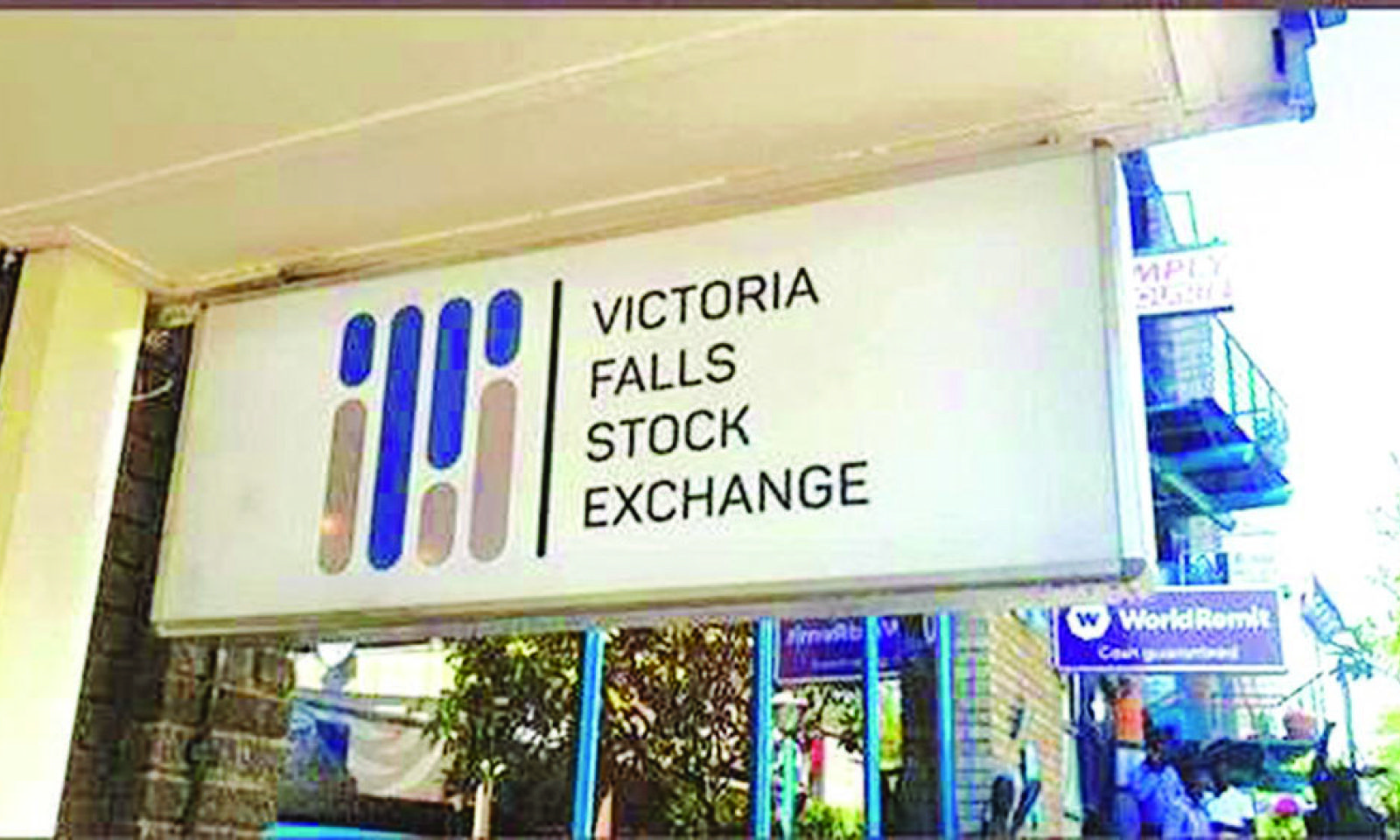
Zimpapers Business Hub
ZIMBABWE’S stock markets experienced contrasting fortunes this year.
While there was encouraging activity on the Victoria Falls Stock Exchange (VFEX), a subdued outturn characterised the Zimbabwe Stock Exchange (ZSE).
Structural shifts in liquidity, sectoral performance and currency dynamics are expected to shape market dynamics in 2026, offering both opportunities and challenges for investors.
Activity and market capitalisation expanded significantly on the VFEX this year.
By last week, it was up approximately 65 percent year-to-date, largely driven by a strong commodities cycle, increased dollarisation and the platform’s foreign currency trading advantage.
Conversely, the ZSE remained broadly flat, weighed down by declining local currency liquidity, cautious retail participation and the tightening monetary stance aimed at stabilising the local unit.
With corporate earnings increasingly reported in US dollars, the local currency-denominated bourse found it difficult to attract meaningful flows in ZiG, limiting turnover and suppressing valuations. Investment analyst Mr Enock Rukarwa said the contrasting fortunes of local capital markets underscore the fragmented liquidity structure of Zimbabwe’s dual currency monetary regime.
“If you then turn to the factors that have been contributing to the growth that we have seen on VFEX, which is currently around 65 percent up year-to-date, you would note that the gold rally has played a very significant role, especially for mining-related companies,” he said.
“You will also realise that since we have got a dual currency economy, the dollarisation penetration has been increasing and this, to a greater extent, was also the mirror effect even on the capital markets where institutions are generating US dollar revenue; they are also creating surplus positions that are in US dollars, and these are some of the funds that have been filtering into the capital markets.”
Economist Mr Malone Gwadu said there was a bit of strain on the capital markets, as there was an exit of various counters from the local bourse and an inability of listed companies to raise capital from the ZSE.
Factors affecting performance
The stabilisation of the local currency (ZiG), Mr Rukarwa said, assisted companies in correcting their valuations.
“What we used to see in the past five years is a situation whereby company financial statements, whether you are looking at top line or bottom line, have been carrying a lot of ‘fat’ through translation gains, monetary gains and also revaluation gains. But this stability has ensured that all that fat is no longer there,” he said.
Mr Gwadu said the ZiG came at a time when the equities market was largely used as a haven for local currency holdings in the face of currency volatility.
“The introduction ushered in efficient trades being realised based largely on investor sentiments without the added layer of using equities as hedge instruments. However, the ZiG, coupled with the liquidity-arresting monetary policy stance, has had the unintended consequence of limiting trading due to tight liquidity,” he said.
Mr Tinashe Duma, an analyst at Equity Axis, said linking company performances to their respective sectoral indices provided a macro view of the economy’s pressures and pockets of resilience.
He said the ZSE Consumer Discretionary Index was the standout performer, rising by 74,2 percent, driven by the stellar performance of RTG.
He also said the modest performance of the ZSE Consumer Staples and Staples Modified Indices (4,2 percent and 6,2 percent, respectively) suggests that, despite tight liquidity, certain segments of consumer spending remain strong.
ZSE Holdings perspective
ZSE Holdings chief executive officer Mr Justin Bgoni said the ZSE All Share Index, which reflects the performance of all listed counters on the exchange, gained 7,9 percent year-to-date as of November 30, 2025, closing at 234.97 points.
The ZSE Top 10 Index, tracking the largest blue-chip companies by market capitalisation, recorded a 9,49 percent year-to-date gain, closing the period at 235.67 points.
“On the Victoria Falls Stock Exchange, the VFEX All Share Index delivered a strong performance, surging 67,8 percent year-to-date to close at 174.68 points,” said Mr Bgoni.
On the VFEX, he added, foreign investor participation declined to 10,7 percent, primarily driven by increased activity from local investors, who have continued to deepen their presence. Foreign participation also moderated slightly, falling to 21,3 percent from 23,46 percent the previous year.
However, with the recent streamlining of transaction costs, greater foreign investor involvement is anticipated going forward.
“Efforts to enhance retail investor participation remain ongoing across both exchanges. Investor education initiatives, alongside the continued promotion of mobile trading platforms, are contributing to improved accessibility and are expected to support broader engagement from retail market participants,” said Mr Bgoni.
Regulator’s perspective
The Securities and Exchange Commission of Zimbabwe (SecZim) said Zimbabwe’s capital markets were poised for deeper transformation in 2026, driven by ongoing regulatory reforms, new disclosure requirements and strengthened investor-protection mechanisms.
In an interview with The Sunday Mail Business, SecZim’s acting chief executive officer Mrs Grace Berejena said progress made in 2025 had laid the groundwork for stronger market performance next year.
“The commission reinforced compliance through proportionate enforcement actions, while new legislation enabling the Zimbabwe Stock Exchange to self-list through ZSE Holdings enhanced institutional independence, transparency and alignment with international best practices,” she said.
“Enhanced oversight of financial crime and compliance risks also played a role, as reflected by the marginal improvement in the SecZim 2025 money laundering sector risk-assessment rating from 0.40 to 0.39.
“This indicates that capital markets participants are gradually responding to supervisory reforms and tightening their internal controls.”
However, she noted that further progress is required as we move into 2026, and the key priorities include expanding the range and number of listings, particularly viable products.
Outlook: Opportunities and risks
Mr Bgoni said market activity on both the ZSE and the VFEX is expected to increase in 2026, driven by heightened participation from both local and foreign investors.
Capital markets are also projected to deepen as more instruments come to market, particularly through new listings in the mining sector and the continued growth of Real Estate Investment Trusts (REITs).
“Additionally, more capital-raising initiatives are projected from small and medium-sized enterprises (SMEs),” he said.
Mr Rukarwa said given that the authorities seemed steadfast in continuing their contractionary policy stance for the full term of the NDS2 (2026 to 2030), liquidity would remain constrained, impacting performance on the ZSE.
“We might continue to see some growth on VFEX, though it might not be too pronounced, probably between 10 and 20 percent, but on the ZSE side, it may be flat to bullish as liquidity will be thin and investors may fail to secure enough liquidity to support the buy side,” he said.