Online Reporter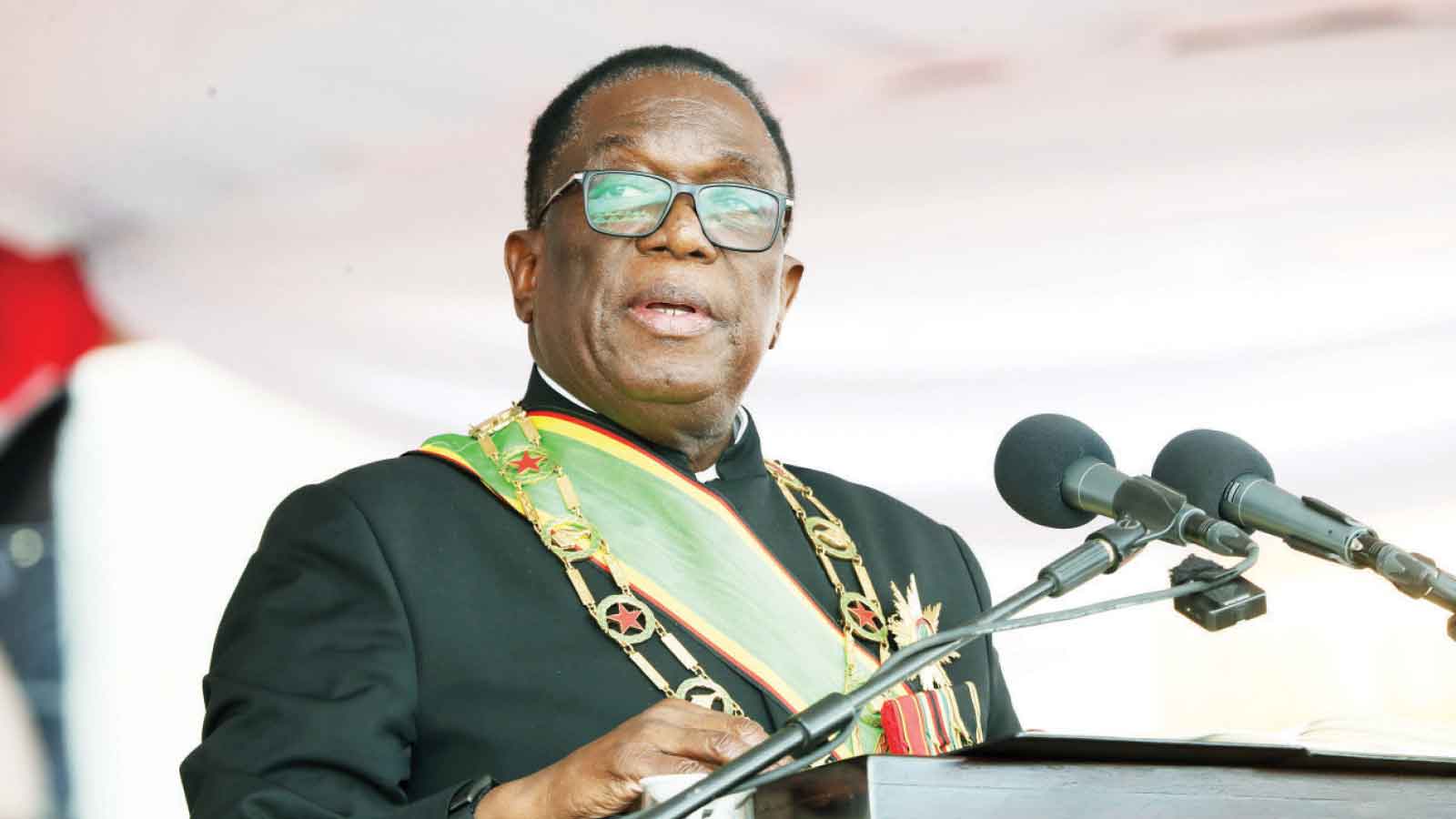
Sam Matema (MP)
The greatest threat to sustainable, green, resilient and smart cities broadly referred to as metropolises of the future, is the failure to achieve a balance in the sustainability triangle.
This is occasioned by anthropogenic factors finding expression in urban informality and all its ills.
With more than 68 percent of the world’s population projected to be living in cities by 2050 as reported by United Nations’ World Urbanisation Prospects 2023, this means over 2,5 billion people will be living in urban areas on the backdrop of many push factors, including climate change and its attendant shocks.
This speaks to the urgency with which Zimbabwe needs to attend to the prescription of the 152nd session of the Inter Parliamentary Union (IPU) theme, “Nurturing hope, securing peace and ensuring justice for future generations” held in Istanbul, Turkey, in April 2026.
Environmental justice anchored on wise and sustainable use of resources, with respect to the need for resilient urbanisation, is a key theme that should be pursued with the speed and urgency of the moment.
As such, urbanisation remains not only an opportunity, but a threat to sustainable and resilient growth of Zimbabwe’s cities going into the future.
There is already serious pressure on service delivery, housing and socio-economic vices, which are heading north because of urban informality. This is symptomatic of the failure of the formal system to keep pace with the rate of urbanisation as it relates to the provision of basic services.
The housing gap has created an opportunity for illegal settlements underpinned on unlawful parcelling of land, by land barons in open spaces reserved for recreational purposes as well as fragile and sensitive ecosystems like wetlands.
As the capital city, Harare carries the biggest scars of informality owing to land barons. In 2014, the Government launched the Harare charter of the National Housing Delivery Programme under the Zimbabwe Agenda for Sustainable Socio-economic Transformation (Zim-Asset). This was meant to see the city delivering 105 935 houses by 2018 to reduce the council housing backlog, as researchers have observed.
However, that became a moving target, for, since 2018, the housing waiting list for Harare has more than quadrupled.
Notably, the elephant in the room is corruption involving land deals by land barons in and around urban areas.
Land is a finite resource, and citizens’ conduct must reflect that. Zimbabweans have been carrying themselves with reckless abandon as if the land available is infinite. The urban sprawl and mushrooming of illegal settlements speak to this.
Since these settlements are not planned, they are home to diseases, crime and floods. One can easily recall Operation Murambatsvina, which, according to reports, saw upwards of 700 000 people being affected.
There are massive opportunities in different spaces regarding building structures, codes, nature of city expansion, spatial planning, greening of cities, sustainable transport systems, waste management, land-use and the law.
All these must be aligned to reflect the direction that should be taken in natural resources management and use.
The other massive opportunity to be seized is the political will that the Second Republic, under the leadership of President Mnangagwa, has exhibited through the push for regularisation of illegal settlements as opposed to approaches of the past.
Living up to the constitutional provisions in respect to economic, social and environmental rights, the country’s laws must reflect a futuristic and responsible environmental stewardship.
Section 73 of the Constitution of Zimbabwe guarantees a clean and safe environment to current and future generations. The current generation is holding the environment in trust for future ones, and for all intents and purposes, Zimbabweans should be responsible stewards, nothing more.
There is an urgent need for the amendment of existing legislation and enacting of new laws. The EMA Bill that will soon be before the National Assembly is expected to tackle and fill the existing gaps that have caused serious environmental damage, especially in spatial planning, housing construction and mining activities.
The Environmental Management Act (EMA 20:27) in its current form is so inadequate and deficient that it needs amendments. Given the importance of wetlands from an ecosystem services perspective, it would be strategic to have a separate and stand-alone Act born out of a Wetland Bill.
The Regional, Town and Country Planning Act (29:12) of 1976, which was cited in Recommendation 3 of the 2005 Tibaijuka report, is another piece of legislation that needs revamping so that it addresses threats caused by rapid urbanisation and climate change.
It has to be in sync with lived realities and future plans, goals and aspirations at a national scale, alive to national, regional, continental and global commitments to serve and save the people.
Critical facts must be prioritised in urban expansion, considering that land is finite. Vertical densification or expansion is the ultimate direction, but that must be actualised through permitting legislation.
Therefore, this calls for an urgent revision of existing laws on spatial planning, building codes and penalties to city authorities and land barons found on the wrong side of the law. Penalties must be deterrent enough if any hope of building sustainable and resilient cities into the future is to be kept alive.
In the absence of the will to implement existing laws, however good, bridges will continue to be built to no avail. Authorities must be decisive and ruthless in dealing with land barons and corrupt council officials.
Zimbabwe can ill afford demolitions of completed houses in so-called undesignated areas. The country cannot afford construction work on its fragile ecosystems and mining activities in cities.
Waste disposal in water sources should be a thing of the past. The door that land barons have used over the years as their escape route must be shut, bolted and barricaded by ensuring that the existing law is enforced without fear or favour.
Collectively, Zimbabweans shall overcome!
Honourable Sam Matema is the National Assembly Member for Buhera Central constituency, ZANU PF Manicaland Province Secretary for Administration, Climate Parliament Zimbabwe Chapter chairman and Chairperson of the Parliamentary Portfolio Committee on Environment, Climate and Wildlife. He writes in his personal capacity.