

 Online Reporter
Sukulwenkosi Dube-Matutu, [email protected]
THE National Aids Council (Nac) says Zimbabwe is shifting to a more targeted HIV prevention approach to protect the major gains achieved in the past two decades, as the country continues to outperform global treatment targets.
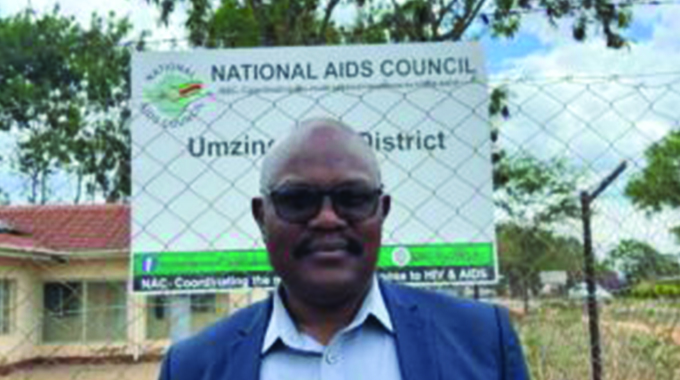
During a media tour in Bulilima and Mangwe districts last week, Nac’s Matabeleland South provincial manager, Mr Mgcini Sibanda, said the country has moved away from a generalised HIV response to a model that focuses on specific populations and their unique risk factors.
Zimbabwe’s HIV response now combines biomedical, behavioural and structural interventions tailored to high-risk groups. These include oral and injectable PrEP, Peer-led programmes such as Brotha2Brotha and Sista2Sista, STI screening and targeted prevention, condom distribution guided by risk profiling and community-based HIV education and testing.
The national HIV prevalence stands at 11,3 percent, with Matabeleland South among the provinces with higher prevalence rates.
Mr Sibanda said the country’s success has necessitated a more refined approach.
“In the past, we were doing a generalised HIV prevention strategy, both for demand creation, HIV testing and all the other thematic areas. The fact that now more than 96 percent of the population who are estimated to be living with HIV know their HIV status. Of those who know the HIV status, more than 96 percent are now on treatment,” said Mr Sibanda.
“Of those who are on treatment, more than 96 percent are virally suppressed. So now we have reached a point where we are saying we will need to sustain these gains. In sustaining the gains, we are now looking at the pockets of individuals, looking at the spatial and geographical areas where they are found.”
Mr Sibanda said Nac now profiles groups according to their vulnerability — whether linked to age, occupation, movement patterns, or power dynamics in relationships.
After a risk assessment, interventions are designed to match the needs of these subgroups.
“Instead of distributing condoms randomly, we channel them to high-risk populations and conduct focused education on proper use. After we have done risk assessment, we then look at these subpopulations, whether it is an age group, like adolescent and young women, artisanal miners, the long-distance truck drivers, the informal traders who are involved in cross-border activities,” he said.
“These are individuals who are at risk and interventions are crafted in a manner to suit their individual needs. For example, with adolescent girls and young women, we’ve discovered that they are not as well informed about HIV issues and they never witnessed the devastating effects the pandemic had before all of these interventions.”
Mr Sibanda said some of these youngsters will be having sex with people way older than them, making it difficult for them to negotiate for condom use and other safe alternative use.
Mr Sibanda said boys are also at risk, as some of them have sexual intercourse with older women while at the same time have relationships with their age mates. He said some of these boys depend on the elderly women for financial support, making it difficult for them to negotiate for safe sex. He said these youngsters and their same-age girlfriends are therefore at risk of HIV.
“We also have artisanal miners and some of them are married people who leave their families behind for a sustained period of time while working in the mines. In those mines, we also have people who are informal traders who come to sell their wares. These women leave behind their sexual partners, which is a recipe for disaster,” said Mr Sibanda.
Mr Sibanda said the response is now targeting and pursuing the hotspots. He said some of the hotspots are not static, especially those for the informal traders. He said the interventions are now tailor-made to suit each situation.
Mr Sibanda said the interventions also follow an integrated approach, which involves various stakeholders. He said the interventions are peculiar to every population group.Other strategies include comprehensive sexuality education, condom distribution, the prevention of mother-to-child transmission (PMTCT), and integrated sexual and reproductive health services.
Zimbabwe has also been a leader in adopting new prevention technologies, such as the injectable PrEP, to improve options for high-risk individuals.
Zimbabwe has made some of the most significant progress in HIV control globally, earning international recognition for reducing HIV prevalence from over 25 percent in the early 2000s to around 11 percent today, achieving and surpassing the UNAids 95-95-95 targets, a robust PMTCT programme that cut mother-to-child transmission, community-driven programmes that improved male circumcision uptake and PrEP access and viral load suppression rates above 96 percent among those on treatment.
— @DubeMatutu


 Bongani Ndlovu