Online Reporter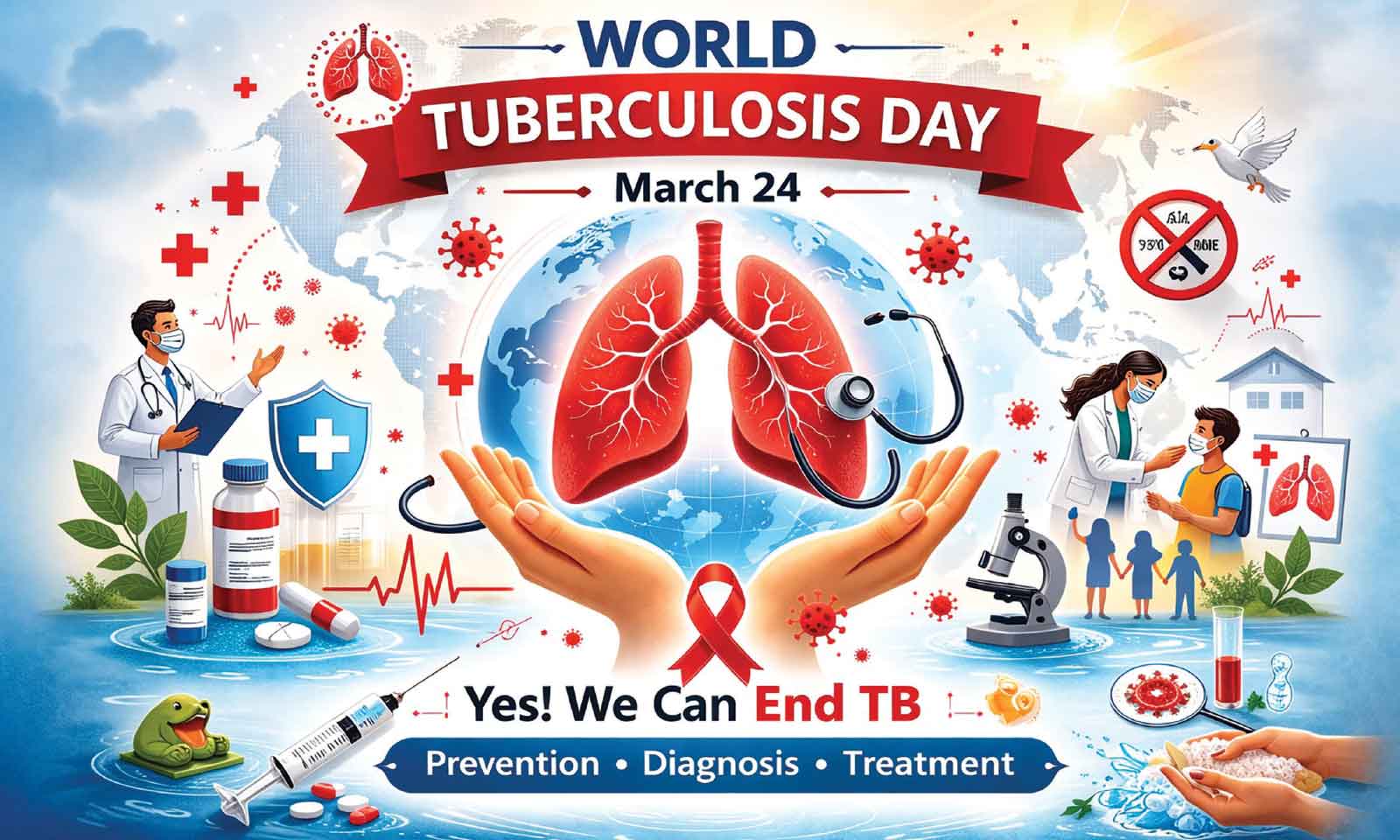
Rumbidzayi Zinyuke
Health Buzz
IS tuberculosis still a disease of the past? As the world marks World TB Day today, that question surely deserves an audience and an answer more urgent than ever.
For many Zimbabweans, TB is often associated with the distant past. Something that is no longer a threat.
Yet behind that perception lies a stubborn reality. TB remains one of the deadliest infectious diseases globally and continues to exact a heavy toll across Africa, including Zimbabwe.
Globally, TB has reclaimed its position as a leading infectious killer, surpassing many other diseases despite being preventable and treatable.
According to the latest data from the World Health Organisation, about 10 million people fall ill with TB each year, and more than 1.2 million die annually. Even more concerning is that progress toward eliminating TB is lagging.
Since 2015, global incidence has declined by only about 12.3 percent, far short of the 50 percent reduction target set for 2025.
In Africa, the burden is disproportionately high. The region accounts for roughly a quarter of global TB cases and loses over half a million lives to the disease every year. These numbers underline the real challenge.
TB is not just a health issue, it is a development challenge, closely linked to poverty, malnutrition, overcrowding and limited access to healthcare.
Zimbabwe mirrors many of these global and regional trends. The country has made notable progress in recent years, being removed from the list of the 30 countries with the heaviest burden of TB. However, the country remains among the high-burden nations for TB/HIV co-infection and drug-resistant TB.
In 2019, an estimated 29 000 people fell ill with TB and about 6 300 died from the disease. More recent data shows encouraging signs, with TB incidence declining to about 203 cases per 100 000 people, reflecting gradual improvement in control efforts.
However, beneath these gains lie persistent gaps that continue to undermine the fight against TB. One of the most significant challenges is under-diagnosis. Zimbabwe is estimated to miss nearly 13 000 TB cases very year, highlighting gaps in case detection and surveillance.
Late diagnosis not only worsens patient outcomes but also fuels ongoing transmission within communities.
Another critical issue is the intersection of TB and HIV. Zimbabwe, like many countries in southern Africa, faces a dual epidemic. TB is a leading cause of death among people living with HIV, complicating treatment and increasing mortality risks. While integration of TB and HIV services has improved, gaps remain in early testing, treatment initiation and patient retention.
Drug-resistant TB (DR-TB) presents an additional layer of complexity. Cases that do not respond to standard treatment require longer, stronger and more expensive regimens. In Zimbabwe, hundreds of drug-resistant TB cases are reported annually, placing strain on the health system and patients alike. Globally, DR-TB remains a major public health threat, with treatment success rates significantly lower than for drug-sensitive TB.
Beyond clinical challenges, structural issues continue to hinder progress. Funding constraints are among the most pressing. Global financing for TB programmes has declined in recent years, raising fears that hard-won gains could be reversed. Experts warn that reduced investment could lead to millions of additional cases and deaths in the coming decade.
In Zimbabwe, resource limitations affect everything from diagnostic capacity to treatment support systems. Rural communities, in particular, face barriers such as long distances to health facilities, limited laboratory infrastructure and shortages of trained personnel. These gaps contribute to delays in diagnosis and interruptions in treatment—both of which are critical drivers of ongoing transmission.
Yet amid these challenges, there is also a growing sense of hope, driven by scientific innovation and renewed global focus on ending TB.
One of the most significant advances has been the development of shorter, more effective treatment regimens. Traditionally, TB treatment required up to 24 months of continuous medication, often with severe side effects. Today, newer regimens of up to six months, are reducing treatment duration and improving patient outcomes. These shorter courses not only enhance adherence but also reduce the burden on health systems.
In addition, new diagnostic tools are transforming how TB is detected. Molecular tests, such as rapid gene-based diagnostics, can identify TB and drug resistance within hours rather than weeks. These technologies are increasingly being rolled out across African countries, including Zimbabwe, improving early detection and enabling timely treatment.
Research is also opening new frontiers. Promising drug candidates and novel compounds are being developed to combat resistant strains, while innovative screening methods, including artificial intelligence-based tools, are showing potential in identifying TB cases more efficiently in high-burden settings.
Perhaps most exciting is progress in vaccine development. For over a century, the Bacillus Calmette-Guérin (BCG) vaccine has been the only available TB vaccine, offering limited protection, particularly in adults. Today, several new vaccine candidates are in advanced stages of clinical trials, raising hopes of a more effective tool to prevent TB transmission in the future.
At the same time, community-based approaches are gaining traction as a critical component of TB control. These include active case finding, where health workers proactively screen high-risk populations, and patient support programmes that help individuals complete their treatment. Evidence shows that involving communities not only improves treatment outcomes, but also reduces stigma, a major barrier that continues to discourage people from seeking care.
Awareness remains a cornerstone of the fight against TB. Despite its prevalence, misconceptions about the disease persist. TB is often associated with stigma, leading many people to hide symptoms or delay seeking treatment.
Yet the disease is both preventable and curable. It spreads through the air when an infected person coughs or sneezes, making early detection and treatment essential to breaking the chain of transmission.
Symptoms such as a persistent cough lasting more than two weeks, night sweats, weight loss and fever should prompt immediate medical attention. Early diagnosis not only saves lives but also protects families and communities.
As Zimbabwe and the rest of the world commemorate World TB Day, it is important to know that progress is possible, but it is not guaranteed.
The fight against TB requires sustained political commitment, increased funding, stronger health systems and continued investment in research and innovation.
For Zimbabwe, the way forward lies in building on existing gains while addressing the gaps that persist. Strengthening primary healthcare, expanding access to diagnostics, integrating TB and HIV services, and ensuring consistent supply of medicines are all critical steps. Equally important is empowering communities with knowledge and reducing stigma so that no one is left behind.
The world has committed to ending TB by 2030 under the Sustainable Development Goals. But current trends suggest that without accelerated action, this target will remain out of reach.
World TB Day is more than a commemorative event, it is a call to action. A reminder that behind every statistic is a life, a family, a community affected by a disease that should no longer be claiming lives in the 21st century.
The question, then, is not whether TB can be ended. The tools, knowledge and innovations are increasingly within reach. The real question is whether the world, and countries like Zimbabwe, will act with the urgency and commitment required to turn that possibility into reality.
Feedback: [email protected]