Online Reporter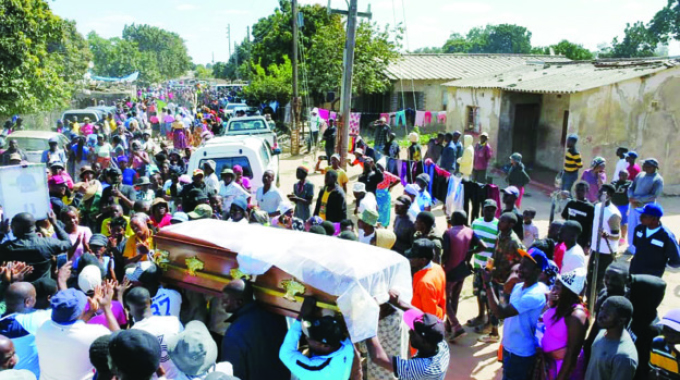
Remember Deketeke-Herald Correspondent
AS the final clods of soil fell on the coffins of Rainford (29) and Shantel Jere (3), the mood at Zororo Memorial Park was one of heartbreak, reflection and unanswered questions.
In Chengaose Street, St Mary’s, the funeral procession, marked by solemn hymns and tearful goodbyes, served as a stark reminder of the tragedy that struck at Hunyani Bridge along Seke Road, a single moment that claimed 17 lives.
“What remains are pictures, memories and wounds that the bereaved doubt will never heal,” said a neighbour quietly, as mourners gathered to pay their final respects at the Jere homestead.
“The burial is done, but who can answer why 17 lives were lost in one bizarre moment?”
Among the mourners was a woman whose pain shook the entire crowd, the widow to Rainford and mother to Shantel.
As she approached their caskets during the final body viewing, her cries pierced the silence.
“Ndisiyei ndione murume wangu nemwana wangu. Musandirambidze (Let me see my husband and child. Do not stop me),” she sobbed.
A voice from the crowd gently remarked, “Vaidanana vanhu ava. (These two truly loved each other.” Though softly spoken, the words carried powerful weight, stirring fresh emotions among those gathered.
The funeral was not only marked by grief, but also a deep sense of community solidarity.
Friends, neighbours and church members stood shoulder-to-shoulder, sharing in the weight of loss. Some wept openly, others sat in silence, lost in thought.
A group of young people from the community wore black armbands in tribute, while others brought flowers, jerseys and candles as tokens of remembrance. Throughout the procession, emotions ebbed and flowed. At one moment, mourners embraced in silence and in the next, they broke into a dirge.
The mix of grief, disbelief and unity painted a haunting picture of a community trying to come to terms with the incomprehensible.
Rainford and Shantel were not the only ones being mourned.
Prodgas Mugere (37), another victim of the crash, was also laid to rest nearby.
A well-known figure in the community, Mugere was remembered not only as a brother and friend, but as a unifier, someone who brought light to the suburb through sport and mentorship.
“I have lost not only a nephew, but a friend, a brother and that, I believe, will hurt more,” said Mr Albert Necheringa, Mugere’s uncle, in a quiet moment of reflection.
The street, usually alive with laughter and chatter, became a place of hymns and heartbreak.
Songs such as Hatina musha panyika (We have no home on earth) and Tipei nguva yekuchema gamba redu (Give us time to mourn our hero) rang out, some sung with trembling voices, others with defiant strength.
For Moses Mugere, the pain was raw and surreal.
“I was in South Africa when the news came and immediately I froze,” he said.
“I came here thinking things might change, but it became worse when I saw pictures of my sister identifying my brother”.
That is when reality kicked in for the South African-based Moses.
“I knew I had lost my best friend, my only brother, and the soccer coach of our community.”
Prodgas, he added, had started a football academy that had helped steer dozens of young people away from drugs and crime.
His dream, now cut short, leaves behind not just grieving relatives, but a whole generation of boys who had found purpose through his vision. As the sun set over Chitungwiza, mourners dispersed, slowly, quietly carrying with them stories of love, loss, and lives taken too soon.
And in the silence that followed, one question lingered in many hearts: Why?