admin
admin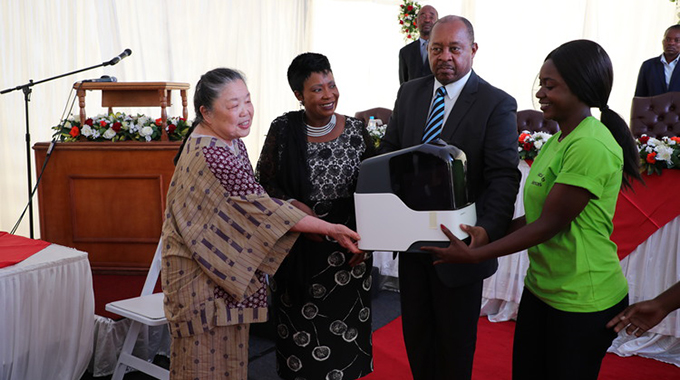
Mirirai Nsingo
First Lady Auxillia Mnangagwa says technology is fast changing the face of the HIV epidemic following the invention of a new generation of diagnostic machines that can test for HIV in infants with results coming out the same day.
First Lady asserts the latest technology being used in HIV response does not only reduce anxiety in mothers but is instrumental in reducing the mother to child infection of HIV.
Zimbabwe this week received 10 Samba machines from a UK-based diagnostic manufacturer, Diagnostic for Real World, which are used to diagnose HIV within an hour in infants, as well as monitoring HIV progression in adults.
“I’m excited by this technology that will see mothers getting results that very same day. And by taking health care services to marginalised communities, this will reduce costs for mothers who used to travel to get such services.
“These machines will definitely go a long way in providing early infant diagnosis of HIV and viral load monitoring. Without treatment, 30 percent of children born to HIV positive mothers die before their first birthday, so this technology will ensure early diagnosis resulting in timeous interventions.”
The machines were distributed across the country’s 10 provinces with the director of the Aids and TB unit in the Ministry of Health and Child Care Dr Owen Mugurungi concurring that this was a milestone achievement that will see the country fast eliminating mother-to-child transmission of HIV.
Before the introduction of these SAMBA point of care machines, HIV infant diagnosis was centralised only being done in Harare and Bulawayo and it would take several weeks or months before mothers get to know the status of their babies.
“This will surely reduce anxiety in mothers as they get to know the status of their infants instantly. Technology is indeed changing the face of the epidemic as we have moved from times when infants could only be tested after 18 months, then came the conventional machines that were only found at central hospitals meaning samples would be sent from districts for testing.
“It would take weeks before mothers get to know the results and now we have machines that can test with results coming out immediately. This will go a long way in the HIV response and we can only thank innovation that has resulted in this new generation of diagnostics,” says Dr Mugurungi.
DRW founder and CEO Professor Helen Lee believes such new generation of diagnostic tools can positively change the HIV response in Zimbabwe.
“We made this for resource constrained countries and it is such innovation that can go a long way in ending AIDS. This indeed a game-changer in the HIV response.
“It is like the invention from a landline to a cellphone and Zimbabwe is one of the countries at the forefront in implementing this technology.”
Director for laboratory services in the Ministry of Health and Child Care Douglas Mangwanya further adds that technology has changed the game, by allowing services to be offered at the point-of-care with patients getting results within hours.
“The decentralisation of early infant diagnosis and viral load monitoring has impacted positively on HIV treatment outcomes.
“The machines have changed the game; they are allowing us to offer services at the point-of-care as patients get results within hours. So in a wholesome way it has improved care of patients in every sense as it is now literally by the bed side, helping us come up with timely interventions and management of patients according to viral load results,” he added.
While the convectional machines required air conditioning and specialised personnel, Mangwanya said the Samba II were made for resource constrained settings and are more reliable, simple, robust, quality-assured and relatively rapid point-of-care molecular diagnostic platform.


 Online Reporter