Chronicle Editor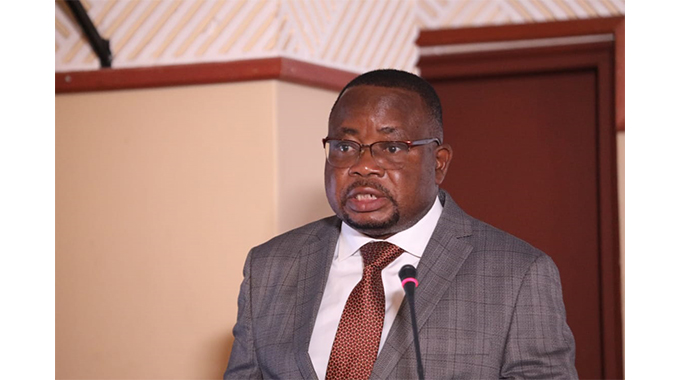
Nqobile Tshili, [email protected]
SKILLS Audit and Development Minister, Professor Paul Mavima, has underlined the importance of embracing new technologies, like artificial intelligence (AI), for Zimbabwe’s economic future.
He stressed the need for Zimbabwe to adapt to the ongoing global technological revolution.
Prof Mavima highlighted the disruptive potential of technological advancements on economies and workplaces. He argued that by remaining on the side lines, Zimbabwe risks falling behind in the race towards increased efficiency and productivity across various sectors.
“It is not just artificial intelligence, but technology in general and the whole idea of the fourth industrial revolution. It’s driving a lot of changes in terms of information technologies. It has implications in the way industry operates. Higher levels of mechanisation, for example, higher levels of automation that is coming from AI and the whole idea of the information economy,” said Prof Mavima.
“So as Zimbabwe, we have to be prepared to compete effectively in integrating this new technology, which is going to bring a lot of efficiencies globally. If we are left behind, it means whatever we are doing in terms of our own industrialisation and want to export will be competing with nations and outside organisations that are employing this technology and they will be better placed to compete against us. So we also need to embrace that and make sure that as we develop our economy, as we industrialise, we are industrialising to the standard that is prevalent to the world.”
Prof Mavima announced the finalisation of plans for a multi-stakeholder consultation meeting. The meeting will pave the way for a comprehensive skills audit aimed at identifying competence gaps hindering the country’s development.
He acknowledged the previous national skills audit, conducted by the Ministry of Higher and Tertiary Education in 2018. He called for a new study to reflect the evolving competency requirements for national development.
The 2018 audit revealed significant skills gaps, particularly in applied natural and applied sciences, engineering technology (over 90 percent), and applied arts and humanities (18 percent). Conversely, the business and commerce sector showed a surplus of 21 percent. It’s important to note, however, that the previous audit focused primarily on skills at the higher and tertiary education levels, potentially missing gaps in other professional areas.
“It produced a lot of good information which has also been used for the purposes of redesigning some of the courses and programmes at our universities. But we want to go beyond higher levels of skills that were audited in 2018 to include a more comprehensive approach where we are looking at the lower level skills that can lead to development at ward level, skills that are produced at vocational training centres which are really useful on a day-to-day basis,” said Prof Mavima.
He outlined the expanded scope of the upcoming skills audit. Moving beyond scientific and technical fields, the audit will assess the availability of skilled professionals in essential trades like plumbing and carpentry. This broader approach aims to identify gaps across a wider range of competencies crucial for the country’s development.
Furthermore, Prof Mavima said the audit will look into the quality of education delivered at primary and secondary schools. The comprehensive evaluation aims to identify shortcomings across the entire educational spectrum. By pinpointing areas for improvement, the skills audit can pave the way for a more effective education system that equips Zimbabwe’s workforce for the future.
“It will inform whether we have reformed our education enough to where it will lay a good foundation for the skills that we need now and in the future and create a conveyor belt into tertiary education,” said Prof Mavima.
He said that skills development is crucial for the country’s progress, transforming ideas into marketable products and driving economic growth.
“It is skills that provide the best service to our people. If we don’t have skilled manpower and human capital, then we have a serious problem in delivering on the services. We need skills in order to produce goods that this country needs to meet its aspirations, including Vision 2030,” he said.
He acknowledged the Government’s awareness of the skills flight challenge and outlined a two-pronged approach for immediate solutions. Firstly, by continuously producing skilled professionals, the Government aims to mitigate critical skills shortages in key economic sectors.
In the long term, Prof Mavima said efforts will continue being made to improve Zimbabwe’s macro-economic fundamentals. This focus aims to create a more attractive environment for both skilled Zimbabweans to stay and foreign talent to consider opportunities within the country. —@nqotshili



 Online Reporter