Online Reporter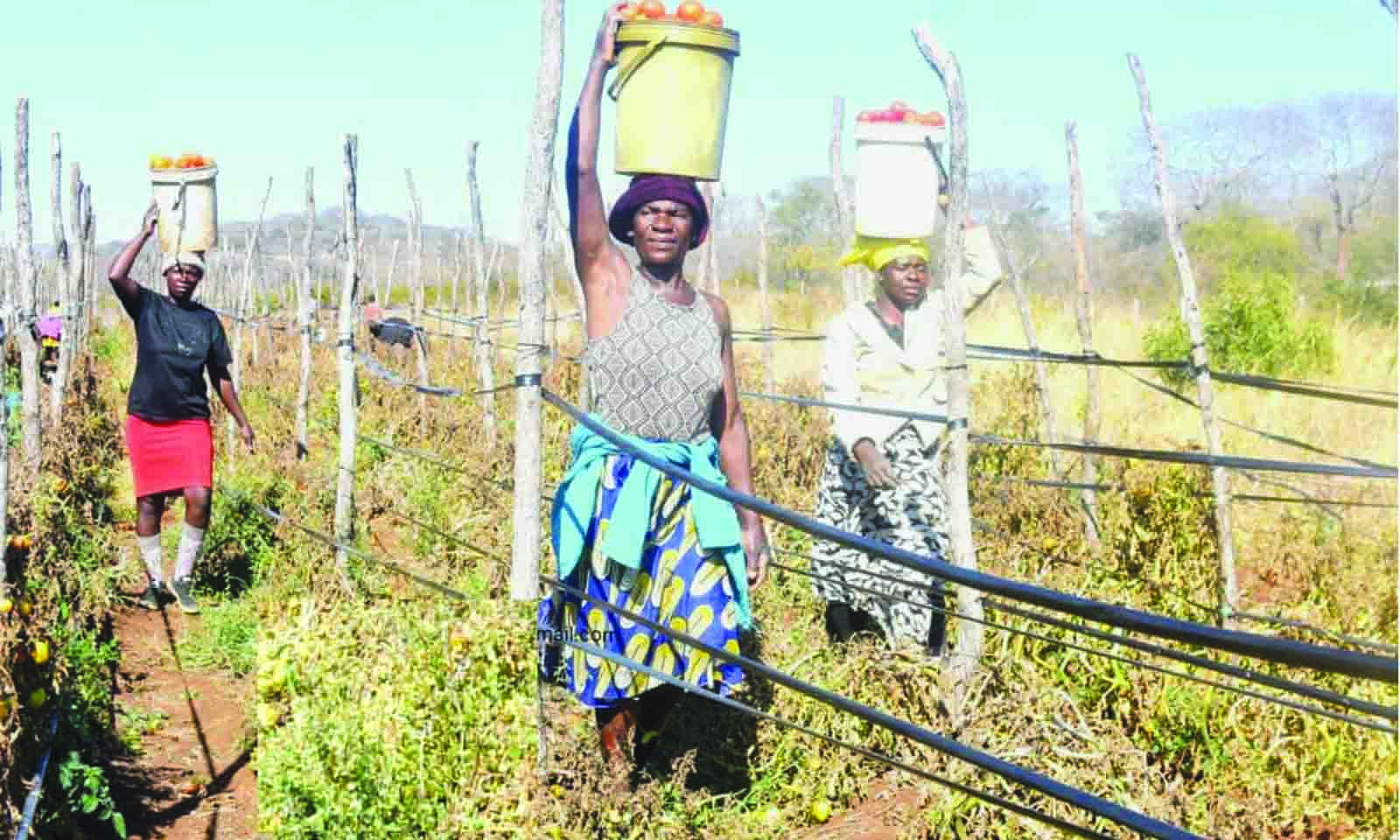
Theseus Shambare
Features Writer
IN the red soils of Craig Gower Farm, Glendale, Mazowe District, Ester Makwara stands as a testament to resilience and transformation.
Widowed and left to raise four children alone, Ester could have succumbed to despair.
Instead, she embraced the land provided through Zimbabwe’s Fast-Track Land Reform Programme, sowing seeds of hope and determination.
Ester shared her journey with The Herald on the sidelines of the distribution of the Presidential Productivity Booster Kit to 92 farmers, recently.
“Getting that land was the beginning,” she said. “I had somewhere to start again. Farming gave me purpose and a future for my children.”
At first, securing quality seeds, fertiliser and equipment was a daily struggle. Everything was done by hand, harvests were modest.
Yet Ester persisted, motivated by the need to feed her family and honour her late husband’s legacy. Her determination soon drew attention.
Agritex officers provided technical guidance on land preparation, crop management and market access.
“I started seeing results — better crops, better income. So, I bought a tractor. It changed everything.”
Today, she leads the farm’s irrigation committee, mentors other women and has become a role model for the wider community.
Ester is also a beneficiary of the inaugural Presidential Productivity Booster Kit and has secured her farm titles, cementing her position as a leader in both agriculture and women’s empowerment.
“When the Government gives us land and support, it is a vote of confidence,” she said. “With support and determination, everything can change.”
Where Ester’s journey shows individual triumph, Sibusisiwe Nyakunhuwa in Zvishavane, Midlands Province, demonstrates how women can lift entire communities.
In an area where men often risk their lives in unpredictable mining activities, she has given women a new anchor through agriculture.
“Our families relied on mining income, which was never stable. Now women are taking charge. We feed our children, pay school fees, and make sure no one goes hungry,” she said.
Most of her workers are women, each balancing the twin burdens of farming and family.
By creating employment and stability, Sibusisiwe has turned vulnerability into resilience, proving that women are not just participants in agriculture — they are its backbone.
The same story of transformation echoes in Mwenezi District, Masvingo Province, where the Pikinini-Jawanda Irrigation Scheme has become a beacon of resilience.
Once barren and drought-prone, the 156-hectare project now flourishes, benefiting over 300 households across Pikinini and Jawanda villages.
Funded with close to US$1,1 million from the Green Climate Fund (GCF), the Government, and UNDP under the “Building Climate Resilience of Vulnerable Agricultural Livelihoods in Southern Zimbabwe” initiative, the scheme has transformed lives.
Wendy Madzura, chief agronomist with Seed Co, explained the game-changing partnership.
“We have entered into a contract farming agreement with Pikinini-Jawanda to produce certified sugar bean seed. What attracted us is their gender-sensitive approach, with women holding influential positions,” she said.
“Seed Co buys the entire yield if it meets quality standards, provides technical assistance, and supports agronomic guidance throughout the growing cycle. Farmers are now strategic players in the national seed value chain.”
Chizivano Shava, chairperson of the scheme, described the shift: “We have moved from hoping for rain to managing contracts, planning markets, and ensuring quality. Our work now feeds not just families, but the country’s agriculture system.”
For women like Sifelani Chiwanatambo, empowerment is felt most in the daily grind.
“I feel empowered, I feel honoured and recognised,” she said. “As I harvest and push my wheelbarrow to the market, I feel I hold control of my future, away from being a housewife like I used to be before this irrigation scheme.”
In Chivi District, the Bwanya Irrigation Scheme is equally rewriting rural realities.
Part of a US$47,8 million initiative by the Government, UNDP and GCF, it focuses on reducing climate vulnerability in drought-prone areas.
“Before, we waited for rain and prayed,” said Eurita Mahove, who leads the day-to-day management of fields.
“Now we have water, tools, and training. Our crops are growing, and with them, our children’s futures. We no longer wait for our husbands to come back from town to feed the family. We are empowered as women.”
UNDP communications officer Pylaia Chembe reinforced this message: “This is not just about infrastructure. It is about watering dreams, restoring dignity and giving people control over their future.”
In Umguza District, Matabeleland North, the Phaphamani Irrigation Scheme shows how small communities can rise above harsh climates.
The 50-hectare project, supported financially by AFC and technically by FAO and AfDB, is managed by just 12 farmers — eight of them women.
“Before, we worried whether we would eat. Now, we plan, irrigate, and harvest,” said Mrs Ketty Ncube, vice-chairperson of the scheme.
“Our families are fed, children stay in school, and we are proud to lead.”
For Sithembiso Banda (54), from Fountain Village under Chief Deli, the women’s contribution is unmistakable.
“The women here have brought discipline and vision. They ensure crops are planted on time, managed properly, and marketed efficiently. It is their dedication that makes Phaphamani successful.”
The Government recognises that women’s leadership is central to food security and rural development.
Lands, Agriculture, Fisheries, Water and Rural Development permanent secretary, Professor Obert Jiri, recently announced the appointment of Mrs Medlinah Magwenzi as the new chief director of Agricultural and Rural Development Advisory Services (ARDAS).
“Women’s leadership, supported by policy and resources, is key to sustainable food security and rural development,” he said.
Women constitute 52 percent of Zimbabwe’s population, according to the 2022 national census.
Yet in rural areas, they still face barriers in accessing land, inputs and markets.
Initiatives in Mwenezi, Chivi, Umguza, Zvishavane, and Mashonaland Central are proof that with the right support, women move from survival to leadership.
From Mwenezi’s vast irrigation fields to Chivi’s climate-smart plots, Umguza’s dryland oasis and Zvishavane’s women-led farms, Zimbabwe’s women are showing that food security, resilience and dignity grow best in their hands.
“We are feeding our families, our communities and contributing to national development,” said Makwara.
“We are showing that women are essential to agriculture and leadership. Every harvest is a statement: when women lead, communities thrive,” said Mrs Ketty Ncube.
“Women are no longer waiting,” added Nyakunhuwa.
“We are the backbone of farming in our community. Our work ensures no child goes hungry and gives our families dignity.”
Their stories echo beyond borders. Partnerships with UNDP, GCF, FAO, AfDB, AFC, and Seed Co amplify impact, aligning local action with SADC’s vision and UN Women’s global goals for gender equality, climate adaptation, and sustainable development.
As Women Affairs, Community, Small and Medium Enterprises Development Minister Monica Mutsvangwa put it: “When women lead, Zimbabwe eats, grows and prospers. Their success is our national triumph.”