admin
admin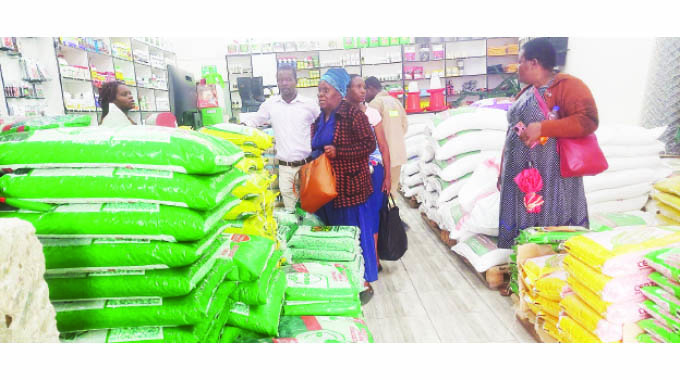
Obert Chifamba-Agriculture Editor
ORDINARILY, the 2024/25 farming seems to be a term whose destiny has already been charted and sealed.
It is a season that weather experts have projected as going to have normal to above normal rains.
And coming hot on the heels of an El Nino-ridden season, this tenure will be a special one given that the agriculture sector will go all out to redeem itself and show what it is capable of achieving in a good season.
It is a season that is expected to see both crop and livestock sectors making up for the shortcomings of the 2023/24 season and this means it will also be important to have the playing field levelled to make that dream successful.
It is also an undisputed fact that the success of any farming season is a direct result of the interplay of various factors – rainfall pattern, soil quality, access to seed and fertilisers and market conditions, to name a few.
On the one hand, it also pays to observe that access to resources like credit lines, equipment and extension services can influence the farmer’s ability to invest in her farm and subsequently improve productivity. And depending on the farmer’s capacity to mitigate the unsavoury impacts of natural factors like drought and in some cases excessive rains, the complexion of a season may easily change for the worse.
The Meteorological Services Department (MSD) has since indicated that the 2024/2025 rainfall season will coincide with a weak La Niña phase.
This development comes with prospects of better rains from the second half of the season to the end of the forecast period spanning from November to March.
Zimbabwe is therefore most likely to receive normal to below-normal rainfall for the period October 2024 to December 2024 with an improvement in rainfall quantities expected for the period November to December 2024 then January 2025. On the brighter side of things, the MSD also predicted an improvement in the rainfall pattern in 2025 with normal to above-normal rainfall anticipated across the country.
According to the forecast, the main global climate driver, the El Niño Southern Oscillation (ENSO), is currently in the neutral phase and is expected to transition into a weak La Niña phase starting October 2024 reaching a peak in the December-January-February sub-season.
The La Niña phenomenon presents high chances of normal to above-normal rainfall over the southern parts of the Southern African Development Community (SADC) region, including Zimbabwe.
Naturally, such news should excite farmers and usher them into the mood to atone for their poor performance last season because of the El Nino-induced drought.
The bulk of the farmers that I have chanced to talk to have professed their readiness to start the season buoyed by the prospects of better rains, thanks to the positive weather forecasts.
However, their biggest undoing at the moment is that most of them have not yet received or procured inputs while those that are self-financing have to content with the high prices agro-dealers have suddenly adopted.
It is unfortunate that most farmers may easily fail to establish early crops because they have not yet secured inputs. Many farmers producing crops under various programmes, for instance, Pfumvudza have not yet received their inputs packages, which means they are failing to capitalise on the rains currently falling in most parts of the country.
It is high time the Government made sure those tasked with distributing inputs do not waste any more precious time before disbursing them.
The reality on the ground is that the La Nina weather phenomenon can also have both wet or excessively wet and dry moments, which makes it prudent for farmers to make the most of the season’s exciting moments.
If the country’s push to achieve self-sufficiency and also revitalise most value chains in the agriculture sector is to succeed, all stakeholders need to play their part especially at a crucial moment like this when the goal is to make sure all resources are harnessed towards making the season a success.
Then there is this issue of prices of basic inputs such as maize seed that have suddenly gone up, as if to frustrate the self-financing group of farmers.
A two-kilogramme packet of maize seed is now priced at between US$10 and US$15 in some agro-dealers’ shops with the 25kg pack now attracting anything between US$100 and US$140.
Less yielding and short season varieties are those that are still reasonably priced while the high-yielding and long season varieties have been literally priced out of the reach of many. Fertilisers on the other hand have also not been spared in the madness to frustrate production with a bag of Compound D fertiliser priced at between US$28 and US$34 while Ammonium Nitrate (AN) is going for between US$38 and US$40.
In essence, the fertiliser prices are not atrocious but the problem is that most of the agro-dealers trading in the commodity are not accepting local currency (ZiG).
This is one issue that policy makers may need to look into and ensure there is total compliance to national regulations on currency lest the projected good rains go to waste.
Away from this price madness, it is crucial for those farmers who have not yet finished physical preparations on the ground to hasten and do so. One piece of advice for free — our farmers relying on Government programmes should also strive to mobilise a bit of inputs independently, as they grow towards being weaned off with time.
Essentially, the Government’s support programmes should be there to augment the farmers’ efforts and in some cases serve as a launch pad or start-up role.
Farmers will also need to fervently follow updates from the weather station.
The MSD also needs to continue monitoring seasonal climate indicators influencing the country’s rainfall patterns and communicating its findings to the populace.
Updates coming on a monthly, weekly and daily basis will be important for farmers who need to be abreast with the short-term weather variabilities such as dry and wet spells.
Such information will be critical for the success of a season like the current one that will be characterised by two different halves with varying complexions.
This calls for MSD to up its game and ensure information is disseminated to all corners of the country. Projections of the normal to below-normal rainfall for the first half of the season will essentially result in a late start to the season in some places, but farmers in the affected regions must have everything in place and wait for the eventual setting in of the season.



 Online Reporter