admin
admin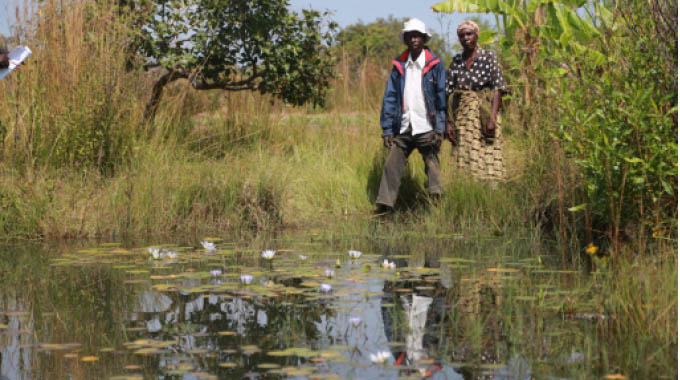
Mutsawashe Mashandure-Herald Correspondent
As the rainy season approaches, the Environmental Management Agency (EMA) has urged Harare residents to refrain from engaging in urban agriculture in wetlands and near water bodies to prevent environmental degradation and flooding.
In a statement issued yesterday, EMA Harare provincial manager Mr Leon Mutungamiri said wetlands must be conserved according to Section 113 of the Environmental Management Act (Cap 20:27) as read with Section 20 of Statutory Instrument (SI)7 of 2007.
“No person shall, except following the express written authorisation from EMA, reclaim or drain any wetland, or disturb any wetland by drilling or tunnelling in a manner that has or is likely to hurt any wetland or adversely affect any animal or plant life therein.
“As we strive for sustainable growth, we must reconcile development with environmental protection.”
He said that wetlands in the Harare Metropolitan Province are threatened by increasing construction activities and peri-urban agricultural practices as the farming season begins.
He added that wetlands play a crucial role in filtering and purifying water, and they also provide a habitat for various plant and animal species.
“Keeping wetlands is a good initiative, it is a way of preserving our environment and ensuring that our community has access to clean water.
“If we destroy our wetlands, we risk losing these benefits and facing serious environmental consequences, he said.
“As a community, we need to take responsibility for protecting our wetlands and preserving them for future generations.
“It is not just about the environment, it is also about our health and well-being.
“By keeping our wetlands intact, we can ensure that our community has access to clean water and a healthy environment,” he said.
Mr Mutungamiri stressed that construction on wetlands is a recipe for disaster, a ticking time bomb that can have devastating consequences for the environment and the community
“When we build on wetlands, we disrupt the natural water flow and destroy the habitats of plants and animals that depend on these ecosystems.
“This can lead to flooding, erosion, and water pollution, which can have serious impacts on human health and the environment.
“Moreover, construction on wetlands can also lead to the loss of biodiversity, as many plant and animal species that are found in these areas are unable to survive in other environments.”
Mr Mutungamiri urged developers to ensure they only commence construction after acquiring an Environmental Impact Assessment (EIA) Certificate from EMA.
“Developments on wetlands are prohibited.
“Developers embarking on construction activities should only do so after acquiring an Environmental Impact Assessment Certificate from EMA.
“Together we can restore and protect Harare’s wetlands.
“We need to take a step back and think about the long-term consequences of our actions, rather than just focusing on short-term gains.
“And the need to prioritise the protection of our wetlands and ensure that any development is done in a sustainable and environmentally friendly manner,” Mr Mutungamiri added.



 Online Reporter