dyton mupawaenda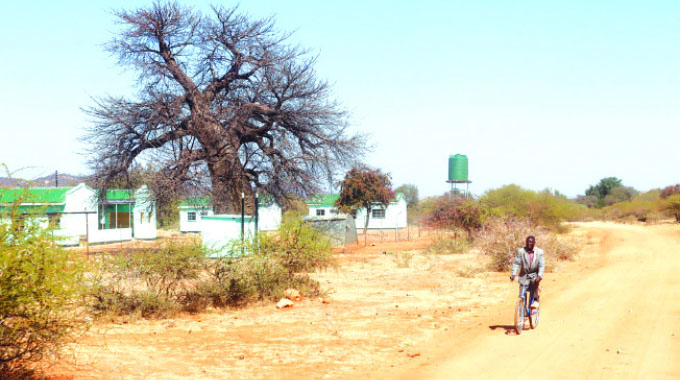
Thupeyo Muleya-Beitbridge Bureau
Almost every border town in Zimbabwe has a baobab tree, or a street or suburb named after this tree of life.
It is a plant which carries many tales ranging from how the Almighty in a moment of anger turned the baobab upside down as it sought to reach the heavens, to how it provided home to people in ancient times.
With a trunk of up to 10 metres in diameter and a circumference of 20 metres it can grow to at least 30 meters in height at full maturity.
Many even fly from abroad to come and acquaint themselves with one of Africa’s biggest and resilient trees.
To some ordinary Zimbabweans, this is just a tree in the bush, while to others it provides a bountiful annual harvest of fruits exploited for various reasons.
Development agents see this tree as a potential to drive economics in selected communities due to its non-timber product, which are sought in many countries.
Droughts have come, climate change has happened but the baobab tree remains standing signalling endurance, resistance and great adaption qualities.
In fact, it is a symbol of long life considering that it can grow up to 2 500 years, seeing the mankind generation form another generation.
According to Beitbridge’s senior traditional leader, Chief Stauze (David Mbedzi) the baobab is a legendary tree and is highly revered in the Venda culture.
“It symbolises our culture in so many ways and it produces very good fruit, which is also a recipe to many dishes,” said the traditional leader.
“These trees also provide good shade for wild and domestic animals and people.
“In some instances, you will note that most of our traditional courts are located under these huge baobab trees. They are a sanctuary to many”.
Chief Stauze said the baobab fruits have many by-products both traditional and modern.
He said in some instances ordinary communities were making money from selling the trees by products although there was a need to build their capacity to be more productive.
Traditional leaders, he said, continue to hand down deterrent fines to those caught cutting down trees or burning the veld.
A villager passing by the famous tree.
“We need to safeguard these natural resources and hence we have adopted a tough stance against those destroying the forest” said Chief Stauze.
He said the tree’s bark was used by other villagers for making thatching ropes, floor mats, bags, and hats hence it must be protected at all cost.
Environmentalist, Mrs Nomphumelelo Chigwinya said the baobab tree was a special and unique tree that can withstand all the weather pressures.
She said its long life span means it is a great adaptor to the ever changing environment.
“The benefits we get from eating the fruits and by-products are too much.
Other people use the products for spiritual, ornaments and craft purposes and the trees in general are a natural attraction for some tourists,” said Mrs Chigwinya.
Rangelands Regenerations Trust chief executive, an organisation working on conservation issues in Beitbridge, Mr Steven Pocock said these ancient trees could live more than 2 500 years old and have hundreds of life-sustaining uses.
He said the African Baobab is often called the ‘tree of life’ and that it has a distinct appearance with its stout, swollen trunks and spindly branches.
The trunks, he said, can reach enormous sizes, with some baobabs having a circumference of over 30 metres. “They have the ability to store large amounts of water in their trunks, enabling them to withstand droughts and survive in arid conditions,” said Mr Pacock.
“Baobab fruits are highly nutritious and have been used for centuries by communities for their medicinal and dietary benefits.
The fruit contains high levels of Vitamin C, antioxidants, and other essential nutrients, making it a valuable food”. Mr Liberty Masilinge, a seasoned development worker said the tree has good non timber forest products in the form of its excellent fruit and bark for mat making.
He said the fruit can be consumed as it is or processed for juice or added to meals like porridge.
“The porridge is nutritious for children.
The seeds can be ground to make coffee or processed for cosmetic oils.
In fact, the baobab is a versatile tree which can survive for many years,” said Mr Masilinge.
He said Beitbridge district was endowed with a lot of these trees which can be utilised for local communities’ livelihoods.
The trees need to be preserved for future generations so that they also benefit from them.
He added that community projects like the International Rescue Committee (IRC) led Zimbabwe Resilience Building Fund (ZRBF) which ended last year in 2022 helped communities to see value in indigenous trees like the baobab tree.
“The Mnandi Mnandi factory at Madaula is one such facility, which the natural resources partner in ZRBF, Bio-Hub Trust, worked hard to empower the local communities of ward 3, Madaula Village area.
They are making a living through processing wild fruits into various by-products,” said Mr Masilinge.
Renowned business woman, Dr Anna Muleya who is also running a baobab juice processing business in partnership with a group of youths said the tree lives for more years than any other tree and was the biggest tree in the world. She said its fruits which have more than 10 uses start to grow after 15 years.
From the fruits, the business women are able to produce flavoured drinks, natural drinks and yoghurt among other things.
She said there were plenty of upside down trees (baobab) because of the semi-arid environment, and hot weather conditions.
“Communities can benefit from the fruits to make different foods and drinks, roots for medicine, trunks for art among other things,” said Dr Muleya.
“At the same time it is critical that the community members are educated on the importance of the tree.
“Some methods include the use of chilli bites and other ways to make animals not eat it.”
Beitbridge Forestry Commission district head Mr Zibusiso Ndlovu said those seeking to harvest by-products from wild trees for commercial purposes should regularise with his office and the councils.
He said the harvesting of wild fruits or trees should be vigilantly controlled to make sure they do not get extinct and that natural propagation continues.
Mr Ndlovu said in terms of ecological value, baobab trees are important as nesting sites for several bird species, or its open trunks can be a habitat for wild animals or store waters for the same wild animals.



 Online Reporter